
Dental crown in Kénitra
A dental crown is a prosthesis that fully covers a tooth too damaged to simply be filled. At Dr Fatima Azelmat's practice in Kénitra, it is made from ceramic or zirconia, from a digital impression, to restore the tooth's shape, strength and a natural appearance — with no visible metal.
The assessment does not commit you to any treatment. It helps you understand first, then decide.
Dental crown in Kénitra
In Kénitra, a dental crown is 3,000 MAD in zirconia and 3,500 MAD in full ceramic (e.max) as an indicative fee at Dr Fatima Azelmat’s practice; the temporary crown fitted in the meantime is 1,000 MAD. If the tooth is badly broken down, a post-and-core build-up (800 MAD) may be needed before fitting. The written quote is given to you after the assessment (consultation 150 MAD).
Ce qu'il faut savoir
What is a dental crown?
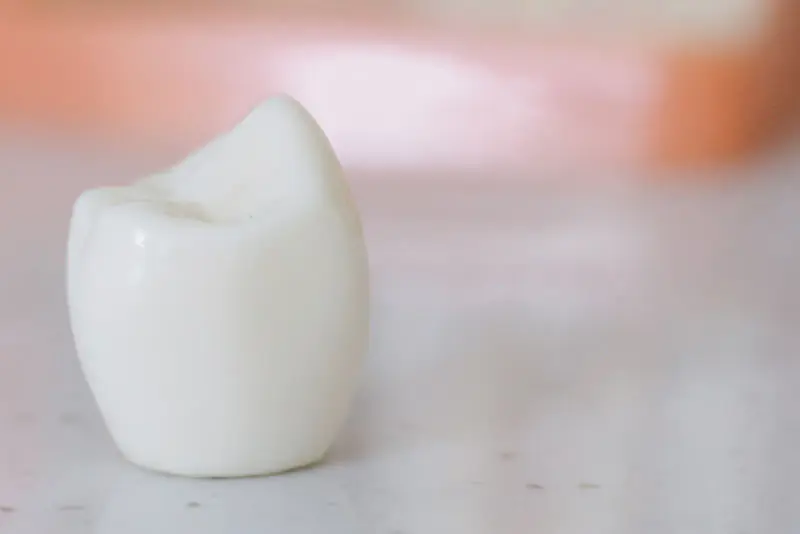
A crown is a prosthesis that covers the whole visible part of a tooth to rebuild it when it is too damaged for a simple filling. It protects the tooth, restores chewing and gives back a natural shape and shade. Made from ceramic or zirconia, it blends into the smile. For more on materials, see: ceramic and zirconia crowns.
When is a crown placed?
A crown is indicated when:
- The tooth is heavily decayed or broken down and can no longer hold a solid filling.
- The tooth has been root-treated and becomes fragile: the crown protects it from fracture.
- The tooth is cracked or heavily worn.
- A tooth on an implant must be restored, or the crown serves as a bridge abutment.
When the loss of substance is more limited, a ceramic inlay/onlay is sometimes enough: it preserves more of the tooth. Conversely, for a purely esthetic concern on a healthy tooth, a veneer is preferred.
A crown on a tooth, or a crown on an implant
A crown covers a tooth that still exists. When the tooth is missing, the crown needs a support: an implant, which replaces the root, or the neighbouring teeth, which then carry a bridge supported by the neighbouring teeth. The choice depends on the condition of those neighbours, the available bone and the way your teeth meet, as much as on the tooth to be replaced. This is what the assessment examines before designing the final tooth; it does not commit you to any treatment.
Ceramic or zirconia: which material?
The practice favours metal-free crowns:
- Ceramic offers esthetics suited to visible teeth.
- Zirconia is very strong, suited to heavily loaded back teeth.
Both are biocompatible and avoid the grey line of old metal-ceramic crowns. We detail this choice here: metal-free prostheses, ceramic and zirconia.
Step by step
- Assessment. Examination of the tooth, X-ray and choice of material.
- Preparation. The tooth is shaped to receive the crown; if needed, it is first rebuilt.
- Digital impression. An intraoral scanner records the tooth precisely, without paste.
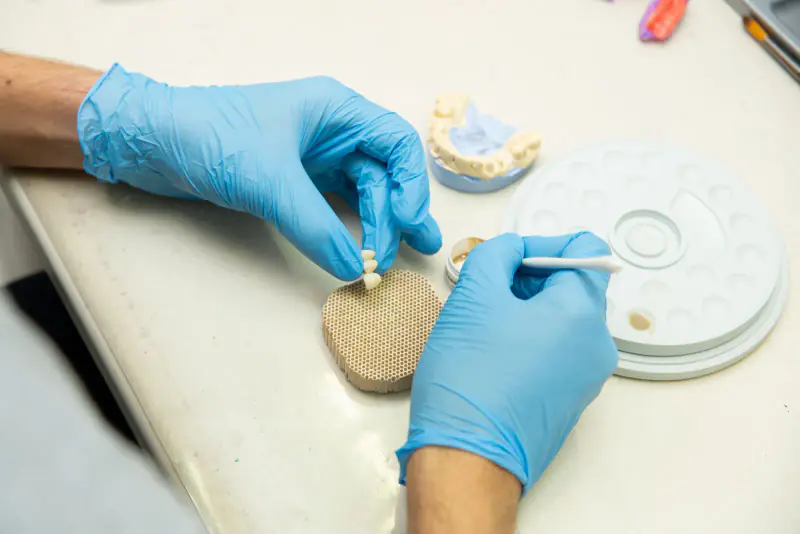
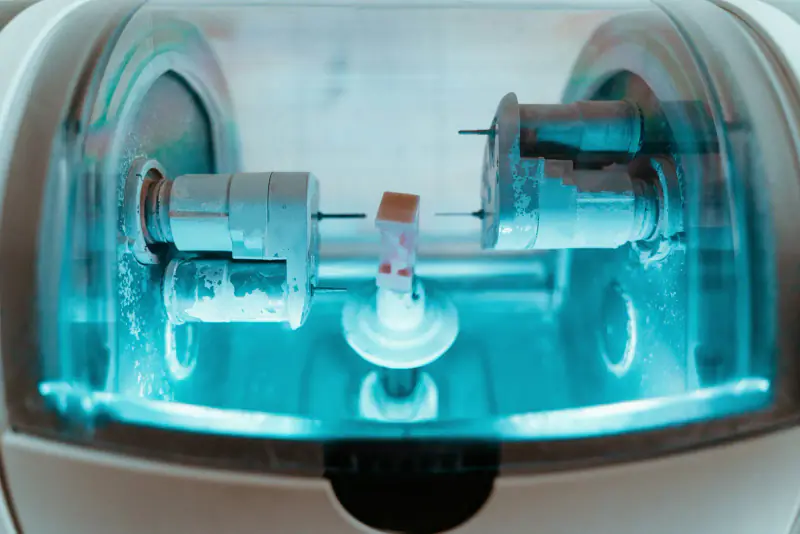
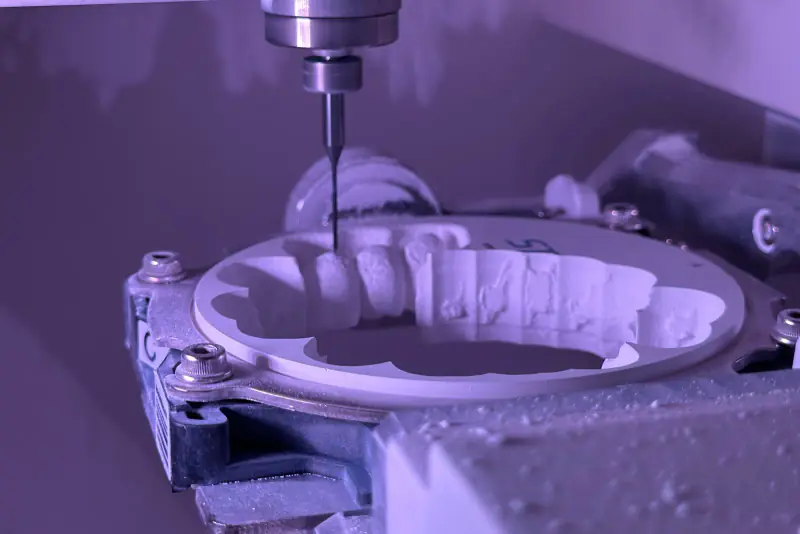
- CAD/CAM design. The crown is designed by computer (CAD/CAM) then milled to measure.
- Placement. After try-in and checking of shade and bite, the crown is cemented. A temporary crown protects the tooth between visits.
How many visits and how many days for a crown
A crown made by a laboratory usually takes two main appointments: the first to prepare the tooth, record the impression and fit the temporary crown, the second for the try-in, adjustments and cementation. In between, fabrication most often takes two to three weeks, sometimes longer (Cleveland Clinic). An extra visit may be added if the tooth first needs to be rebuilt or root-treated. Some crowns can be designed and milled chairside in a single visit, but this is not possible in every case: the number of visits planned for your tooth is given at the assessment.
Longevity and care
A well-made, well-maintained crown lasts many years. The tooth carrying it remains prone to decay at its margin with the gum: careful brushing, floss and regular scaling are essential. Yearly check-ups keep an eye on the crown and the gum.
Price of a dental crown in Kénitra
The fee depends on the material (ceramic, zirconia), whether the tooth must first be rebuilt and the context (natural tooth or on an implant). It is set by quote after the assessment.
| Service | Indicative fee (MAD) |
|---|---|
| Ceramic or zirconia crown | quote after assessment |
| Prior build-up if needed | on quote |
The details of the procedures and their fees are presented to you before starting. Coverage depends on the procedure and your scheme’s conditions: ask your organisation to confirm in writing which procedures are covered. See also our fees.
How the practice works
Dr Azelmat designs every crown with a digital workflow (optical impression, CAD/CAM) for a precise fit and a natural result. She favours metal-free materials and preserves as much healthy tooth as possible, offering an inlay/onlay or a veneer when they are more appropriate than a full crown.
Frequently asked questions
Does a dental crown hurt?
Preparation and placement are usually performed under local anaesthetic to limit pain during the procedure. Pressure or discomfort may still be felt, and the tooth or surrounding tissues can remain sensitive for a few days. Persistent or increasing pain should be reported to the practice.
Ceramic or zirconia crown: which to choose?
Ceramic offers the best esthetics on visible teeth; zirconia, being stronger, suits heavily loaded back teeth. Both are metal-free and biocompatible. The choice is made at the assessment based on the tooth’s position and your priorities.
How long does a crown last?
A well-maintained crown lasts many years. Its longevity depends on hygiene, gum health and regular check-ups. The supporting tooth remains prone to decay at its margin, hence the importance of brushing and floss.
Does the tooth need root treatment before a crown?
Not systematically. Root treatment is done only if decay reaches the nerve or if the tooth is already symptomatic. A vital tooth can perfectly well receive a crown; the decision is made after examination and X-ray.
What is the difference between a crown and a veneer?
The crown covers the whole tooth to rebuild it when it is damaged or root-treated. The veneer covers only the visible face of a broadly healthy tooth, for esthetic purposes. For moderate loss of substance, an inlay/onlay is sometimes preferred.


Schedule an assessment
The assessment does not commit you to any treatment. It helps you understand first, then decide.