
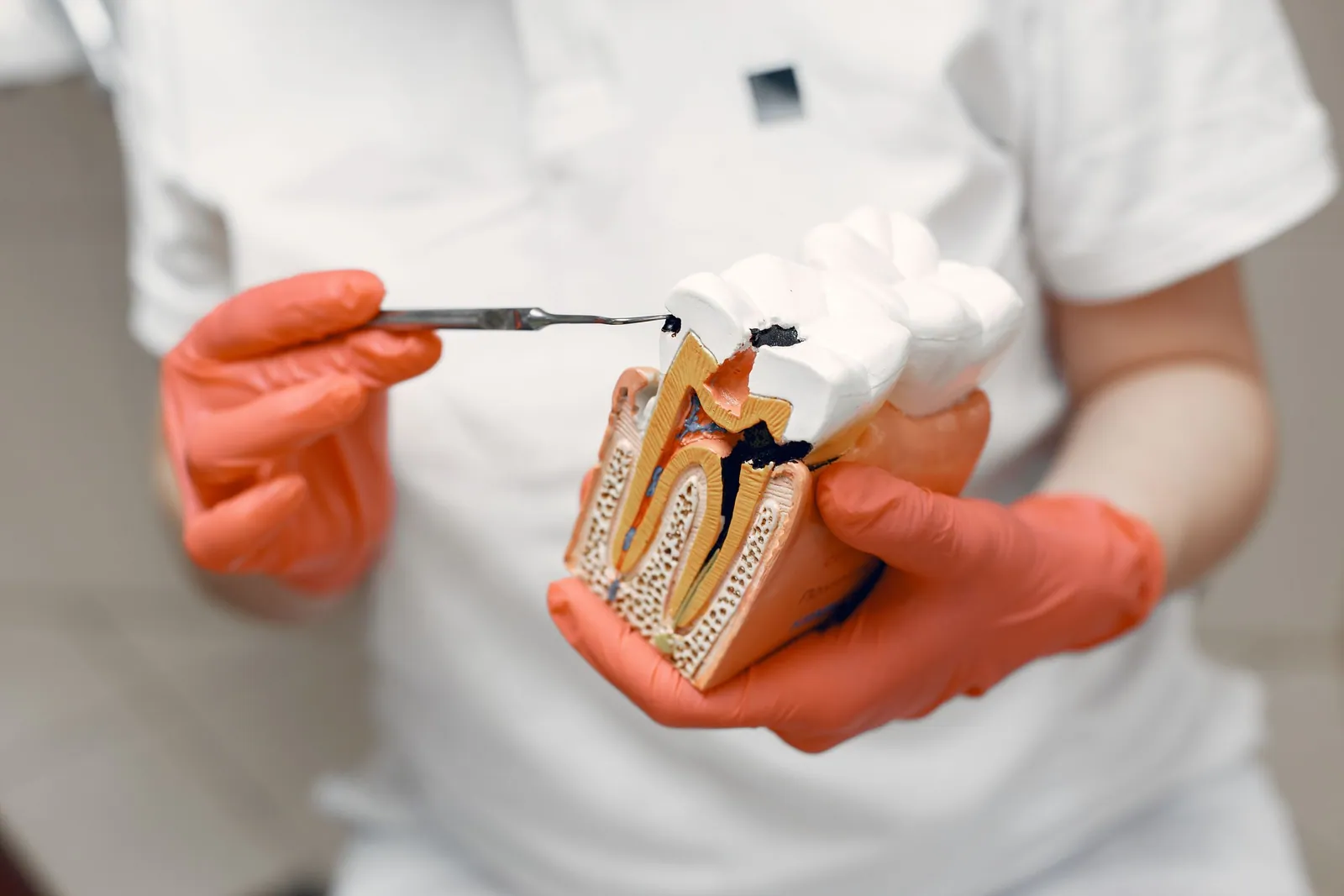
A root canal, also called endodontic treatment, is not the painful procedure many people fear. It is carried out under local anesthesia and, according to the American Dental Association, causes little or no pain during the intervention. The American Association of Endodontists says much the same: with today’s techniques and anesthetics, the treatment is no more painful than having a simple filling placed. The pain patients associate with a root canal is, in reality, most often the pain that comes before the appointment — the raging toothache — which the treatment is specifically meant to bring to an end.
As a dental surgeon in Kénitra, I see that fear of pain is the main obstacle to this treatment, and that it rests largely on outdated ideas. The aim of this article is to describe honestly what actually happens: why a tooth needs a root canal, how the procedure unfolds, which pain is normal and which should raise concern, and what can reasonably be expected in the long term. Without superlatives, and without promises that cannot be kept.
What exactly is a root canal?
At the center of every tooth lies the pulp, a soft tissue containing the nerve and the blood vessels. When this tissue is irreversibly damaged by infection or deep inflammation, a root canal consists of removing it, then cleaning and disinfecting the inside of the roots, and finally sealing them tightly.
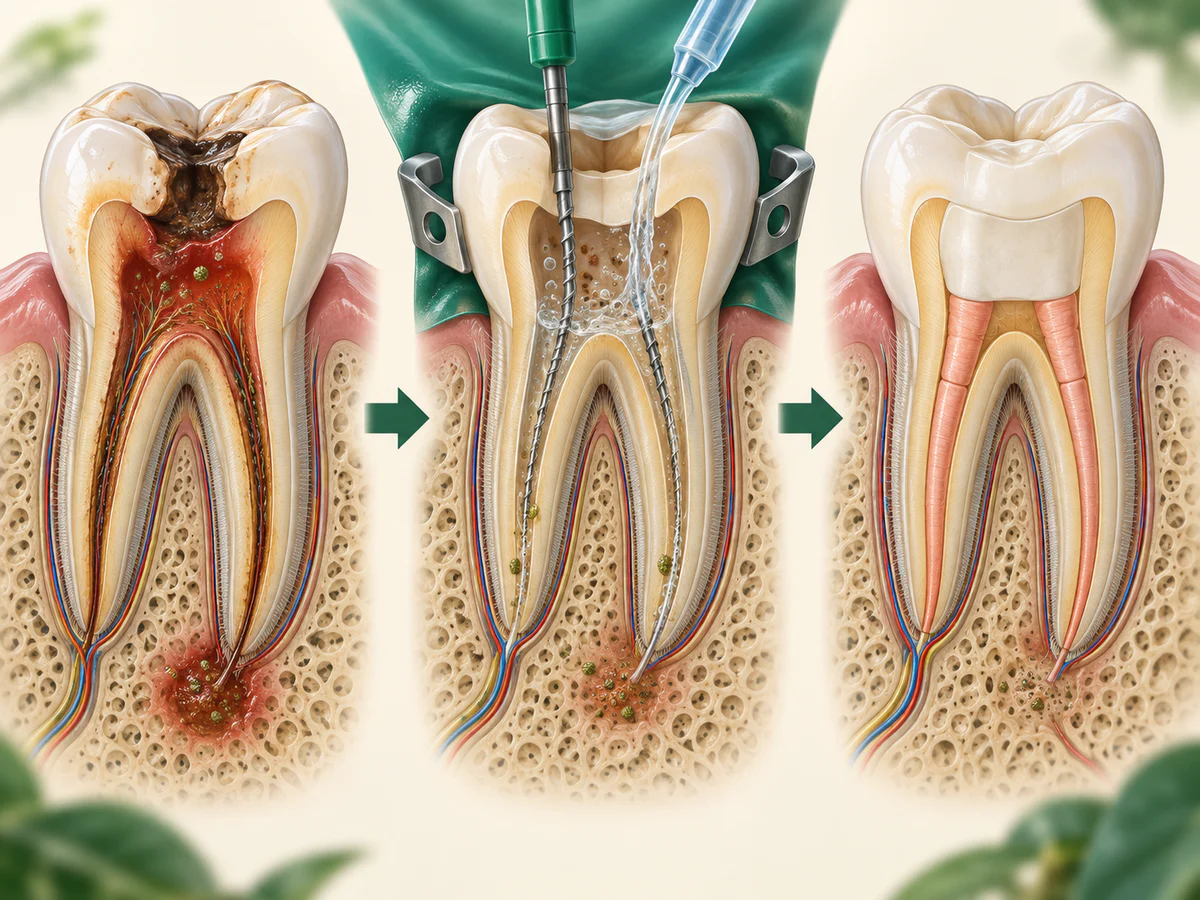
ameli.fr and the UFSBD describe the same steps: removal of the pulp, cleaning and disinfection of the canals, then filling with gutta-percha points combined with a sealer cement. The American Dental Association describes this seal as protection against future infection. The goal is not to “kill” the tooth, but to keep it in the arch rather than extract it.
One point deserves precision, because it is often poorly worded. Cleaning and irrigating the canals sharply reduces the bacterial load, and the filling minimizes the risk of reinfection. No protocol, however, sterilizes the canal system 100 %, nor does any guarantee that reinfection will never occur. That is precisely why the outcome is expressed as a probability of success, and why retreatment remains possible if needed.
Why does a tooth need a root canal?
A root canal is the standard treatment for preserving a tooth whose pulp is irreversibly damaged. According to the UFSBD and ameli.fr, the main indications are the following:
- A cavity that has grown deep enough to reach the pulp.
- Irreversible inflammation of the pulp, known as pulpitis.
- Necrosis of the pulp, meaning death of the pulp tissue.
- Trauma or a fracture that has injured the nerve.
- An abscess at the tip of the root, known as a periapical abscess.
What is at stake is not only comfort. According to the UFSBD, if the tooth is left untreated, the infection eventually spreads along the root as far as the jawbone and causes an abscess. The American Dental Association similarly describes an infection of the tissues around the root, a source of pain, swelling and sometimes an abscess. A root canal interrupts this progression.
Root canal or extraction?
A root canal is the option that preserves the natural tooth. When the tooth can no longer be restored, extraction followed by a replacement becomes the logical route. The choice between keeping and replacing depends on the condition of the tooth, on how much healthy tissue remains, and on the overall situation in the mouth. If the question of replacement arises, our article on implant, bridge or denture: how to choose presents the available solutions and their limits.
Is a root canal painful?
This is the central question, and the answer deserves nuance rather than a slogan.
During the procedure, the tooth and the surrounding tissues are anesthetized locally. The American Dental Association indicates that patients feel little or no pain, precisely because the local anesthetic prevents them from feeling the work being done. The American Association of Endodontists confirms that the experience is no more painful than having a cavity treated. The most striking pain remains the one that precedes the appointment — acute inflammation of the pulp — and that is the pain the treatment aims to relieve.
Two reservations call for honesty. First, anesthesia can be harder to achieve when the pulp is acutely inflamed; additional anesthetic is sometimes needed. Second, postoperative pain does occur in some patients, and it would be untrue to promise a complete absence of pain after the procedure.
What kind of pain follows a root canal?
Sensitivity lasting a few days is normal, particularly to pressure on the tooth. The American Dental Association describes it as expected and notes that it can be managed with simple pain relievers. This discomfort reflects the reaction of the tissues around the root, not a failure of the treatment.
On the extent of this pain, the data are precise and worth knowing. The systematic review by Sathorn, Parashos and Messer (Int Endod J, 2008) found postoperative pain with a frequency ranging from 3 % to 58 % depending on the studies analyzed. In other words, it is neither universal nor absent: it affects a variable minority of patients, and it most often remains moderate and short-lived. The same review concludes that there is no solid evidence of a difference in pain depending on whether the treatment is completed in a single visit or in several.
Normal pain or abnormal pain: the signs to watch for
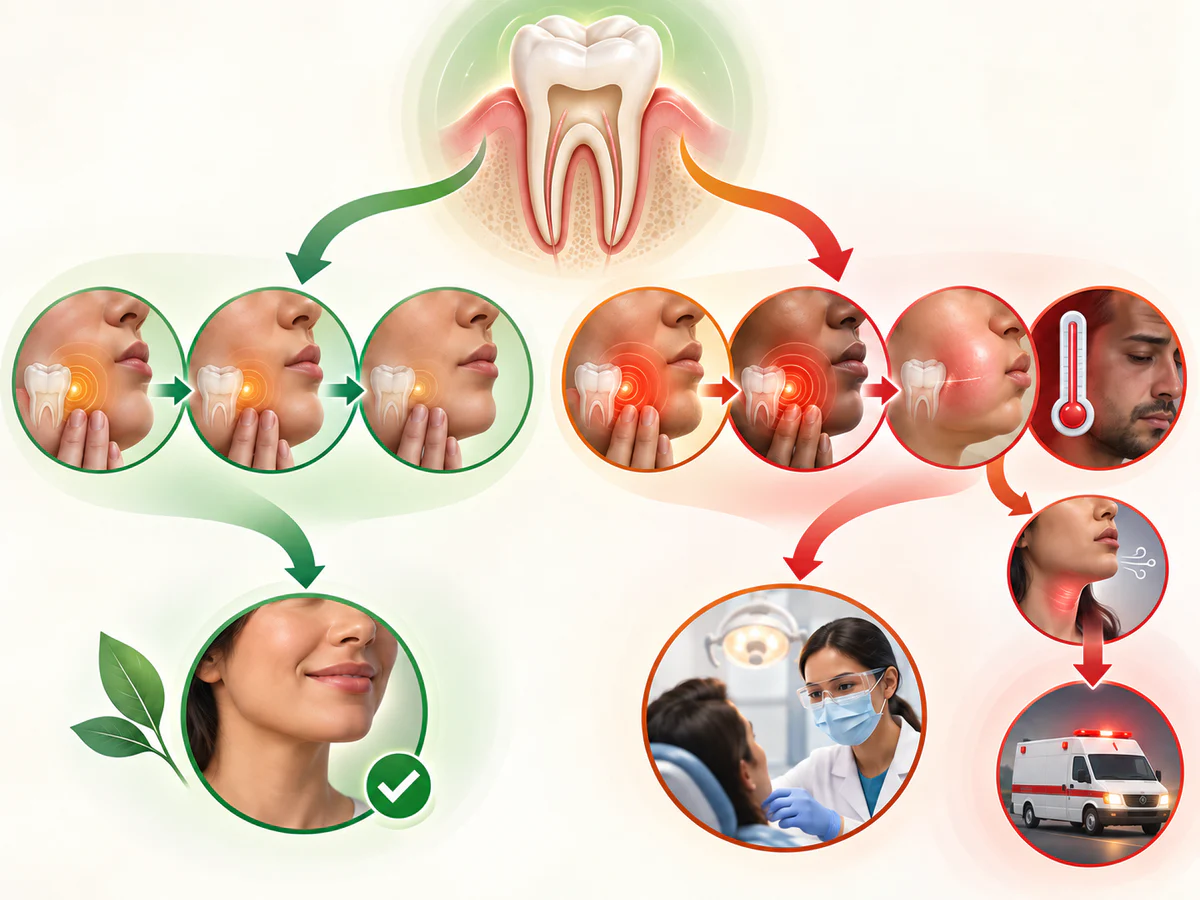
The distinction is easy to remember. Pain that gradually decreases over a few days is expected. Pain that gets worse, or that comes with general symptoms, warrants a consultation without delay.
| Situation after the procedure | Interpretation | What to do |
|---|---|---|
| Sensitivity to pressure, decreasing over a few days | Normal tissue reaction | Simple pain relievers, monitor the improvement |
| Mild, temporary discomfort when chewing | Usual course | Chew on the other side, wait it out |
| Pain that increases after day 3 | Potentially abnormal sign | Get back in touch with the practice |
| Swelling of the cheek or the gum | Warning sign | Seek care promptly |
| Associated fever | Warning sign | Seek care the same day |
Facial swelling and fever are not ordinary aftereffects of a root canal: they are warning signs that call for a prompt consultation. If in doubt, our article on what to do right away in a dental emergency sets out the situations that should not wait.
How does a root canal treatment unfold, step by step?
The procedure is now well codified. It is carried out under radiographic control, as ameli.fr points out, which makes it possible to visualize the anatomy of the roots and to verify the work.
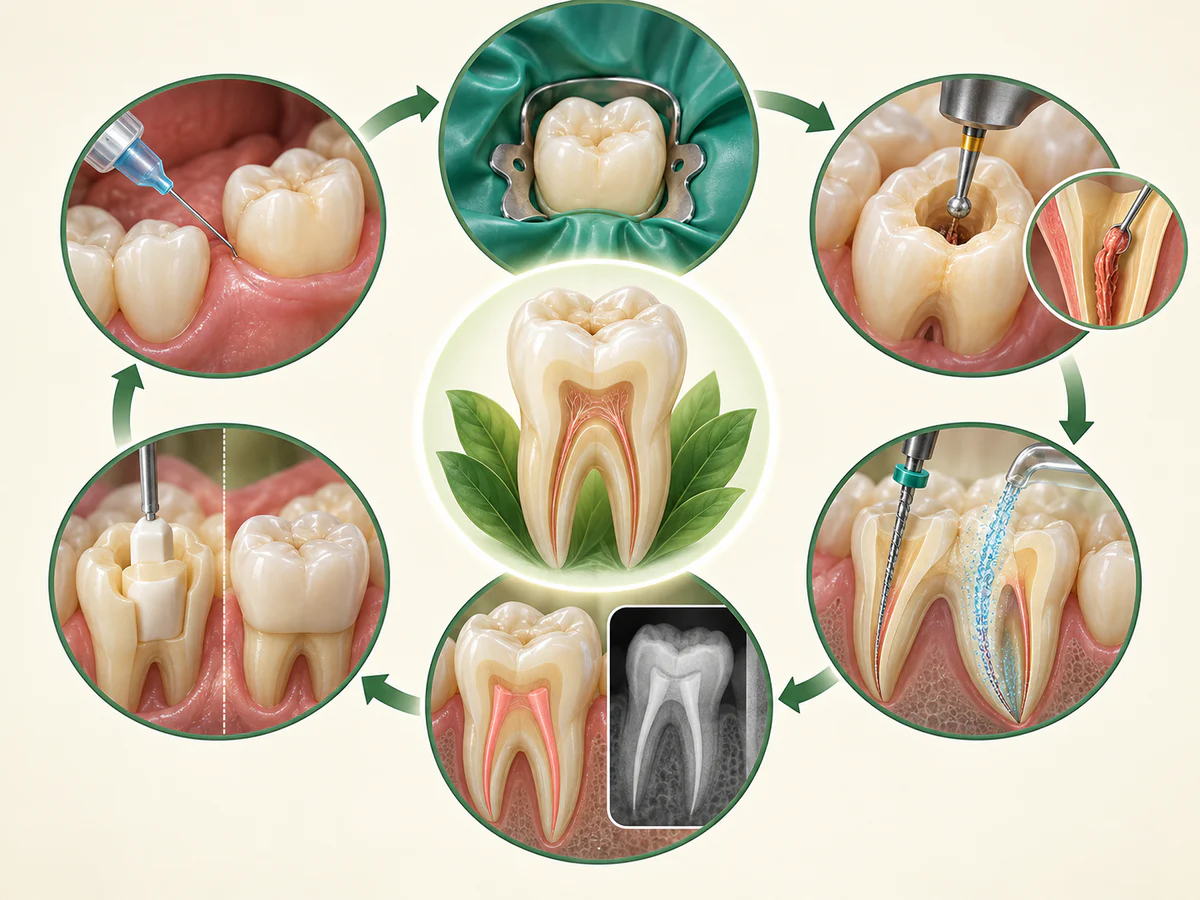
- Local anesthesia. It numbs the tooth and the neighboring tissues before anything else is done.
- Isolating the tooth. An operating field, the rubber dam, isolates the tooth from saliva. Here too, precision matters: the dam provides isolation and reduces salivary and bacterial contamination, without creating a completely sterile environment. It is a step of good practice, not absolute asepsis.
- Opening the tooth and removing the pulp. The pulp chamber is accessed and the diseased tissue is removed.
- Shaping and disinfection. The canals are cleaned, shaped and irrigated. The working length is determined with an apex locator, a reliable measuring instrument used alongside radiographic control.
- Filling the canals. The canals are sealed tightly with gutta-percha and a cement, to limit the risk of reinfection.
- Rebuilding the tooth. A filling, and then often a crown, restores the tooth and protects it.
Depending on the case, treatment is completed in one visit or several. As the review by Sathorn et al. (2008) showed, this choice has no clearly demonstrated effect on postoperative pain; it depends above all on the anatomy of the tooth and on the state of the infection.
What becomes of a tooth after a root canal?
A root-canal-treated tooth is not a dead organ. The UFSBD stresses this: the ligament connecting the tooth to the bone remains supplied with blood, and therefore alive. The tooth loses its internal blood supply, but it keeps its anchorage and its function.
This loss of blood supply has a practical consequence. According to the UFSBD, the tooth becomes much more fragile and can fracture more easily. That is why it is reinforced, most often with a crown. ameli.fr and the American Dental Association describe the same approach: rebuilding with a filling and then, frequently, a protective crown. This step is not a detail: it largely determines how long the treated tooth will last.
The myth of the “toxic” root-canal-treated tooth
A persistent idea holds that a root-canal-treated tooth sustains general illness. The American Association of Endodontists is clear on this point: there is no valid scientific evidence linking root canal treatment to cancer or to disease elsewhere in the body. This belief, regularly repeated, rests on no reliable data.
What is the prognosis for a root-canal-treated tooth?
The prognosis is favorable when the treatment is well conducted and the tooth properly protected. Both the American Dental Association and the UFSBD indicate that a treated and restored tooth can last a very long time, sometimes a lifetime, provided it is well maintained and regularly monitored.
That “a lifetime” is a conditional formulation, not a guarantee. Cohort data allow a more measured benchmark. The study by Mareschi, Taschieri and Corbella (Int J Dent, 2020) reports a cumulative tooth survival of around 86 % at twenty years after non-surgical endodontic treatment. This is an encouraging result, and it should be read as a high probability rather than as an individual certainty.
When a previously treated tooth shows signs of reinfection, endodontic retreatment is possible. It is a recognized procedure that consists of redoing the treatment of the canals. It illustrates an important reality: a root canal sharply reduces the risk of infection without eliminating it entirely, and the tooth remains open to a second course of care if needed.
When the situation calls for surgery
Most root canals are routine care. Some situations, however, fall within a more complex framework: an extensive site of infection, a tooth that cannot be saved, or a rehabilitation to be planned. The work-up may then call for three-dimensional imaging; for this, the practice has a Cone Beam Durr Dental, useful for a fine analysis of the anatomy of the roots and the surrounding bone when a standard radiograph is not enough.
When the tooth cannot be saved, its extraction and replacement are discussed. Losing a tooth has an effect on the bone that supported it, and the question of a bone graft may arise before an implant is placed; this point is covered in detail in our article on bone grafting before an implant. For the replacement itself, our article on dental implants in Kénitra describes the steps and the indications. These options are considered only when keeping the tooth is no longer reasonably possible.
In summary
Root canal treatment has a bad reputation, but that reputation comes from the pain that precedes it, not from the procedure itself. Performed under local anesthesia, a root canal is no more painful than having a cavity treated, according to the American Dental Association and the American Association of Endodontists. Sensitivity for a few days after the procedure is normal and affects a variable minority of patients, as the review by Sathorn et al. (2008) established. Pain that worsens, swelling or fever, on the other hand, should prompt a prompt consultation.
The purpose of the treatment is to keep a tooth that would otherwise have to be extracted, and then to protect it, most often with a crown, because it becomes more fragile. Well performed and well followed up, a root-canal-treated tooth can last many years, with a survival rate of around 86 % at twenty years in the data from Mareschi et al. (2020). This is not an absolute guarantee, but a dependable result and one far preferable to losing the tooth.
Frequently asked questions
Is a root canal painful?
Why does my root-canal-treated tooth still hurt after the procedure?
Is a crown always needed after a root canal?
Is a root-canal-treated tooth a dead tooth, or dangerous to your health?
How long does a root-canal-treated tooth last?
Sources
Medical references consulted for this article.
- 1American Dental Association, MouthHealthy, Root Canals (page patient)
- 2American Association of Endodontists, Myths About Root Canals
- 3American Association of Endodontists, Root Canal Treatment (vue d'ensemble)
- 4UFSBD (Union Française pour la Santé Bucco-Dentaire), Fiche Conseil : La Dévitalisation
- 5ameli.fr (Assurance Maladie), Traitement des caries (dévitalisation / pulpectomie)
- 6Sathorn C, Parashos P, Messer H. Postoperative pain in single- vs multiple-visit endodontics : a systematic review. Int Endod J 2008
- 7Mareschi P, Taschieri S, Corbella S. Long-Term Follow-Up of Nonsurgical Endodontic Treatments : Tooth Survival. Int J Dent 2020
Contents
Share