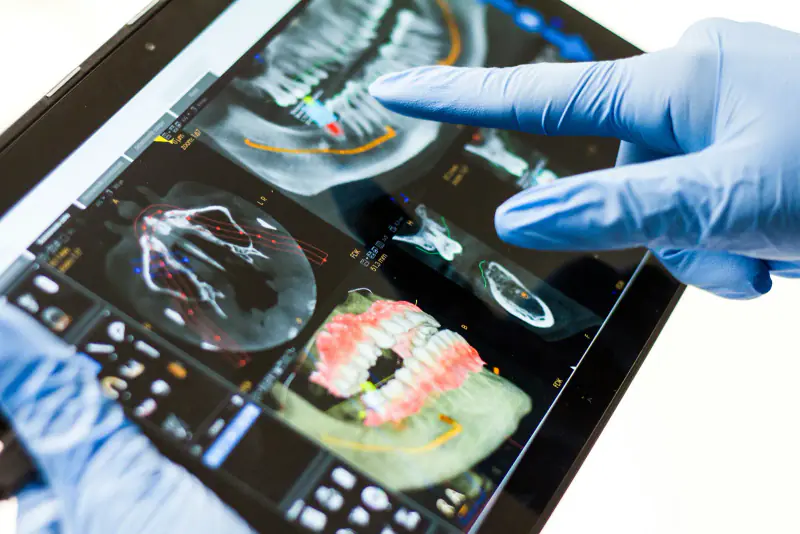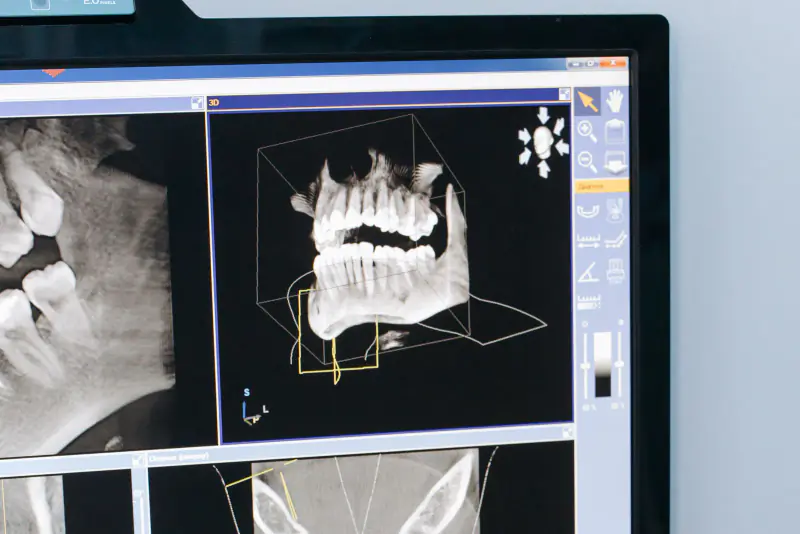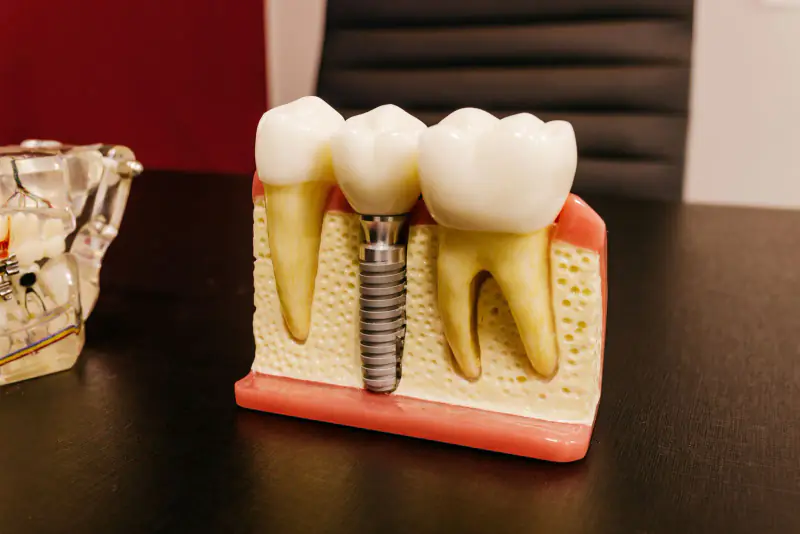
Sinus augmentation, or sinus lift, is a bone augmentation procedure performed beneath the maxillary sinus when the height of available bone in the posterior maxilla is insufficient to place an implant. In practical terms, it involves gently lifting the membrane that lines the floor of the sinus, then filling the space created with a grafting material, in order to rebuild an adequate thickness of bone. The Foundation for Oral Rehabilitation places the usual threshold for treatment below 4 to 6 mm of residual bone height. Reported implant outcomes after this procedure are high, but it carries a complication of its own — perforation of the membrane — and contraindications that must be respected.
As a dental surgeon in Kénitra, I often see people who lost one or more upper molars a long time ago and who have been told that “the sinus is too low” for an implant. This article explains why this situation arises, how it is corrected, which techniques exist, and above all in which cases the procedure is not indicated. The aim is to give clear reference points, without promising anything that is not supported by evidence.
Why is there a lack of bone in the posterior maxilla?
The posterior maxilla — the area that carries the upper premolars and molars — is a particular region. Above the roots sits the maxillary sinus, an air-filled cavity lined by a thin mucous membrane known as the Schneiderian membrane.
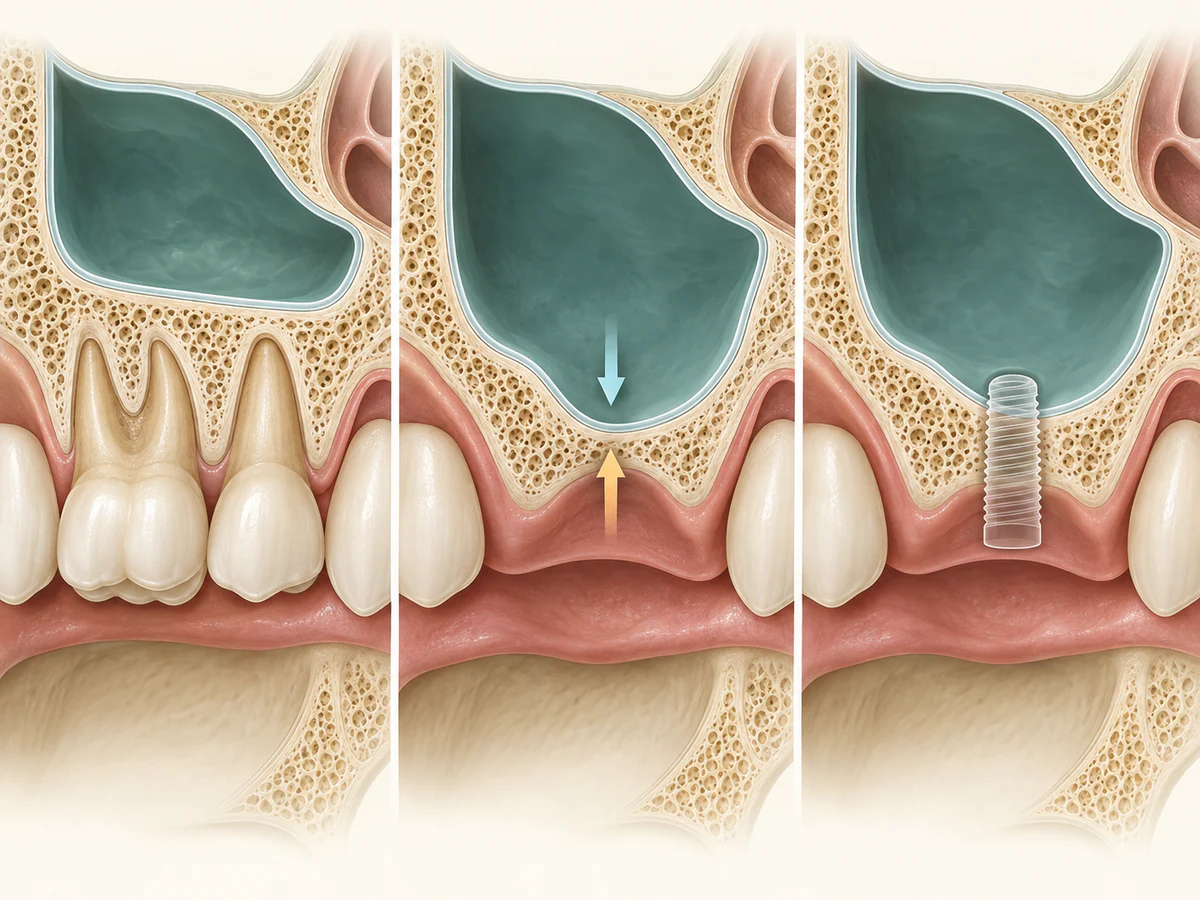
Two phenomena combine after a tooth is lost in this area:
- Resorption of the crestal bone, which loses both height and width once the tooth is gone.
- Pneumatization of the sinus, meaning the gradual downward expansion of the sinus cavity, which further reduces the thickness of bone separating the mouth from the sinus.
The result is a residual bone height that is sometimes too small to anchor an implant. The CHU de Lyon describes this situation precisely: when the maxillary molars are lost, bone height is sometimes insufficient to place an implant, and the sinus graft then consists of lifting the sinus lining and filling its floor in order to increase bone volume.
Sinus elevation: another name for the same procedure
Sinus elevation is another name for the sinus lift. The word describes the key step: the membrane lining the floor of the sinus is gently elevated, that is, lifted upward, and graft material is placed in the space created beneath it. In medical texts you may also read sinus floor elevation, sinus augmentation, subantral augmentation or sinus graft: all of them refer to this same idea.
The name says nothing about the route used. A sinus elevation can be carried out through a small window on the side of the jaw (the lateral approach) or through the implant site itself (the crestal approach), both described below. Which one suits you depends mainly on how much bone remains, as measured on 3D imaging. Whatever the name on your treatment plan, the aim stays the same: to rebuild enough bone height beneath the sinus to hold an implant.
When is a sinus lift indicated?
The indication rests above all on measuring the height of available bone, assessed on three-dimensional imaging. The Foundation for Oral Rehabilitation regards a residual bone height of less than 4 to 6 mm as an indication for subantral augmentation. This figure is not an absolute rule: it is weighed alongside bone quality, the number of teeth to be replaced and the prosthetic plan.
A sinus lift therefore addresses a localized vertical deficit beneath the sinus. It should not be confused with other situations involving a lack of bone, which call for different solutions. If the deficit mainly concerns the width of the ridge, or other areas, the approach differs: these cases are covered in our article on dental implants when there is not enough bone.
Is it a major operation, and what is the risk to the sinus?
The sinus is an air-filled cavity above the roots of the upper back teeth. Its floor is lined with a thin membrane, like a film. A sinus lift does not fill the sinus with bone: the membrane is gently detached, lifted by a few millimetres, and the graft material is placed underneath. The air of the sinus remains above it.
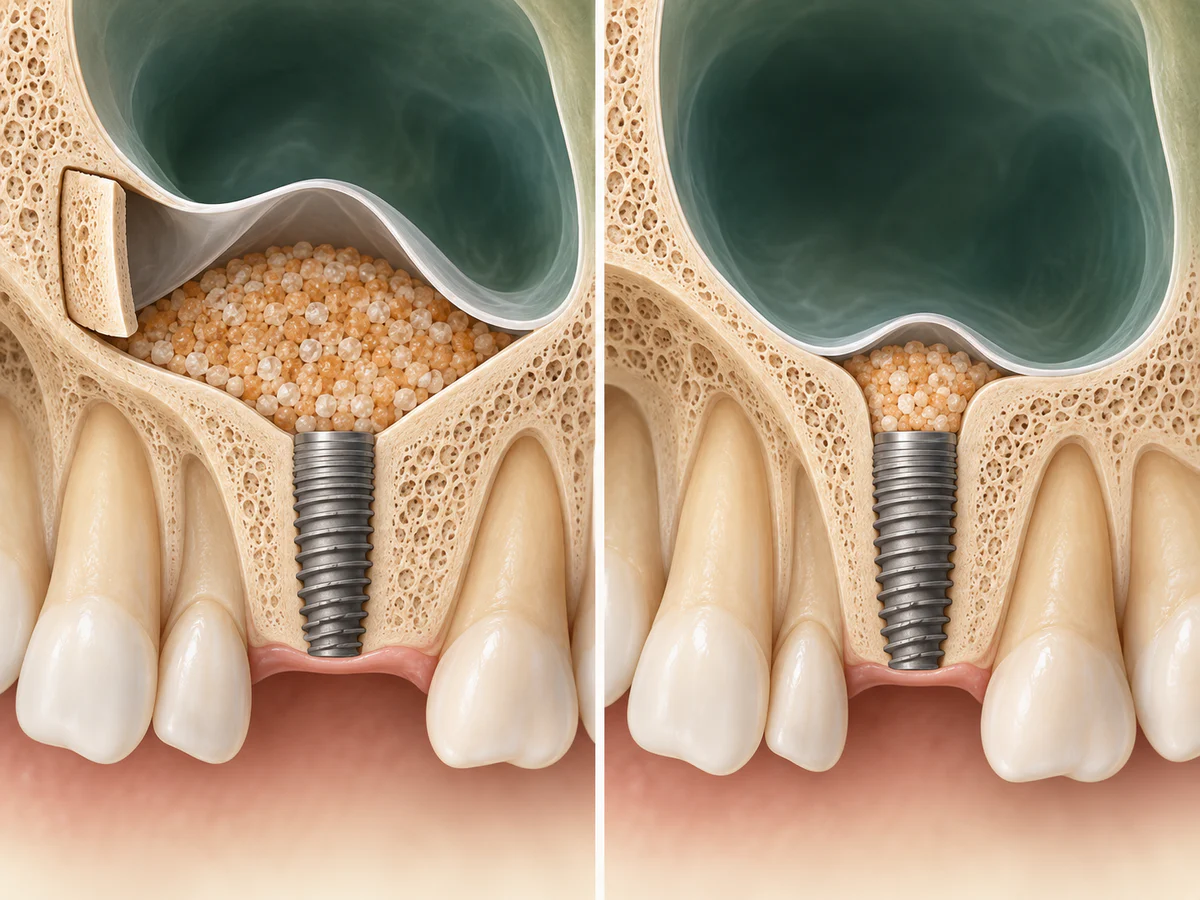
How demanding the procedure is depends on the approach. The crestal approach, through the future implant site, is the lightest. The lateral approach, which opens a small window on the side, involves more. According to patient information from Cambridge University Hospitals (NHS), most sinus lifts are done with the patient awake, under local anaesthesia, and take 45 minutes to two hours depending on complexity. What you feel during the session is described in how a graft goes on the day of the procedure.
The risk specific to the sinus is a tear in the membrane. It is the most frequent complication, and it is often small: it is repaired during the same session, with a protective membrane placed over it or a few stitches. If it is too large, the procedure can be stopped, the area left to heal, and the lift resumed four to six months later. Sinusitis can also occur after the procedure. It is more likely after a tear, with smoking or with known sinus problems: that is why an ongoing sinusitis is treated first.
What sinus lift techniques are available?
There are two main surgical approaches, and the choice between them depends chiefly on the residual bone height and on the gain being sought.
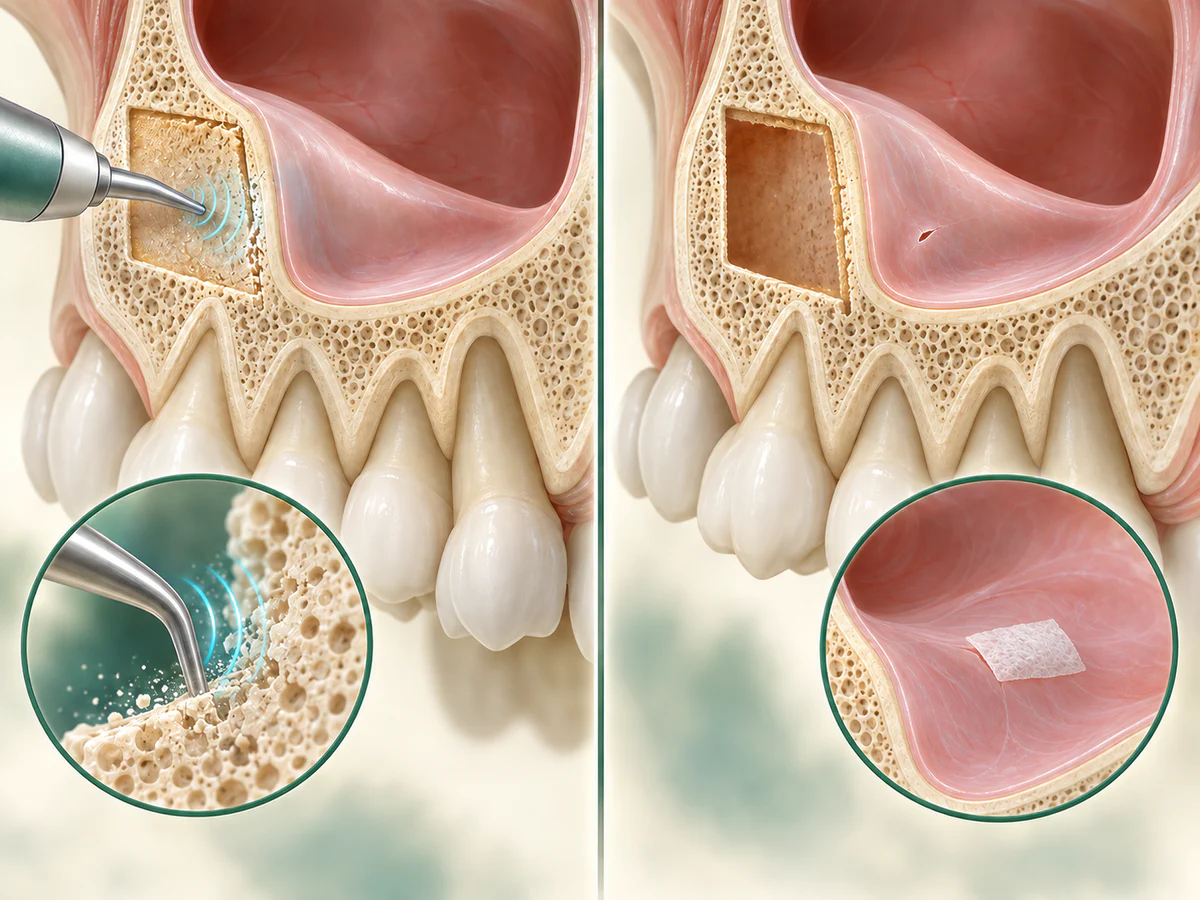
The lateral approach, or lateral window technique
The lateral approach involves opening a small window in the outer bony wall of the sinus, above the gum, in order to reach the membrane, lift it and slide the graft underneath. It is the technique of choice when the bone deficit is substantial and a significant vertical gain is required.
The Foundation for Oral Rehabilitation notes that a markedly greater gain in bone height can be obtained through this lateral approach than through the crestal approach. The Journal of the Canadian Dental Association specifies that, when residual bone height is less than 6 mm, the lateral window augmentation technique is strongly recommended and predictably allows more than 4 mm of vertical bone growth. It is therefore the preferred route when height is very limited and a substantial vertical gain is the goal.
The crestal approach, or Summers osteotome technique
The crestal approach reaches the sinus from the top of the ridge, through the future implant site, without opening a lateral window. The membrane is lifted by a few millimetres using purpose-made instruments, the osteotomes. This is a less invasive approach, reserved for situations where a reasonable bone height is already present and the required lift is modest.
The Journal of the Canadian Dental Association places the threshold for the lateral window below 6 mm of residual height, which amounts to reserving the crestal approach for situations where more bone remains. In practice, we follow a simple logic rather than a rigid figure: the crestal approach when enough bone remains and the lift is small, the lateral approach for more pronounced deficits and larger gains. Editorial sources such as chirurgie-buccale.org describe the same orientation.
Comparison of the two approaches
| Criterion | Lateral approach (window) | Crestal approach (osteotomes) |
|---|---|---|
| Typical situation | Substantial bone deficit | Residual bone still adequate |
| Vertical gain sought | Higher | Modest |
| Invasiveness | Greater | Lower |
| Visibility of the membrane | Direct, through the window | Indirect |
| Source | FOR.org, JCDA | FOR.org, JCDA |
What is the role of piezosurgery?
Piezosurgery uses ultrasound to cut bone selectively. Its theoretical appeal is clear: it acts on hard tissue — bone — while sparing soft tissue such as the thin Schneiderian membrane to a greater degree. That makes it a suitable tool for opening the lateral window and for detaching the membrane, two stages where the risk of perforation is real.
The source chirurgie-buccale.org describes piezosurgery as having profoundly transformed the lateral approach, allowing a controlled, minimally traumatic procedure with simplified postoperative recovery. The benefit in terms of perforation risk is, however, debated, and it should be presented with nuance.
What the literature says, and its limits
The data do not all point in the same direction:
- A meta-analysis published in the International Journal of Implant Dentistry in 2018, covering 69 studies, reports a membrane perforation rate of 24% with conventional rotating instruments compared with 8% with piezoelectric devices, a statistically significant difference. The authors conclude that perforations can be significantly reduced with these devices.
- Conversely, a clinical trial by Delilbasi published in 2013 in Implant Dentistry (PMID 24168901) found no significant difference in perforation rate between piezosurgery and rotating instruments, while the rotating instrument did cause significantly more postoperative pain and swelling.
Piezosurgery is therefore a technique designed to protect the membrane, associated in pooled data with lower perforation rates, but it does not eliminate the risk and offers no guarantee. It is a useful tool, not an insurance policy. At the practice, piezosurgery is part of the surgical set-up, alongside the Cone Beam Durr Dental for three-dimensional assessment and the Choukroun PRF technique, which uses a preparation derived from the patient’s own blood to support healing.
How does the procedure unfold, step by step?
The sequence varies with the chosen approach, but the general logic remains the same.
- Assessment and imaging. A Cone Beam scan measures bone height and identifies the position of the sinus, any septa and the condition of the membrane.
- Local anaesthesia and access. The gum is reflected to expose the bone, then access to the sinus is created, either through a lateral window or through the crest.
- Detaching the membrane. The Schneiderian membrane is carefully lifted to create the space intended for the graft.
- Placing the graft. The grafting material is introduced beneath the raised membrane.
- Closure and healing. The gum is sutured, then the grafted bone matures over several months.
Implant placement: one stage or two?
The implant can sometimes be placed at the same time as the graft, in a single surgical stage, or else at a second stage. The Foundation for Oral Rehabilitation indicates that simultaneous placement presupposes enough residual bone for primary implant stability, on the order of at least 4 mm, and describes a healing period of 4 to 8 months after grafting. The CHU de Lyon specifies that implants may be positioned at the same time as the graft or at a second stage, roughly six months later. The exact time the graft takes to mature depends on the type of material used and on the patient.
A sinus lift is therefore one part of the overall implant journey. To understand all the stages of an implant, from planning to placement, you can read our article on dental implants in Kénitra. The principle of grafting beforehand, its timelines and its healing are also detailed in the article on bone grafting before an implant.
After a sinus lift: blowing your nose, sneezing, travelling, and the signs to report
The lifted membrane and the graft it covers need calm while they heal. The sinus-specific instructions all come from the same idea: avoiding pressure surges in the nose and the sinus. If your written instructions differ from these guidelines, follow your instructions.
- Do not blow your nose. Blowing your nose pushes air under pressure towards the membrane that has just been lifted. The duration varies between sources, from at least five days (Journal of the Canadian Dental Association) to two weeks (Cambridge University Hospitals). If your nose runs, simply wipe it.
- If you sneeze, do not hold the sneeze in and do not pinch your nose to stop it: the pressure would then go through the sinus.
- A little blood from the nose may appear in the first days: bleeding from the operated area can drain that way. The bleeding to report is listed below.
- Sport should be avoided for 7 to 10 days, as after a bone graft, according to Lyon University Hospital (CHU de Lyon).
- Flying, diving and wind instruments should also be avoided for a while. For a wound involving the sinus, the NHS (Huddersfield Royal Infirmary) advises against flying for at least two weeks, as well as diving, snorkelling, playing wind instruments and blowing up balloons. If a trip is planned in the following weeks, mention it before the date of the procedure is set.
Signs that should prompt a call to the practice
- Bleeding that has not stopped after two days, or bright red, continuous bleeding.
- Swelling or pain that increases after the second day, pain that does not ease, fever or feeling unwell.
- Small granules coming out of the nose, or the feeling that the material has moved after a sneeze or after blowing your nose.
- Thick discharge from the nose, like pus, a blocked nose on the operated side, or pain or pressure in the cheek on that side: these are signs of sinusitis.
- Liquids coming up into the nose when you drink, or air passing between the mouth and the nose: this can indicate a communication between the mouth and the sinus, which is rare but needs to be examined.
What are the outcomes and the limits?
Reported implant outcomes after sinus augmentation are high, but we need to be precise about what the studies actually say.
The Journal of the Canadian Dental Association, citing a consensus based on 85 studies, reports survival rates for implants placed in grafted bone ranging from 88.6% to 100%, with a mean of 97.7% and a median of 98.8%. This is a range observed across many studies, not a guaranteed result. No procedure can be presented as assured of 100% success.
Membrane perforation, the most frequent complication
The most frequent complication of a sinus lift is perforation of the Schneiderian membrane, as both the Foundation for Oral Rehabilitation and the Journal of the Canadian Dental Association point out. Such a perforation is not always serious: the JCDA describes a graded management approach, with small perforations able to be covered by a resorbable collagen membrane, larger ones by fixed membranes, and very extensive perforations potentially leading to the procedure being halted and healing awaited before resuming. It is precisely to limit this risk that the choice of technique and instruments, including piezosurgery, matters.
Contraindications to be aware of
Certain situations contraindicate or postpone a sinus lift:
- Acute or chronic sinusitis. The Journal of the Canadian Dental Association recommends referring these patients for medical evaluation and treatment, often with an ENT specialist, before any augmentation. The source chirurgie-buccale.org also mentions thickening of the membrane, which may reflect subclinical sinusitis requiring prior treatment. This is a relative contraindication, to be resolved before the procedure, not a permanent obstacle.
- An infectious focus of dental origin, which must be treated beforehand.
- General health factors that bear on any surgery and any healing process, to be assessed case by case.
Is there an alternative to a sinus lift?
Yes, in certain situations, and mentioning it is a matter of honest information. The EAO consensus conference of 2015, published in Clinical Oral Implants Research, compared two strategies in the atrophic posterior maxilla: long implants combined with a sinus lift, or short implants without augmentation.
The reported survival rates were very close, around 99.5% for long implants in grafted sinuses and 99.0% for short implants. More importantly, biological complications — mainly membrane perforation — were about three times more frequent with the augmentation strategy. The authors conclude that short implants may represent the preferable therapeutic alternative in these situations, given the lower morbidity and reduced surgical time.
This does not mean the sinus lift is obsolete. It remains indicated in many cases, particularly when a short implant is not suited to the situation. The choice between augmentation with a long implant and a short implant is discussed according to bone volume, occlusion and general health. The decision between different replacement options more broadly is covered in our article on implant, bridge or denture: how to choose.
At the practice, this procedure is part of the pre-implant surgery described on the Bone graft page; if you were told ‘not enough bone’, that statement can be measured.
In summary
A sinus lift is a bone augmentation procedure beneath the maxillary sinus, indicated when the residual bone height in the upper posterior area is insufficient for an implant — in practice often below 4 to 6 mm according to the Foundation for Oral Rehabilitation. Two approaches exist: the lateral approach for substantial deficits, the crestal approach for more modest lifts. Piezosurgery is designed to protect the thin Schneiderian membrane and is associated in pooled data with fewer perforations, without however eliminating this risk, which remains the most frequent complication.
Reported implant outcomes are high, with a survival range of 88.6% to 100% according to the Journal of the Canadian Dental Association, but active or chronic sinusitis calls for prior medical evaluation, and short implants constitute a documented alternative according to the EAO. The right approach is to establish the available bone volume objectively through three-dimensional imaging, then to choose the solution best suited to the situation, weighing benefits, limits and contraindications.
Frequently asked questions
Is a sinus lift painful?
How much bone height is needed to avoid a sinus lift?
Can the implant be placed at the same time as the graft?
Does sinusitis rule out a sinus lift?
Is there an alternative to a sinus lift?
Sources
Medical references consulted for this article.
- 1Foundation for Oral Rehabilitation (FOR.org), Sinus lifting treatment guideline
- 2Journal of the Canadian Dental Association, Lateral Window Sinus Elevation Technique: Managing Challenges and Complications (article d101)
- 3International Journal of Implant Dentistry, 2018 (via PMC), Membrane perforation rate: rotating instruments versus piezoelectric device, meta-analysis
- 4EAO 4th Consensus Conference 2015, Clinical Oral Implants Research (via PubMed), Short implants versus sinus lifting with longer implants
- 5Hospices Civils de Lyon (CHU Lyon), Greffe osseuse et greffe de sinus
- 6chirurgie-buccale.org, Le sinus lift : déroulement et objectifs de l'intervention
- 7Le Fil Dentaire, Élévation sinusienne : piézochirurgie et instrument rotatif
- 8Delilbasi C, Gurler G, Implant Dentistry 2013 (PMID 24168901), Comparison of piezosurgery and conventional rotative instruments in direct sinus lifting
- 9Cambridge University Hospitals NHS Foundation Trust, Sinus lift procedures (information patient, 2024)
- 10Fischer, Riley, Kacker, Sinonasal Complications Following the Sinus Lift Procedure, Ochsner Journal (2023)
- 11Alshamrani et coll., Maxillary Sinus Lift Procedures: techniques, presurgical evaluation and complications, Cureus (2023)
- 12Huddersfield Royal Infirmary, Maxillofacial Unit, Oro-Antral Communication (OAC) Advice Leaflet
Contents
Share