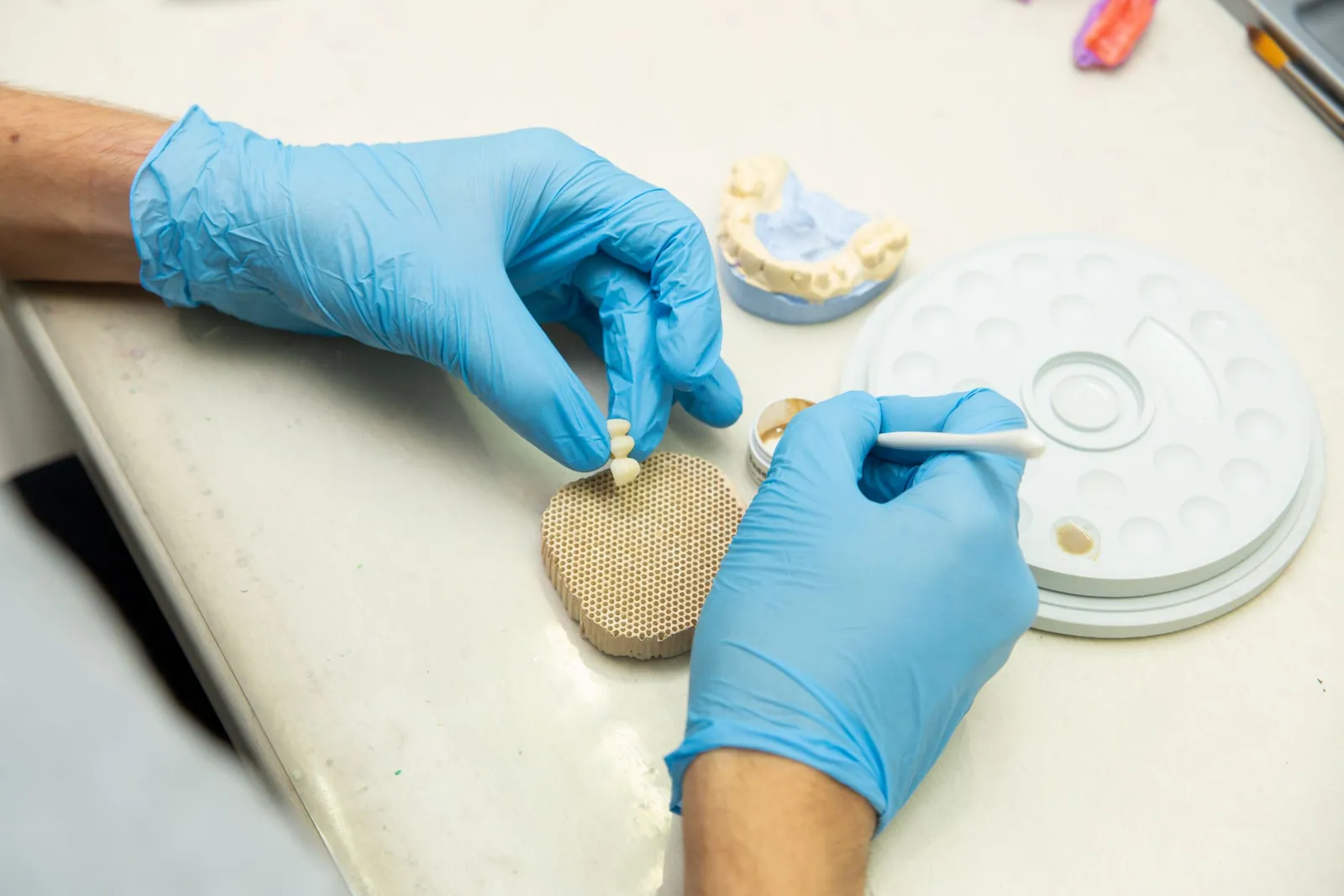
In short: No, zirconia is not a metal. It is zirconium dioxide: the metal zirconium chemically bound to oxygen, which turns it into a white ceramic that does not conduct electricity like a metal and stays chemically stable in the mouth. That is why a zirconia crown is described as metal-free.
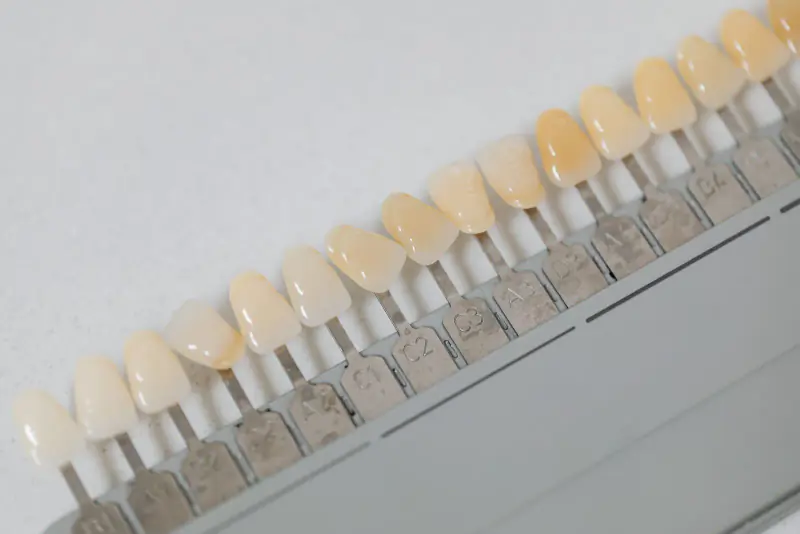
Zirconia is a technical ceramic based on zirconium oxide, strong enough to replace the metal that once formed the framework of a crown. That is the central appeal of the “metal-free crown”: achieving a solid restoration while doing away with the thin grey line that can appear at the gum margin with metal-ceramic crowns. Zirconia comes close to the color of a natural tooth, and the recent translucent versions have clearly narrowed the esthetic gap that once separated it from other ceramics.
As a dental surgeon in Kénitra, I offer here an educational and honest overview of zirconia: what it is, why it is described as “metal-free”, how it compares with metal-ceramic and with lithium disilicate (E-max), what the scientific literature says about its longevity and biocompatibility — and, just as important, what it does not provide. The figures quoted are survival rates drawn from studies: probabilities, never a guarantee for any one tooth.
What exactly is zirconia?
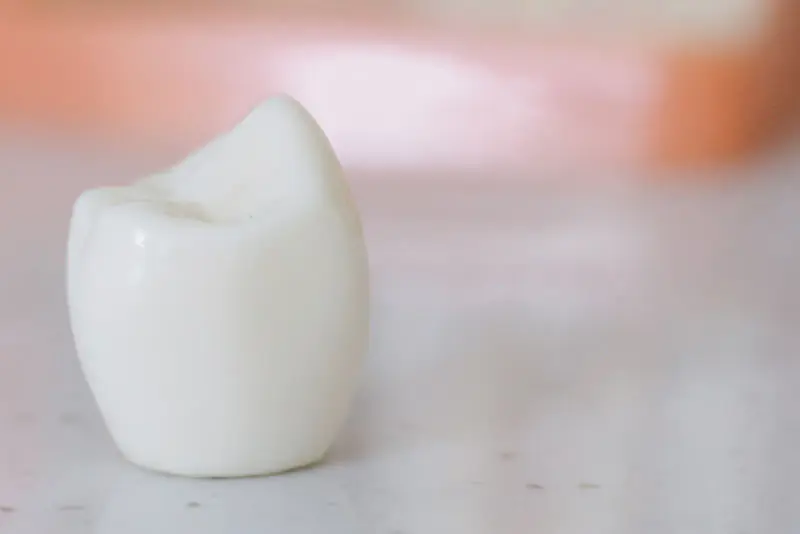
Zirconia (zirconium dioxide, ZrO₂) is a crystalline ceramic that has been used in dentistry since the 1990s. Unlike glass ceramics, it is not a brittle “glassy” material: it is a dense, polycrystalline ceramic whose microstructure gives it remarkable mechanical strength. It is this strength that has made it possible to use it where a metal framework was previously required.
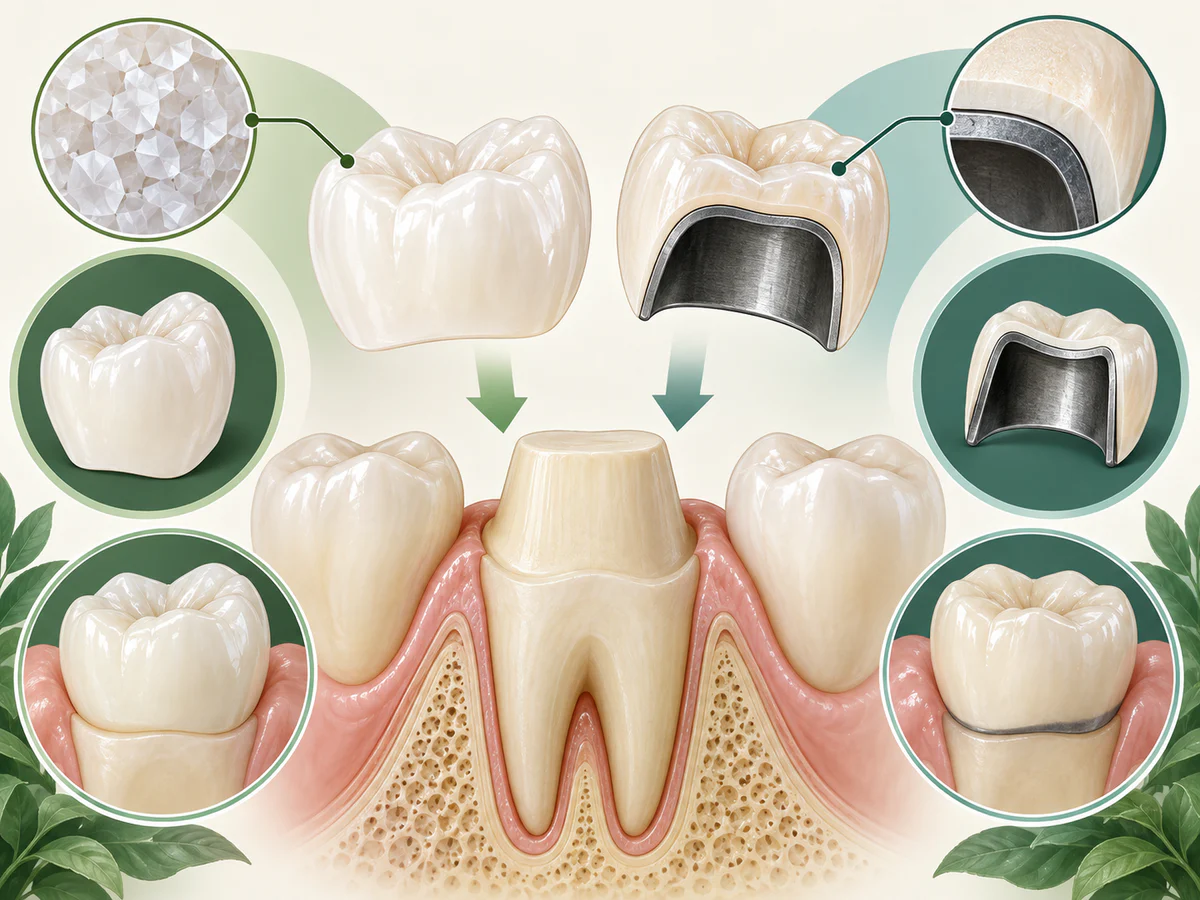
There are in fact several kinds of zirconia, and this point is often overlooked. Depending on their yttrium content (the oxide that stabilizes the structure), we distinguish in particular 3Y-TZP (very strong but more opaque), 4Y-PSZ and 5Y-PSZ (more translucent but somewhat less strong). As the review by Kui et al. (Biomedicines, 2023) describes, there is a fundamental trade-off: the more translucent a zirconia is, the less strong it is, because increasing the yttrium content raises the proportion of the cubic crystalline phase, which favors the optical result but works against toughness. So it is not a matter of “zirconia” in general, but of the right type of zirconia for the right tooth.
Monolithic or veneered with ceramic?
A zirconia crown can be designed in two ways. The “monolithic” form is milled from a single block of zirconia, with no cosmetic layer: it removes the risk of chipping of a surface ceramic. The “veneered” form uses a zirconia framework covered with an esthetic ceramic, as metal used to be — at the cost of a risk of chipping of that layer. The current trend, particularly in heavily loaded areas, is toward monolithic designs.
Is zirconia a metal?
No. The confusion comes from the similar names. Zirconium is a metal, extracted mainly from a sand mineral called zircon, mined in particular in Australia and South Africa, and valued in industry for its resistance to corrosion at high temperature, for example in nuclear reactors. Zirconia is something else: zirconium dioxide, an oxide in which the zirconium is chemically bound to oxygen. That bond makes it a ceramic. It is white rather than metallic, does not conduct electricity the way a metal does, and does not corrode or tarnish in the mouth. In the same way, table salt contains sodium, which is a metal, yet salt itself is not a metal.
Like the metal, the zirconia used in dentistry is obtained mainly from the mineral zircon, through chemical processing and purification. For dental use, zirconia powder is stabilized with yttrium oxide, shaped, then sintered at a high temperature, which gives it its density and strength. A zirconia crown therefore contains no metal framework: this is what “metal-free” refers to. The same logic applies to zirconia implants, which are ceramic rather than metal implants, a subject covered in metal-free implants and prosthetics.
Why do we speak of a “metal-free” crown?
The metal-ceramic crown, long the reference standard, combines a metal framework covered with a cosmetic ceramic. It is robust and benefits from considerable clinical experience, but it has two esthetic limitations. First, metal is opaque: it blocks light, which sometimes gives a somewhat “flat” appearance compared with the translucency of a real tooth. Second, and above all, when the gum recedes over time, a thin grey metal line can appear at the neck of the tooth.
Zirconia does away with that metal framework: there is no longer any metal to show through, hence no grey line, and light passes through the material more readily. This is the main esthetic argument for the all-ceramic crown, and it is particularly useful in the visible part of the smile. For very thin front teeth, the alternative to a crown is sometimes still a veneer, which we cover in our article on ceramic dental veneers. Zirconia is not, incidentally, the only metal-free ceramic: lithium disilicate is one too, and the choice between the two is the subject of the next section.
Metal-free ceramics: what the term covers
“Metal-free ceramics” is the umbrella term for dental restorations made entirely of ceramic, with no metal framework inside. Crowns, bridges, inlays and veneers can all be made this way. Within this family, there are two broad groups, and the difference matters for your tooth:
- Glass ceramics, such as lithium disilicate (E-max) or feldspathic ceramic, let light through much like enamel. They are chosen mainly where appearance comes first, and they are usually bonded to the tooth with an adhesive technique, which helps them hold.
- Polycrystalline ceramics, mainly zirconia, are denser and stronger. They are chosen where chewing forces are high, such as on molars or for bridges, and they can often be fixed with a more conventional cement.
In both groups, the absence of metal removes the grey line at the gum. Which one suits a given tooth is decided after an examination, according to its position, the forces it bears and how much healthy tooth remains.
Zirconia, metal-ceramic or disilicate: the comparison
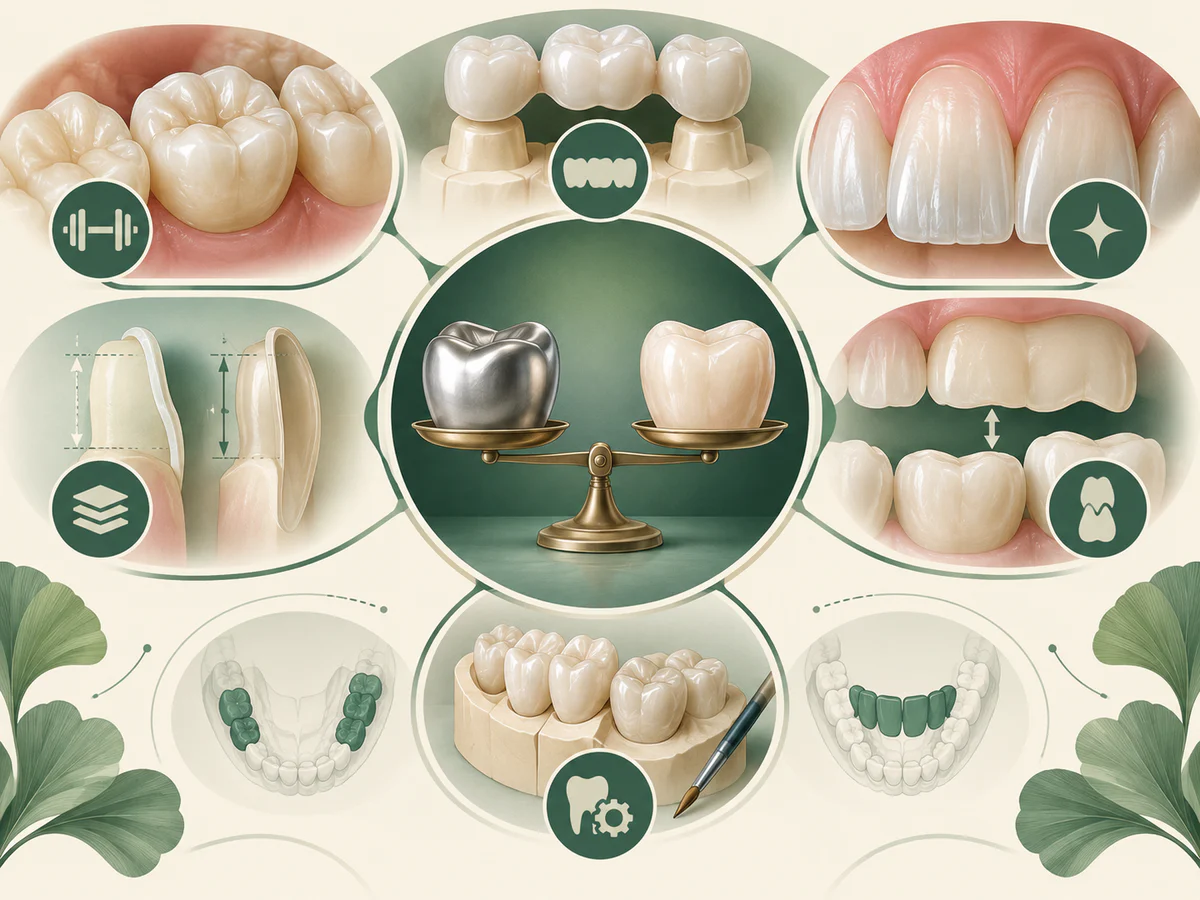
There is no material that is “better” in absolute terms. Each family reflects a different compromise between esthetics, strength and indication. Lithium disilicate (marketed in particular under the name E-max) is a reinforced glass ceramic, very esthetic, ideal on anterior teeth and premolars. Zirconia, which is stronger, is often preferred on molars and in patients who clench or grind their teeth. Metal-ceramic retains its place thanks to its proven robustness and long track record.
| Material | Metal | Esthetics | Strength | Typical indication | Main limitation |
|---|---|---|---|---|---|
| Metal-ceramic | Yes | Adequate | High | Posterior, bridge abutments | Grey line at the neck, chipping possible |
| Lithium disilicate (E-max) | No | Very good | Good | Anterior, premolar | Less suited to long bridges |
| Monolithic zirconia | No | Good (translucent: very good) | Very high | Molar, bridge, bruxism | Esthetics sometimes less “lifelike” |
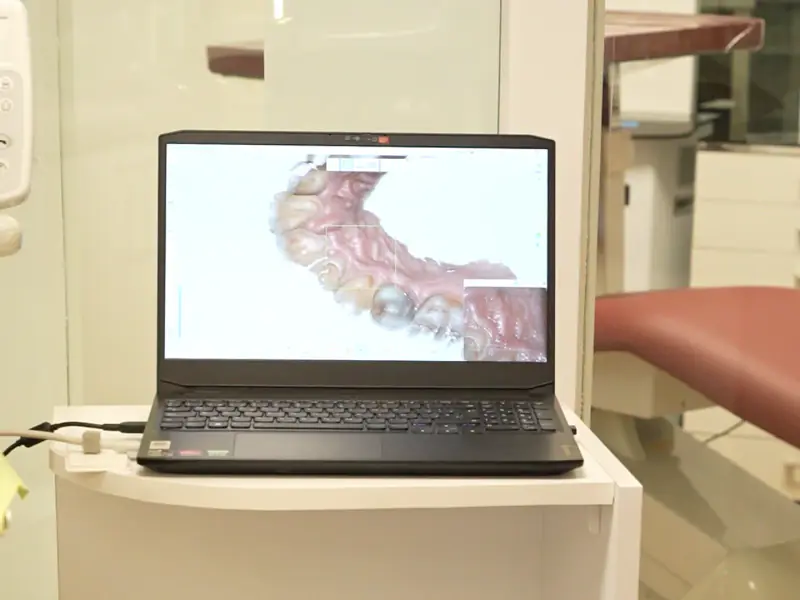
This comparison is deliberately schematic: the right choice depends on the position of the tooth, the chewing forces involved, your habits and your esthetic expectations, and it is decided together with your practitioner. The broader question of choosing a crown and its materials is covered in detail in our article on the ceramic or zirconia dental crown. Computer-aided design (CAD/CAM) also makes it possible to mill these crowns precisely from a digital impression.
What does the literature say about strength and longevity?
This is the most useful question, and the one where caution is needed: the rates below are averages from studies, not an individual promise.
For single crowns, the systematic review and meta-analysis by Pjetursson et al. (International Journal of Prosthodontics, 2026), covering several thousand crowns, reports five-year survival rates that are very close across materials: about 97.1% for metal-ceramic, 98.5% for monolithic lithium disilicate, 96.8% for densely sintered monolithic zirconia and 97.3% for veneered zirconia. In other words, at five years, zirconia crowns achieve survival comparable to that of the metal-ceramic reference standard.
An earlier review by Pjetursson et al. (Clinical Oral Implants Research, 2018), comparing zirconia and metal-ceramic, confirmed this overall equivalence while highlighting one nuance: more fractures of the material itself on the zirconia side in certain configurations, and a rate of chipping of the cosmetic ceramic of a similar order in both families. It is precisely in order to limit this chipping that monolithic designs have been developed.
Over the longer term, a retrospective cohort study published in the Journal of Prosthetic Dentistry (2025) on posterior crowns estimated ten-year survival at about 86.0% for monolithic zirconia, compared with about 71.0% for veneered zirconia. The difference did not reach the threshold of statistical significance, and the study identified two risk factors for complications: a molar (rather than a premolar) and an upper tooth (rather than a lower one). So this is a favorable probability, modulated by the position of the tooth — not a guarantee of how long it will last.
Does zirconia wear down the opposing tooth?
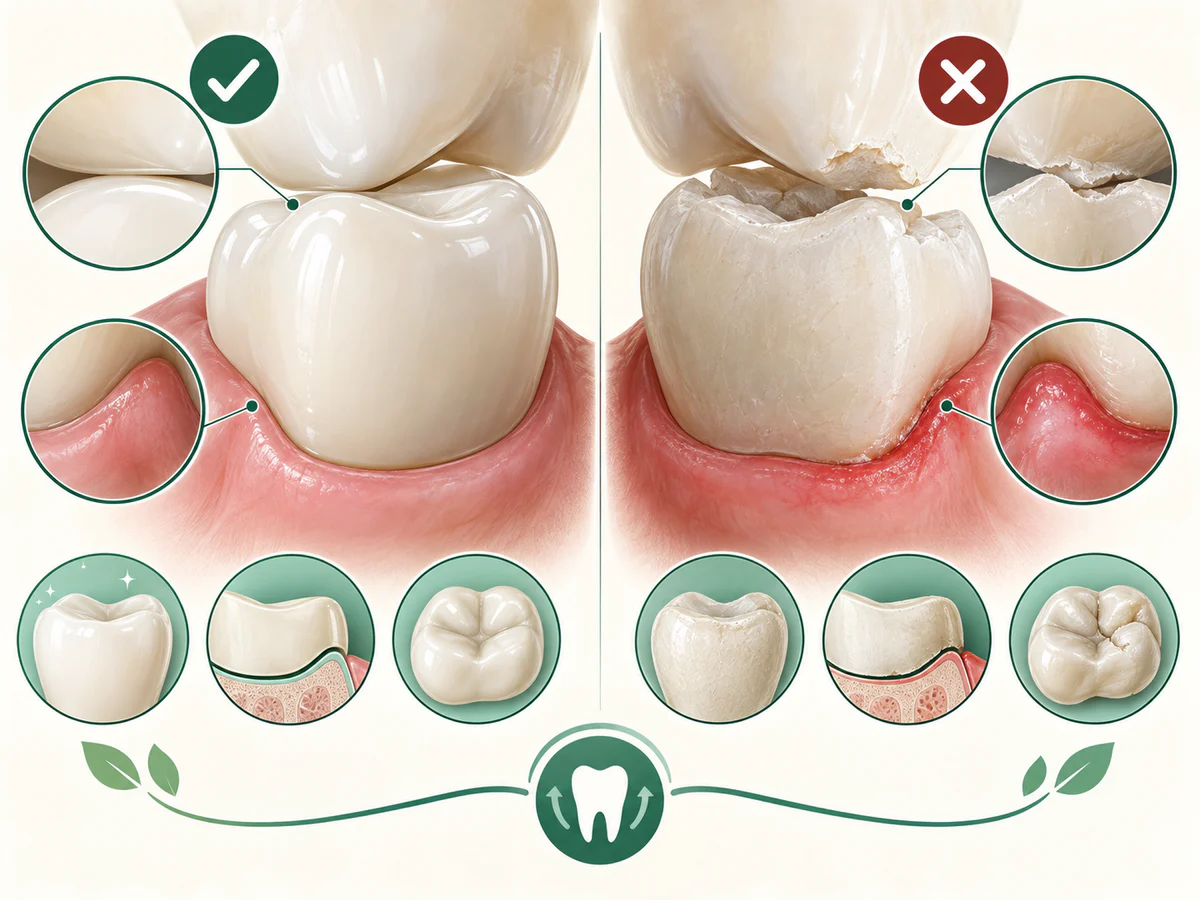
This is a common concern: might such a hard material abrade the opposing tooth? The answer from the literature is reassuring, with one condition. The systematic review by Gou et al. (Journal of Prosthetic Dentistry, 2019) shows that wear of enamel opposing a well-polished monolithic zirconia is comparable to that caused by a natural tooth, and lower than that caused by metal-ceramic. The essential condition is polishing: carefully polished zirconia wears enamel less than glazed zirconia. On this point, then, a well-finished zirconia surface is rather favorable.
Biocompatibility: a genuine advantage, not to be over-interpreted
Zirconia is regarded as a biocompatible and chemically stable material in the oral environment. Literature syntheses on the interaction of zirconia with oral tissues, such as the critical review published in Materials (2021), describe good soft-tissue tolerance, low adhesion of bacterial plaque to its surface and the absence of notable cytotoxic effects. For patients concerned about metal materials in the mouth, the absence of metal is a concrete argument; the question of metal allergies in prosthetics is, moreover, distinct from that of titanium implants, which concerns the artificial root and not the crown.
That said, an excessive reading should be avoided. “Biocompatible” does not mean “self-protecting”: zirconia prevents neither decay of the underlying tooth nor gum disease around it. The health of the periodontium depends on hygiene and maintenance, not on the material of the crown.
What zirconia does not provide
Honesty requires naming the limitations. Zirconia is not a miracle solution, and several points deserve to be clear.
First, it does not spare you from having the tooth prepared: placing a crown, whatever the material, means reducing the tooth to make room for the prosthesis, an irreversible step. Second, it does not protect against decay or against periodontal disease: the junction between the crown and the tooth, and the underlying root, remain vulnerable if hygiene is insufficient. Rigorous daily dental hygiene and regular check-ups remain essential.
Beyond that, the esthetics of zirconia, even translucent zirconia, can remain slightly less “lifelike” than that of lithium disilicate or of the natural tooth in the most demanding anterior cases, where the way light is rendered counts for a great deal. The more translucent a zirconia is, the more fragile it is: maximum esthetics and maximum strength cannot therefore be combined indefinitely in the same block. Finally, the clinical track record of the most recent (highly translucent) zirconias remains shorter than that of metal-ceramic: we are extrapolating from medium-term data, which calls for caution about promises of very long service life. And as with any crown, its longevity depends as much on the tooth that carries it — its vitality, the remaining tissue, bruxism — as on the material itself.
In summary
Zirconia is a very strong metal-free ceramic that makes it possible to produce crowns and bridges that are solid, biocompatible and free of a metal line at the neck. Depending on the position of the tooth, the choice is between a zirconia that is more on the strong side or more on the translucent side, bearing in mind that the two qualities are partly at odds. At five years, zirconia crowns show survival rates comparable to metal-ceramic and lithium disilicate, around 97 to 98% according to Pjetursson et al. (2026), and monolithic zirconia retains survival of about 86% at ten years on molars in recent cohort data. Well polished, it causes little wear to the opposing tooth. But it replaces neither brushing nor follow-up: these are favorable probabilities, not guarantees. A clinical assessment makes it possible to determine whether zirconia is, in your case, the best compromise between esthetics and strength.
Frequently asked questions
What is a "metal-free" zirconia crown?
Zirconia or E-max ceramic: which should you choose?
Is a zirconia crown really as esthetic as a natural tooth?
Does zirconia damage the opposing tooth?
Is zirconia biocompatible and free of any risk of metal allergy?
How long does a zirconia crown last?
Which dental ceramics are metal-free?
Is “zirconio” the same thing as dental zirconia?
Sources
Medical references consulted for this article.
- 1Pjetursson BE et al., Survival, failure and complication rates of metal-ceramic, veneered and monolithic all-ceramic tooth-supported single crowns (revue systématique et méta-analyse), Int J Prosthodont, 2026
- 2Pjetursson BE, Valente NA, Strasding M, Zwahlen M, Liu S, Sailer I, A systematic review of the survival and complication rates of zirconia-ceramic and metal-ceramic single crowns, Clinical Oral Implants Research, 2018
- 3Kui A et al., Translucent Zirconia in Fixed Prosthodontics—An Integrative Overview, Biomedicines, 2023
- 4Gou M, Chen H, Kang J, Wang H, Antagonist enamel wear of tooth-supported monolithic zirconia posterior crowns in vivo: A systematic review, Journal of Prosthetic Dentistry, 2019
- 5Long-term clinical outcomes of posterior monolithic and porcelain-fused zirconia crowns (étude de cohorte rétrospective), Journal of Prosthetic Dentistry, 2025
- 6Oral Tissue Interactions and Cellular Response to Zirconia Implant-Prosthetic Components: A Critical Review, Materials (PMC), 2021
Contents
Share