Periodontics in Kénitra
Periodontics treats the tissues that support your teeth: the gums and the bone. Bleeding gums, bad breath, receding gums or teeth that feel loose are all signs of periodontal disease. At Dr Fatima Azelmat's practice in Kénitra, the aim is to stop the disease, stabilise the tissues and keep your teeth for as long as possible.
The assessment does not commit you to any treatment. It helps you understand first, then decide.
Periodontics in Kénitra
In Kénitra, treatment of gum disease at Dr Fatima Azelmat’s practice is quoted on an individual basis: the amount depends on the stage of the disease and how many areas need treating. The protocol always follows the same order — periodontal assessment, one or more debridement sessions, review, then regular maintenance. A scale-and-polish alone, where that is enough, is 400 MAD; the assessment covers consultation (150 MAD) and a panoramic radiograph (200 MAD).
What you need to know
What is periodontics?
Periodontics is the field that prevents, diagnoses and treats diseases of the periodontium — all the tissues that hold a tooth in place: gums, bone and ligament. These conditions, gingivitis and periodontitis, are very common and often silent in their early stages. Left untreated, they lead to receding gums and eventually tooth loss.
Recognising gum disease
Certain signs should prompt you to come in for a consultation:
- gums that bleed when you brush;
- gums that are red, swollen or pulling back (gum recession);
- persistent bad breath;
- teeth that look longer, feel sensitive or loose, or that are shifting position.
The difference between gingivitis (reversible) and periodontitis (where the bone is affected) is explained in our article: periodontitis or gingivitis.
How treatment unfolds
- Periodontal assessment. Probing of the gums, X-rays and evaluation of any bone loss, in order to reach a precise diagnosis.
- Non-surgical treatment. Scaling and root planing to remove tartar and biofilm below the gumline, along with hygiene advice tailored to you.
- Reassessment. A few weeks later, we measure how the tissues have responded.
- Periodontal surgery if needed. In advanced cases, a targeted procedure (debridement, gum graft, regenerative surgery) may be proposed.
- Periodontal maintenance. Regular follow-up visits help keep the tissues stable; they determine how well the treatment holds over time.
Periodontics and implants
Good periodontal health is essential both before and after dental implants are placed. Around an implant, the tissues also need to be monitored in order to prevent peri-implantitis. Implantology and periodontics are practised by the same practitioner, which allows for consistent, joined-up care.
Keeping the tooth or replacing it: the question comes after the measurement
A loose tooth is not necessarily a lost tooth. Probing measures, tooth by tooth, the depth of the pockets, that is, the space between the gum and the root, and the X-ray shows the level of the bone. It is from these measurements that the discussion starts: stabilise and keep the tooth, or replace it when its support no longer allows it. After periodontitis has been treated and stabilised, an implant can be discussed under certain conditions: the conditions for an implant after periodontitis explains them. Dr Azelmat describes this order in Why I look under the gum first. The assessment begins with this measurement; it does not commit you to any treatment. Are you starting from a different situation? The other situations that lead to this page.
The cost of periodontal treatment in Morocco
Periodontal treatment is progressive: its cost depends on how far the disease has advanced and how many sessions are needed. It is set out phase by phase, as a written quote, once the assessment is complete.
| Stage | Indicative fee (MAD) |
|---|---|
| Root planing (per quadrant) | quote provided after assessment |
| Periodontal surgery / graft | quote depending on the indication |
The procedures involved and their fees are presented to you before anything begins. Some routine care may qualify for partial reimbursement, depending on your coverage. See also our indicative fees.
Duration and cost of gum treatment: what makes them vary
From the assessment to maintenance, gum treatment goes through several stages:
- The periodontal assessment, at a first appointment.
- Non-surgical treatment, in one or more sessions: the mouth may be divided into four or six sectors, treated together or one after the other.
- Reassessment, a few weeks after the last session, once the gum has had time to respond; this interval is detailed in the article on reassessment after root planing.
- Further treatment, only for pockets that persist, followed by further healing and a new measurement.
- Periodontal maintenance, at a pace set according to your situation, often every three to six months.
The total duration and cost therefore depend on a few elements: the number of teeth and sectors affected, the depth of the pockets, whether further treatment is needed and how many areas it involves, the maintenance pace, and factors that slow the tissues’ response, such as smoking or poorly controlled diabetes. Replacing a lost tooth, with an implant or a prosthesis, belongs to a separate treatment plan.
A limited budget? Say so at the assessment. The plan is drawn up in phases, and the details of each phase are presented to you before starting. The order follows the logic of care: what controls the inflammation comes first; replacement or aesthetic steps come after stabilisation in any case. What does not split well is a round of non-surgical treatment and its reassessment: stopping them halfway leaves the inflammation in place. Payment arrangements are discussed at the practice; the fees page states that payment facilities may be offered.
What a complete gum examination should help you understand
A complete gum examination leaves you able to answer these questions:
- Which measurements were taken? Pocket depth, bleeding, recession and mobility, recorded tooth by tooth.
- Which images, and what did they show? The level of the bone around the teeth, and where it has dropped.
- How far has the disease gone? The stage and grade, explained in simple words.
- What weighs in your case? Hygiene, smoking, diabetes, jaw forces.
- What happens to each vulnerable tooth? Keeping and monitoring it, or considering replacing it later, and why.
- What comes next? A written plan, in stages, that says what comes first.
To read the numbers of your own exam, see the guide to reading a periodontal exam. If any of these answers remains unclear, ask for it to be explained again; asking for a second opinion is also a normal step.
How the practice works
Dr Azelmat approaches periodontal disease as a whole: understanding the cause, stabilising the tissues, then maintaining the result over time, without overtreatment. The goal is to keep your natural teeth whenever that is possible.
Start with what you notice
A loose tooth and bleeding gums: where the assessment begins.
Frequently asked questions
My gums bleed — is that serious?
Bleeding gums are not normal: they are a sign of inflammation (gingivitis), which is reversible when caught early. If it progresses to periodontitis, the supporting bone becomes affected. It is best to come in for an assessment.
Can a tooth with receding gums be saved?
Often yes, especially if the disease is caught in time. Periodontal treatment aims to halt its progression and stabilise the tooth. The outlook depends on how much bone has been affected, which is evaluated during the assessment.
Is periodontal treatment painful?
Non-surgical treatment (scaling, root planing) is carried out under local anaesthetic if needed and is generally comfortable. Some temporary sensitivity is possible after the sessions.
How many sessions are needed?
That depends on how far the disease has spread. Treatment generally involves an assessment, one or more non-surgical sessions, a reassessment, then regular maintenance care. The plan is set out once the assessment is done.
Do the gums need treating before an implant?
Yes. Active periodontal disease must be brought under control before an implant is placed, and gum health must then be maintained afterwards to avoid peri-implantitis.
Is a loose tooth lost?
Not necessarily. Mobility is measured tooth by tooth, along with the depth of the pockets, the space between the gum and the root, and the level of the bone on the X-ray. It is this measurement that tells whether the tooth can be stabilised and kept.
Why does maintenance continue after treatment?
Periodontitis stabilises but does not go away. Regular follow-up sessions, at a frequency set according to your situation, are used to measure the tissues again and to act early if the inflammation returns.
What does a periodontal assessment measure?
The depth of the pockets around each tooth, bleeding on probing, mobility, gum recession and, on the X-ray, the level of the bone. These measurements are recorded tooth by tooth to track changes over time.
How long does gum treatment take, from the assessment to maintenance?
It depends on the extent of the disease. After the assessment come one or more sessions of non-surgical treatment, then, a few weeks later, a reassessment. If pockets persist, further treatment and a new measurement are added. Maintenance then takes over, at a pace set according to your situation. The timeline becomes clearer after the assessment, then at each reassessment.
My budget is limited: can the treatment be done in stages?
Yes. The plan is drawn up in phases, and the details of each phase are presented to you before starting. What controls the inflammation comes first; a round of non-surgical treatment and its reassessment form a whole that is better left uninterrupted. Payment arrangements are discussed at the practice, and payment facilities may be offered.
Read on the blog
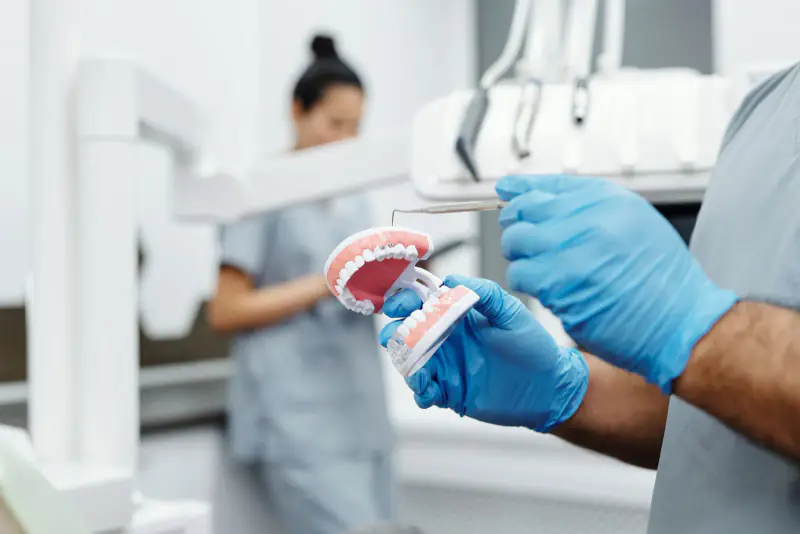
Periodontitis or Gingivitis: Understanding the Difference
Gingivitis is reversible and limited to the gum; periodontitis reaches the supporting bone and stays irreversible. The clinical picture.
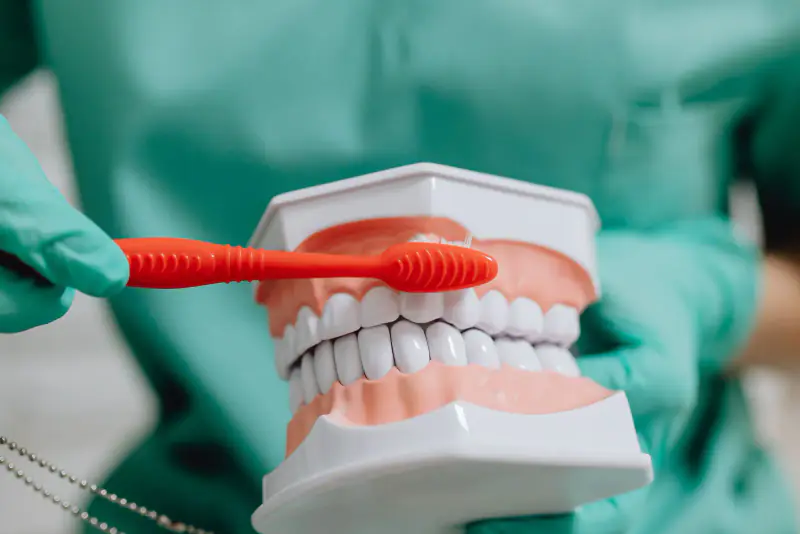
Bleeding Gums: Causes and What to Do
Why your gums bleed, what this sign means and when you should seek care.
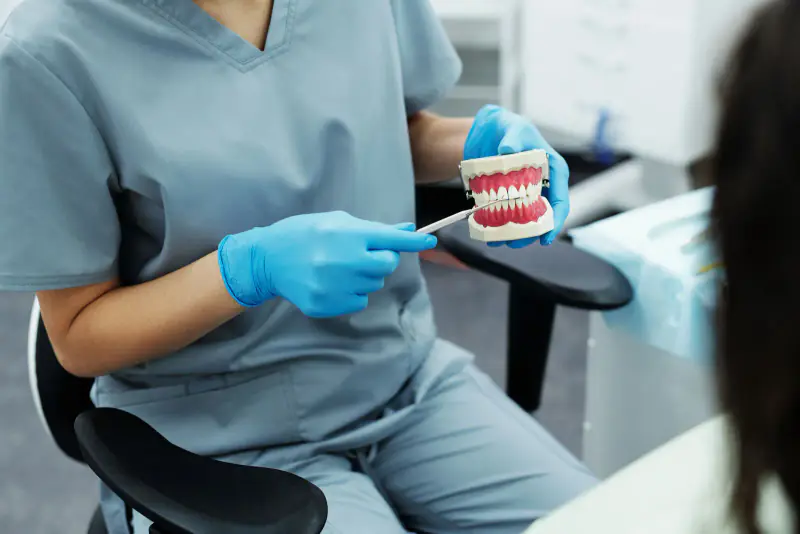
Gum Recession: Causes, Risks and Treatment
When the gum pulls back and exposes the root: what a recession means, what causes it, what it risks, and what mucogingival surgery can, or cannot, cover.
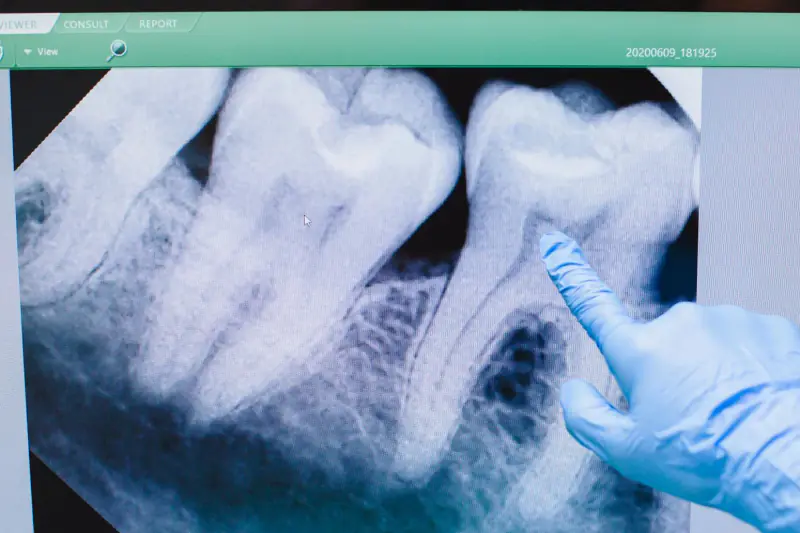
Implants After Periodontitis: Is It Possible?
Having had periodontitis does not rule out an implant. But it is a recognized risk factor for peri-implantitis, calling for a mouth restored to health and lifelong follow-up.
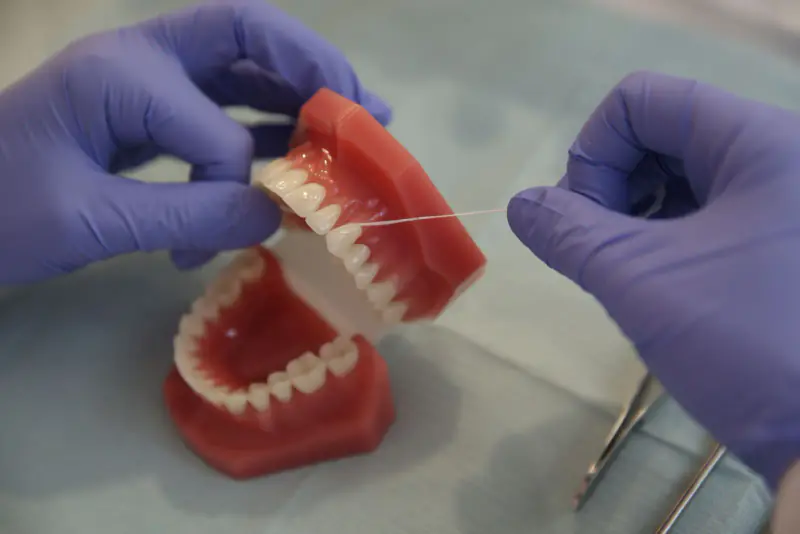
A loose tooth and bleeding gums
What you feel is a signal, not a sentence. The gum and bone are examined before each tooth is assessed.
Schedule an assessment
The assessment does not commit you to any treatment. It helps you understand first, then decide.