Wisdom tooth removal in Kénitra
Not every wisdom tooth needs to be removed. An impacted or angled tooth with no symptoms or disease can be monitored. At Dr Fatima Azelmat's practice in Kénitra, removal is discussed when a symptom or pathology is identified, after clinical examination and appropriate imaging.
Personalised assessment · 3D imaging (Cone Beam) · detailed treatment plan
Describe your situation: you will receive an initial response, followed by a tailored plan after the assessment.
Wisdom tooth removal in Kénitra
In Kénitra, removing an impacted wisdom tooth is 1,200–1,500 MAD as an indicative fee at Dr Fatima Azelmat’s practice; a tooth that has already come through is removed for 200 MAD. The procedure is done under local anaesthetic and takes 20 to 45 minutes. The decision rests on a clinical examination, supplemented by appropriate imaging: an asymptomatic, disease-free, well-positioned and cleanable tooth can generally be monitored rather than removed.
Ce qu'il faut savoir
Do they really have to come out?
No, not as a matter of course. An asymptomatic, disease-free wisdom tooth that is well positioned, fully through and cleanable can generally be monitored. The decision rests on a clinical examination, supplemented by appropriate imaging.
Removal is discussed when a symptom or pathology is confirmed. The position of the tooth alone, even if impacted or angled, is not enough to indicate removal — see our article: wisdom tooth removal, indications and recovery.
When removal is indicated
- Recurrent pericoronitis or inflammation that does not respond to conservative care.
- Symptomatic decay that cannot be restored predictably, or untreatable symptomatic pulpal/periapical disease.
- Abscess, cellulitis or bone infection associated with the tooth.
- A cyst or another lesion associated with the dental follicle.
- Resorption or periodontal damage to the neighbouring tooth caused by the wisdom tooth.
The assessment before surgery
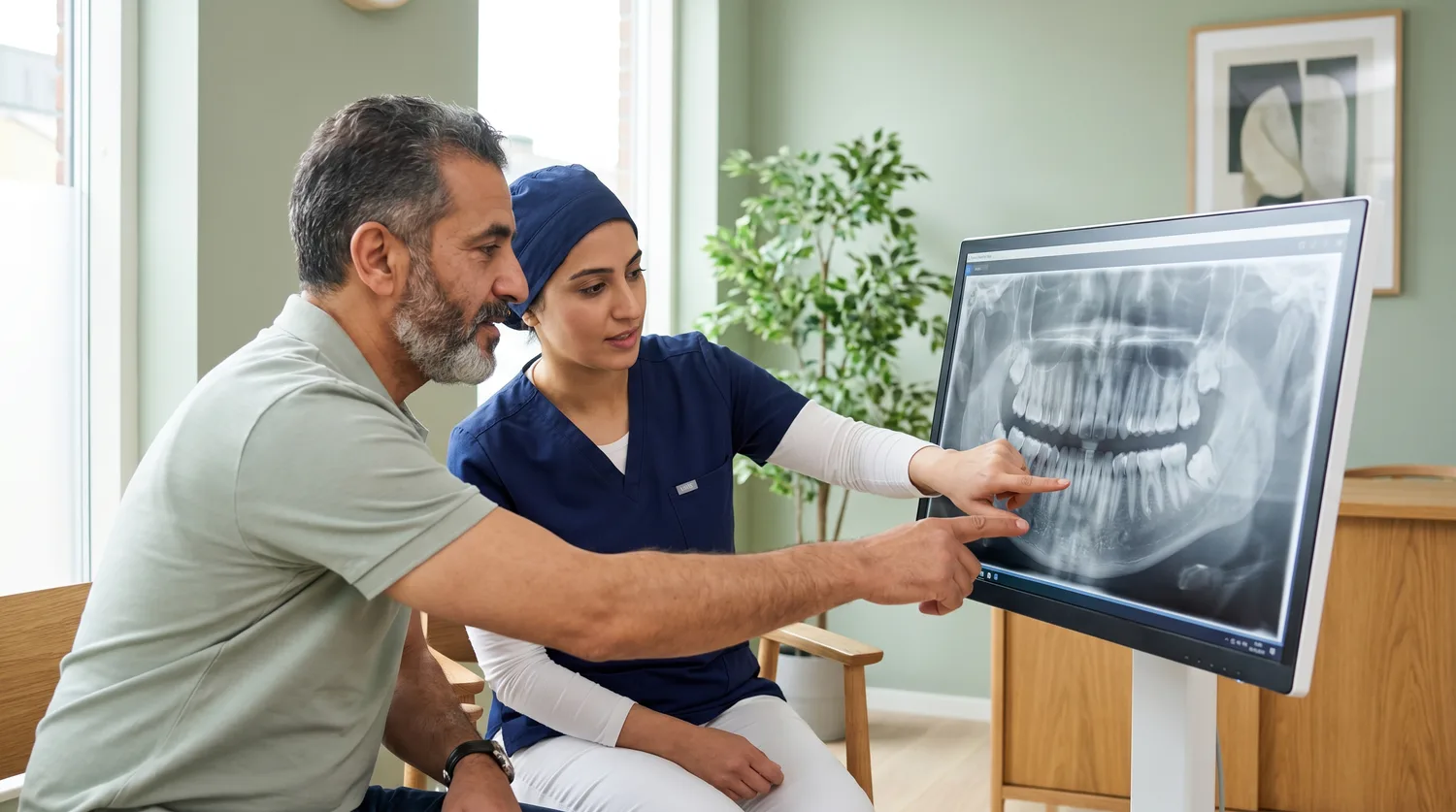
A panoramic radiograph shows the position of the tooth, how impacted it is and its relationship with the structures around it.
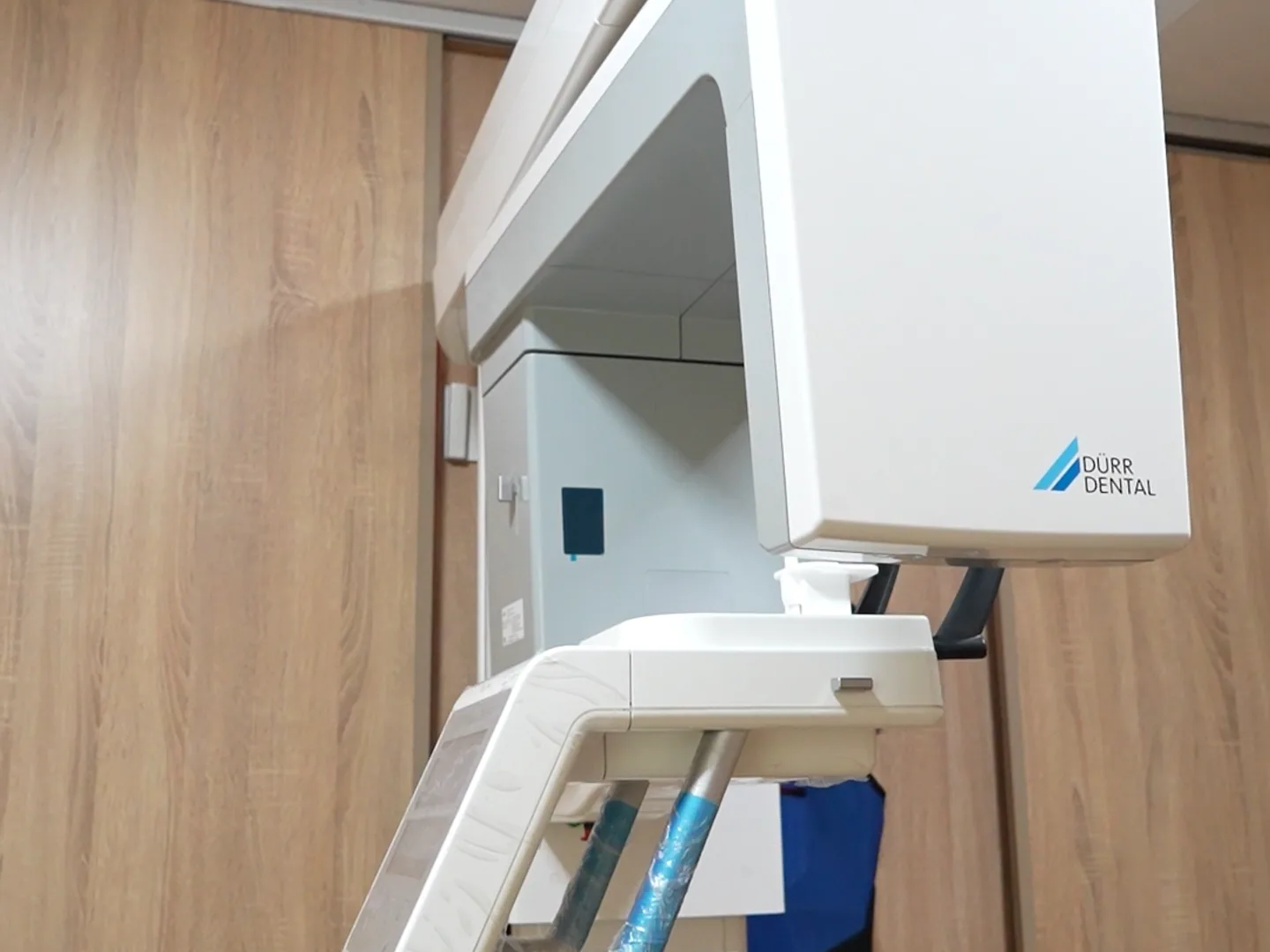
When the panoramic radiograph suggests that the roots are close to the inferior alveolar nerve, 3D Cone Beam imaging may be indicated. It clarifies the relationship between the roots and the canal and can change planning, but it does not eliminate the risk of nerve injury.
How the removal is done
- Local anaesthetic. The area is numbed to limit pain during the procedure. You stay awake and may feel pressure or movement.
- Access. For a tooth that is through, the removal is direct. For an impacted tooth, the gum is opened and a little bone released.
- Removal. An impacted tooth is often sectioned into two or three pieces: it can then come out through a smaller opening, so less bone is disturbed. That heals faster — it is not more serious.
- Sutures. A few stitches close the gum. They come out a week later, or dissolve on their own.
Allow 20 to 45 minutes depending on difficulty. If anxiety is what holds you back, see: dental anaesthesia: improving pain control and conscious sedation with nitrous oxide.
Recovery, honestly
The first 48 to 72 hours are the most noticeable: a swollen cheek, difficulty opening your mouth, sometimes a bruise. That is normal and it settles.
What genuinely helps:
- Cold on the cheek on day one, in 15-minute stretches.
- Painkillers as soon as the anaesthetic wears off, without waiting for the pain to set in.
- Lukewarm, soft food for the first few days. Nothing hot, no straws.
- No tobacco. It is the leading cause of dry socket — a painful inflammation of the socket that shows up around day three.
- Gentle brushing around the area, without avoiding it entirely.
Pain that increases instead of easing after day three is not normal: call the practice.
Wisdom tooth removal prices in Kénitra
The price depends on the difficulty: a tooth that is through comes out simply, an impacted tooth needs a surgical approach.
| Service | Indicative fee (MAD) |
|---|---|
| Consultation and assessment | 150 |
| Panoramic radiograph | 200 |
| Cone Beam (CBCT) if needed | 1,500 |
| Simple extraction | 200 |
| Impacted wisdom tooth removal | 1,200 – 1,500 |
| Surgical extraction | 1,500 |
Your quote is given after the radiographic assessment, before anything is done. See also our fees.
Why see Dr Fatima Azelmat
With a focus on oral surgery, Dr Azelmat considers removal only after its indication has been confirmed. When Cone Beam imaging is useful, it helps select the technique and discuss risks; it does not determine the indication by itself or remove the possibility of complications.
Frequently asked questions
Does wisdom tooth removal hurt?
The extraction is performed under local anaesthetic to limit pain during the procedure. You may still feel pressure or movement. Recovery can include swelling and discomfort for 48 to 72 hours, managed according to the instructions provided by the practice.
Do all four wisdom teeth have to come out?
No. An impacted or angled tooth with no symptoms or disease can be monitored. Removal is discussed when a symptom or pathology is found after examination; position or imaging alone is not enough.
How long does recovery take?
Swelling is often greatest during the first 48 to 72 hours and then tends to settle. Recovery varies with the difficulty of the procedure and the individual. Pain that increases rather than decreases, especially after a few days, warrants a call to the practice.
Can all four be taken out in one visit?
It is possible in some cases, but we often prefer two visits, one per side: you can still chew on one side and the recovery is easier to live with. We decide together based on your situation.
Is smoking a problem after the removal?
Yes. Smoking is an important risk factor for dry socket and delayed healing. Avoiding tobacco around the procedure reduces the risk; the recommended period is discussed for your situation.
Read on the blog
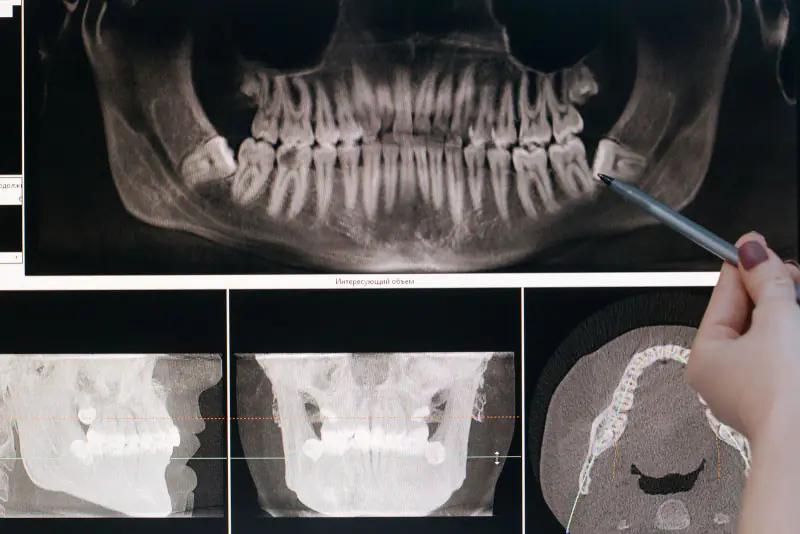
Wisdom Tooth Extraction: Indications and Recovery
A wisdom tooth is not extracted as a matter of principle: the decision rests on a symptom or a pathology, not on its position alone.
“Pain-Free” Dental Anesthesia: What Has Really Changed
The phrase “pain-free anesthesia” is appealing, but what is it really worth? This article explains how local anesthesia works, what topical numbing gel and computer-assisted injection bring, the simple techniques that make the injection nearly painless — and what anesthesia does not take away: anxiety.
Afraid of the Dentist? Conscious Sedation (MEOPA) Explained
What conscious sedation with MEOPA (a nitrous oxide/oxygen mixture) actually is, who it is intended for, how a session unfolds, its contraindications and, above all, what it does not do: it is not general anesthesia.

A question about your case?
The first step is a precise diagnosis. To schedule an assessment, call the practice or write on WhatsApp.