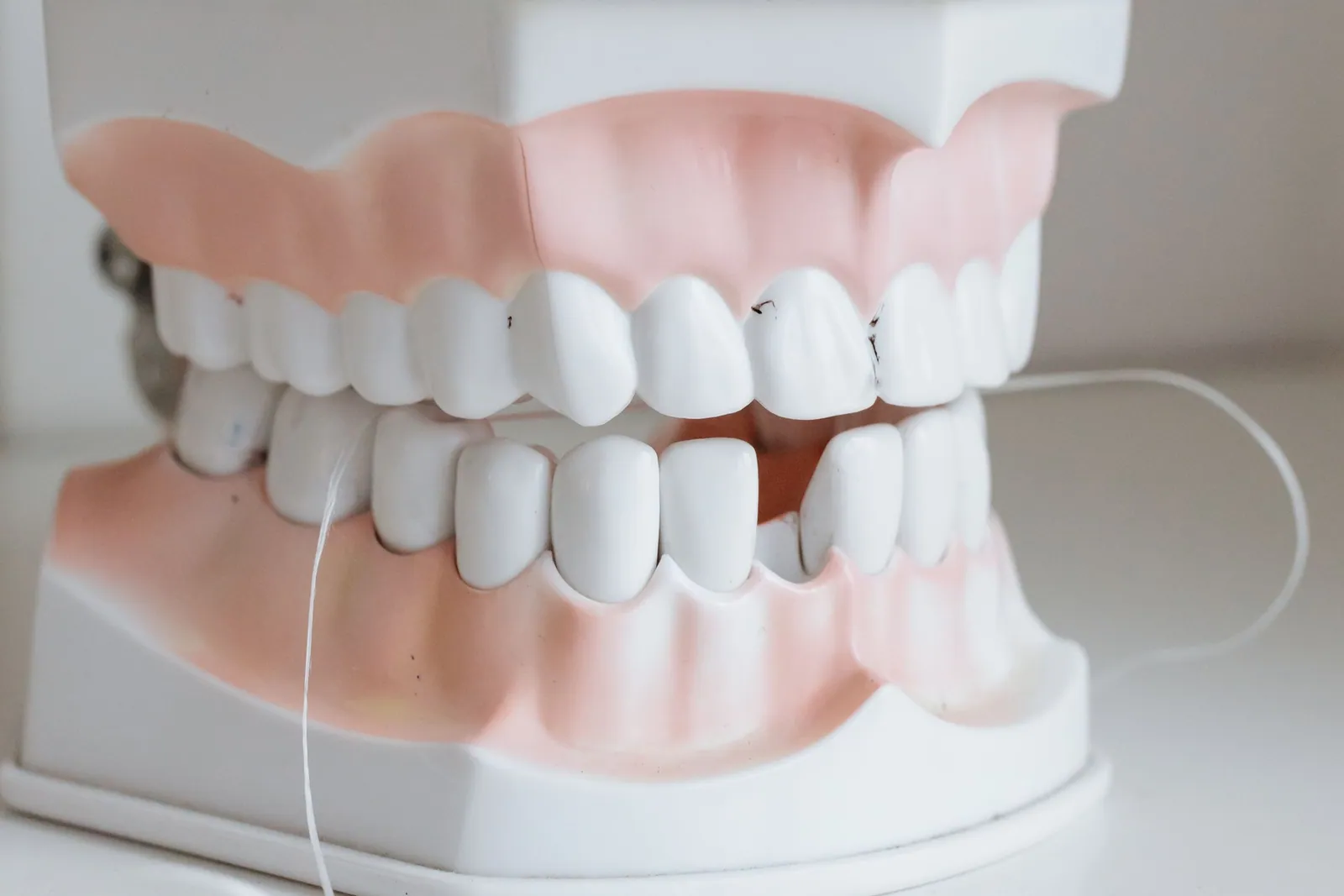
When the tooth was removed, you were in pain for a few days. Then nothing. You learned to chew on the other side without even thinking about it. When you smile, it is hardly visible, if at all. Years have passed. If someone asked how long it had been, you would need to count.
What you cannot see is what may have happened beneath the gum where the gap is.
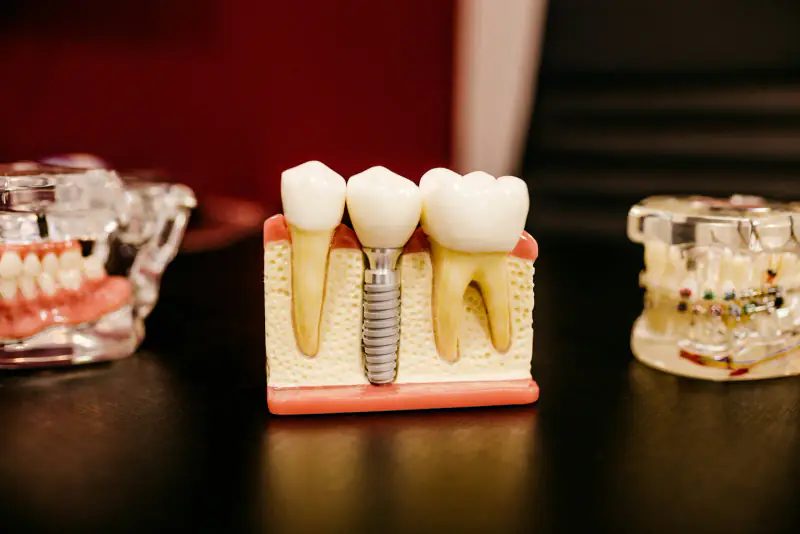
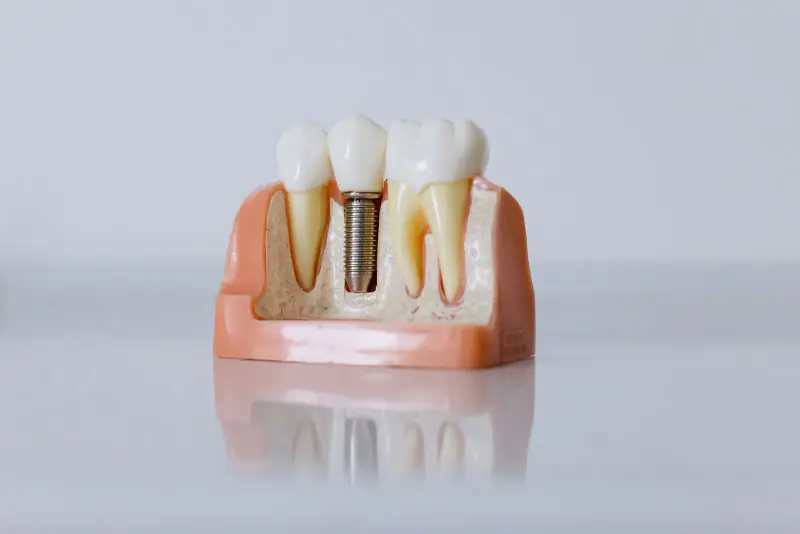
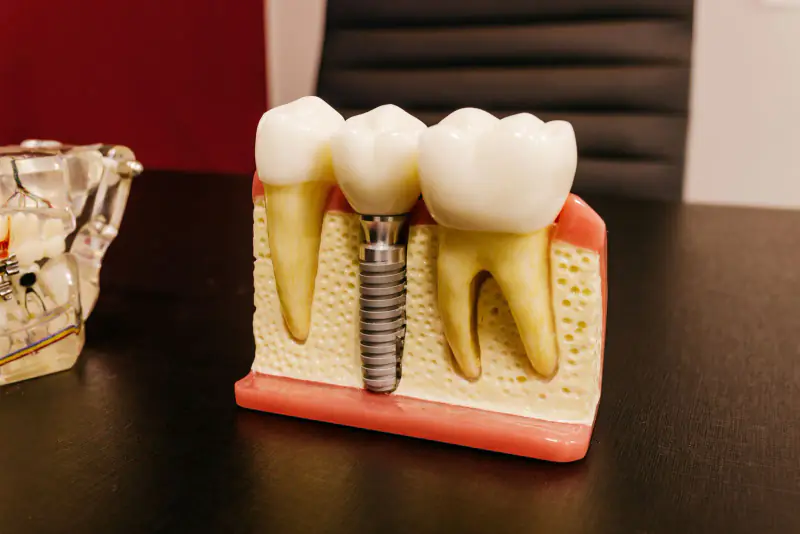
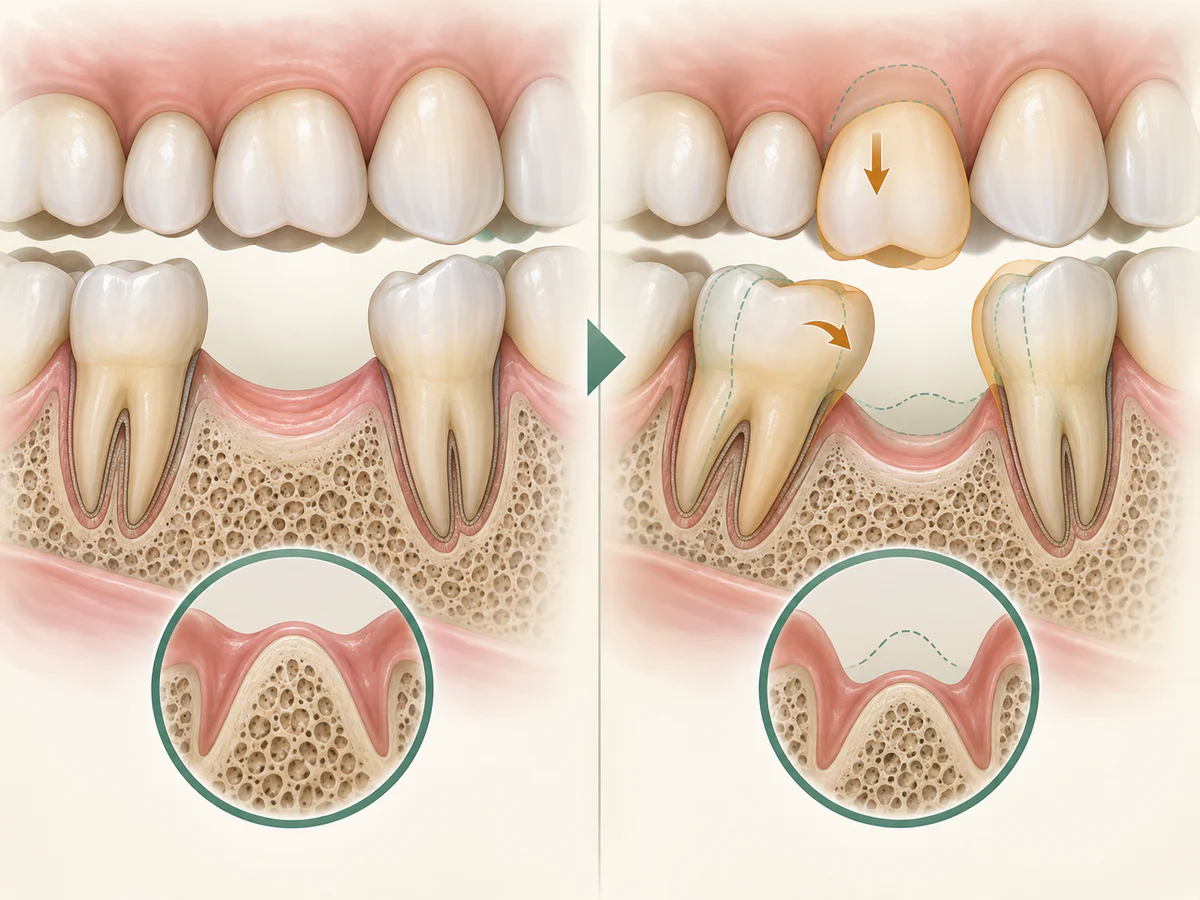
A tooth is held in the jawbone. After it is lost, the bony ridge can lose volume. This change varies greatly from one person to another and cannot be measured from the outside. The neighbouring teeth may also tilt towards the empty space. The opposing tooth may move towards the gap. Little by little, the way the upper and lower teeth meet — the bite, or occlusion — may change.
None of this is a criticism. Many people live for a long time with a missing tooth because of cost, time, fear, or simply because the gap did not bother them. Nor is it a reason to announce an emergency without examining you. It is information: what has changed influences the options that can reasonably be discussed today.
The question is not only how to fill the gap
The right question is: what is beneath this gap, and what does the current situation allow?
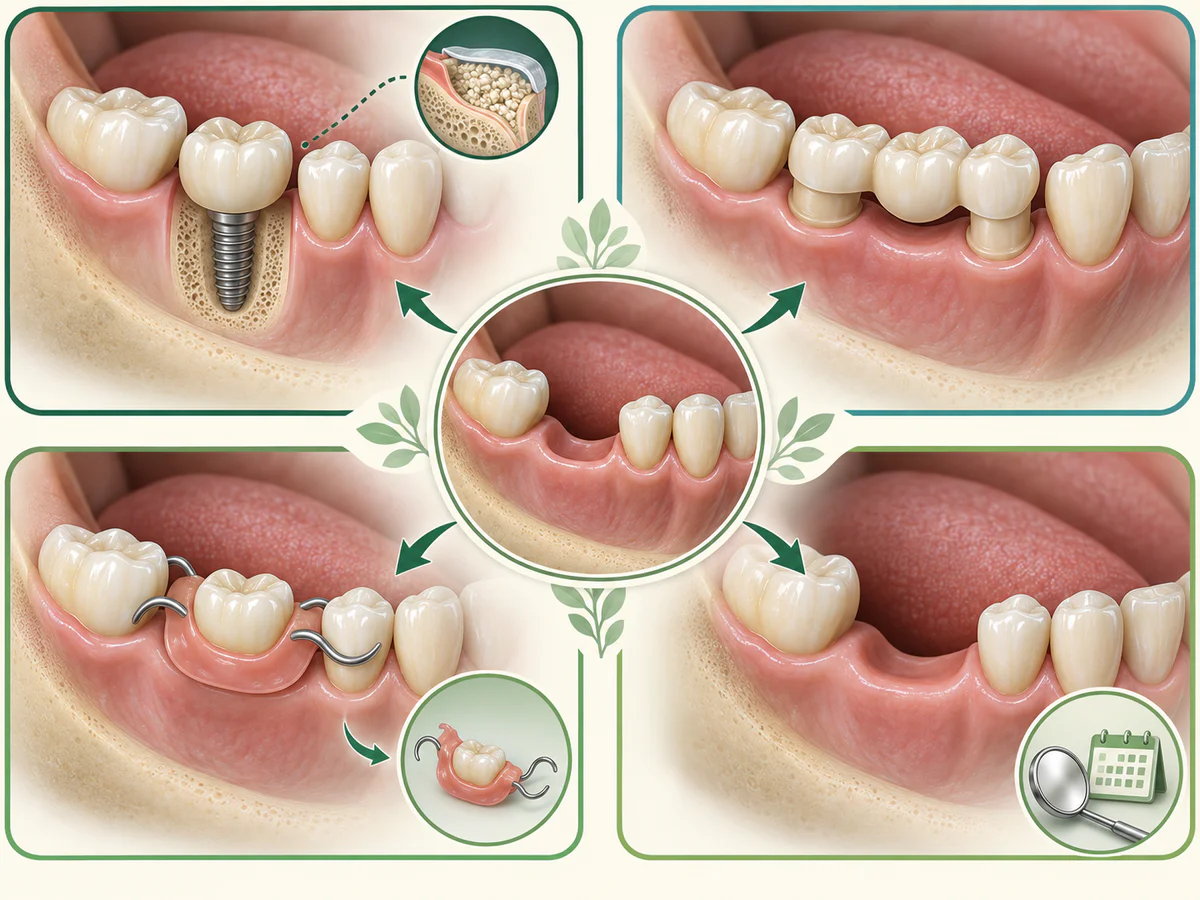
If the bone volume and condition of the gum allow it, an implant may be part of the discussion. If bone is lacking, bone reconstruction can sometimes be considered before the implant. Other paths do not involve an implant. A bridge is supported by the neighbouring teeth. A removable denture is taken out for cleaning. Monitoring the situation is also an option when no treatment is chosen for the time being.
These solutions cannot be ranked from best to worst. Their suitability depends on the bone, gum, neighbouring teeth, your health, the time available, and what you would like to be able to do again. The comparison of implant, bridge or denture explains their differences without choosing for you.
What the assessment should clarify
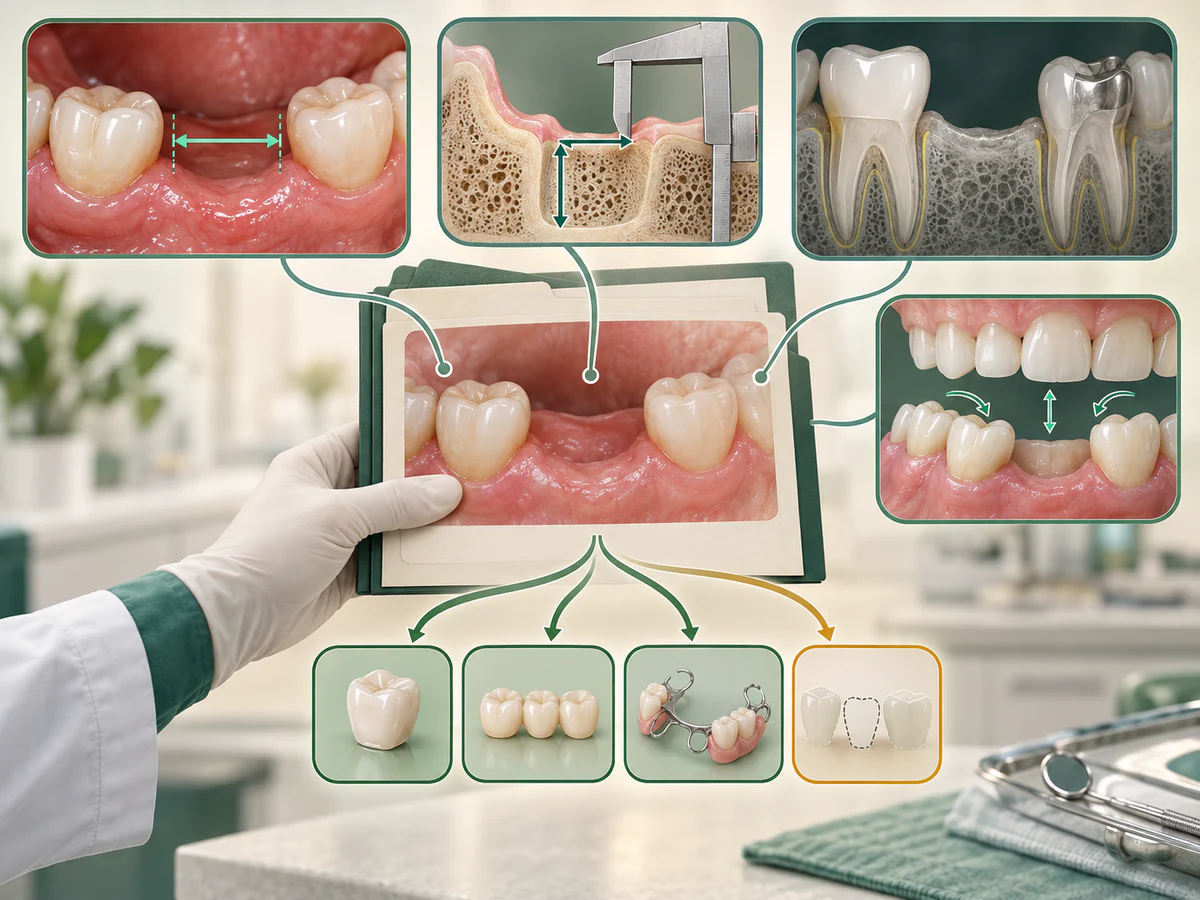
- What is happening: the bone volume at the gap and the position of the neighbouring teeth. A three-dimensional image may be indicated when the available images do not provide enough information.
- What needs prompt attention: for example, pain, inflammation or a problem with a neighbouring tooth; otherwise, the decision can generally be prepared without rushing.
- The reasonable options: an implant with or without bone reconstruction, a bridge, a removable denture, or monitoring, depending on the examination.
- The steps: their order, healing times, and the visits to plan.
- The plan: if treatment is being considered, the information needed to describe the steps and establish the cost after the evaluation.
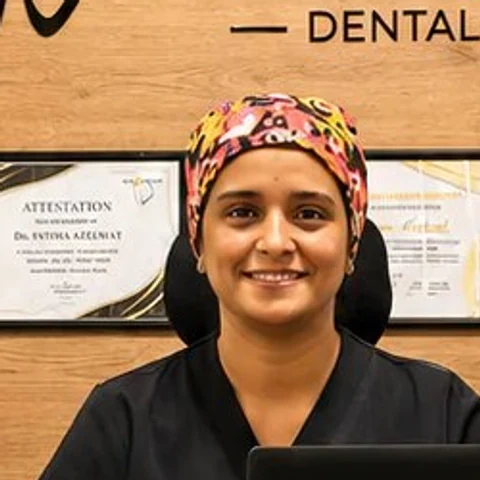
The assessment is carried out by Dr Fatima Azelmat, a dental surgeon in Kenitra. It looks at the missing tooth and what surrounds it: the bone, gum, neighbouring teeth and bite. The Dental implant in Kenitra page explains implant placement; the Bone grafting page describes what may be discussed when bone volume is limited. In both cases, the decision comes after the examination.
General guidance is available on the Fees page. The cost for your situation can only be established after the assessment. Scheduling this assessment does not commit you to any treatment.
Report current or past bisphosphonate or denosumab treatment. Dose and indication affect assessment, particularly in cancer care. Do not stop prescribed medicines yourself. ADA reference.
To understand the families of replacement before the appointment: dental bridge, fixed, on the neighbouring teeth; to find out how the first visit goes: preparing for the assessment.
Frequently asked questions
Have I waited too long to replace a missing tooth?
Why does the bone change after a tooth is lost?
Is an implant the only solution?
Is a tooth that has been missing for a long time an emergency?
Sources
Medical references consulted for this article.
- 1UFSBD patient information sheet, ‘An implant to replace a tooth’
- 2Couso-Queiruga et al., post-extraction dimensional changes, systematic review and meta-analysis, 2021
- 3Romandini et al., survival and complications of tooth-supported multiple-unit fixed dental prostheses, systematic review and meta-analysis, 2026
Contents
Share