
You booked your tickets months ago. This dental problem may have been waiting for this trip for a long time. You would like to arrive, receive care, and leave with peace of mind. That is understandable. It is simply necessary to distinguish what your schedule allows from what healing requires.
The mouth does not read airline tickets. After some procedures, the bone or gum needs time before the next stage. An implant may require a healing period before it can support the final tooth. A bone graft may require a wait before another procedure. Periodontal treatment is carried out in phases, with reassessment between them. These times vary with the situation; they can be organised, but they cannot be promised before the examination.
What can be prepared during a stay
A stay can often begin with the assessment, imaging when indicated, and discussion of a plan. Depending on the examination, a first stage may sometimes be carried out. What follows may require healing and then another appointment. Some situations fit into a short timetable; others require several stays. The assessment makes this distinction without confusing space in the diary with clinical feasibility.
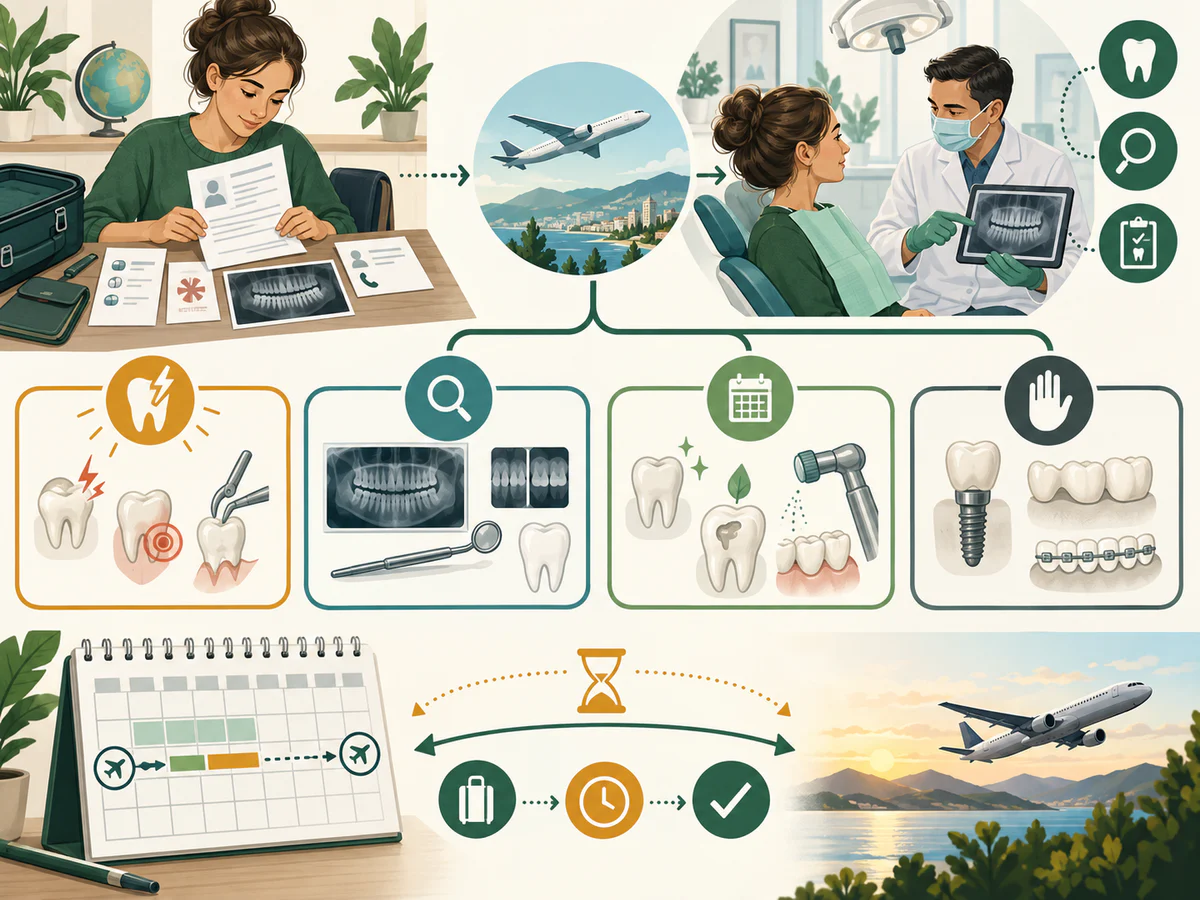
Before travelling, gather any previous X-rays and reports you have, a list of your medicines, your arrival and departure dates, and the number of days you can devote to appointments. Bring these to the assessment. They provide context but do not replace the examination.
The parts that require your presence include the clinical examination, shared decision-making, and every procedure. A photograph or message cannot evaluate the bone, gum and bite with the precision needed for a final plan.
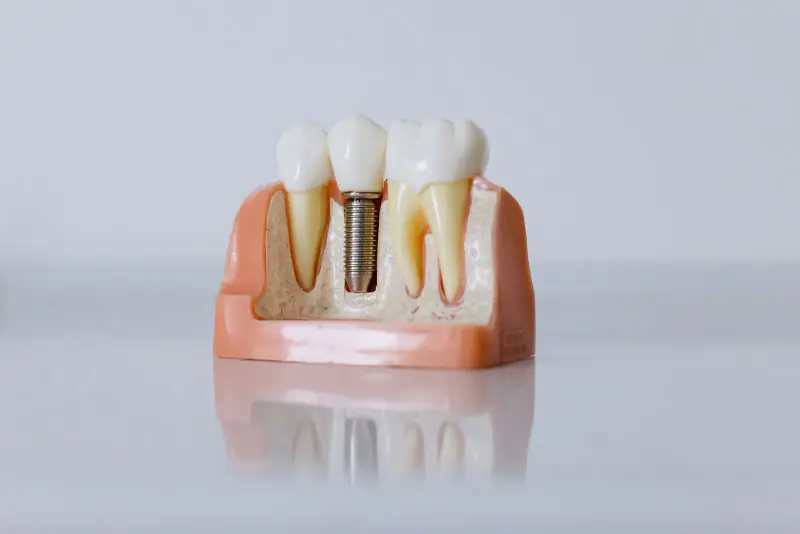
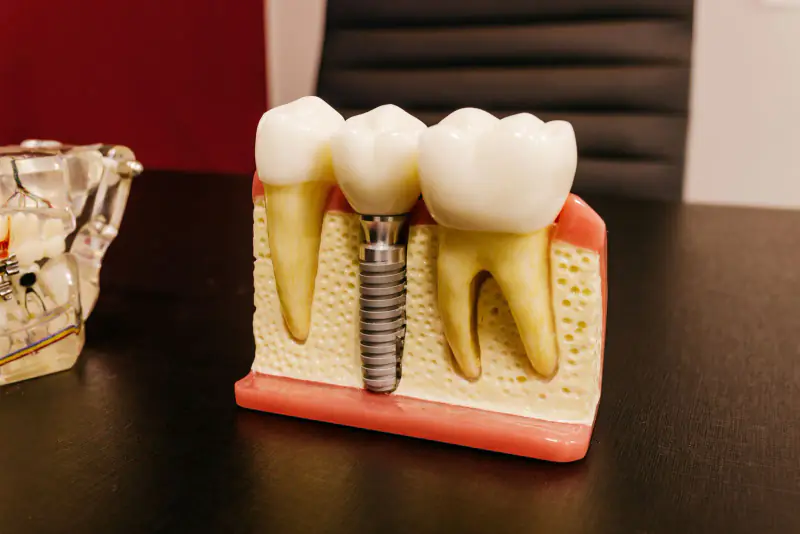
The article Immediate or delayed loading explains why a rapid temporary tooth is not possible in every situation. The Dental implants in Kenitra page describes the general stages of implant treatment; the Bone grafting page explains that reconstruction adds its own healing time.
A bone graft or sinus lift during a stay: what the timeline requires
A bone graft or a sinus lift takes more than one appointment. Allow for the surgery, then a check-up and the removal of stitches, usually one to two weeks later (Leeds Teaching Hospitals). After a sinus lift, you are generally asked not to blow your nose for about two weeks (Cambridge University Hospitals). The pressure changes during a flight should be discussed with the practitioner before you set your return date. The minimum time on site is therefore calculated from the date of the procedure, not from the date on your ticket.

The graft then heals for several months before the implant is placed, and the implant in turn heals before the final tooth. These stages naturally spread over several stays: for example the graft during a first stay, implant placement during a later one, then the final tooth, when healing allows. The general sequence is described in the steps of dental implant placement. Between two stays, a message lets you describe what you notice, but a clinical check or an X-ray requires you to be present, at the practice or with a dentist where you live.
Bridge, denture or full arch: how many stays to plan
The number of stays depends on what has to heal.
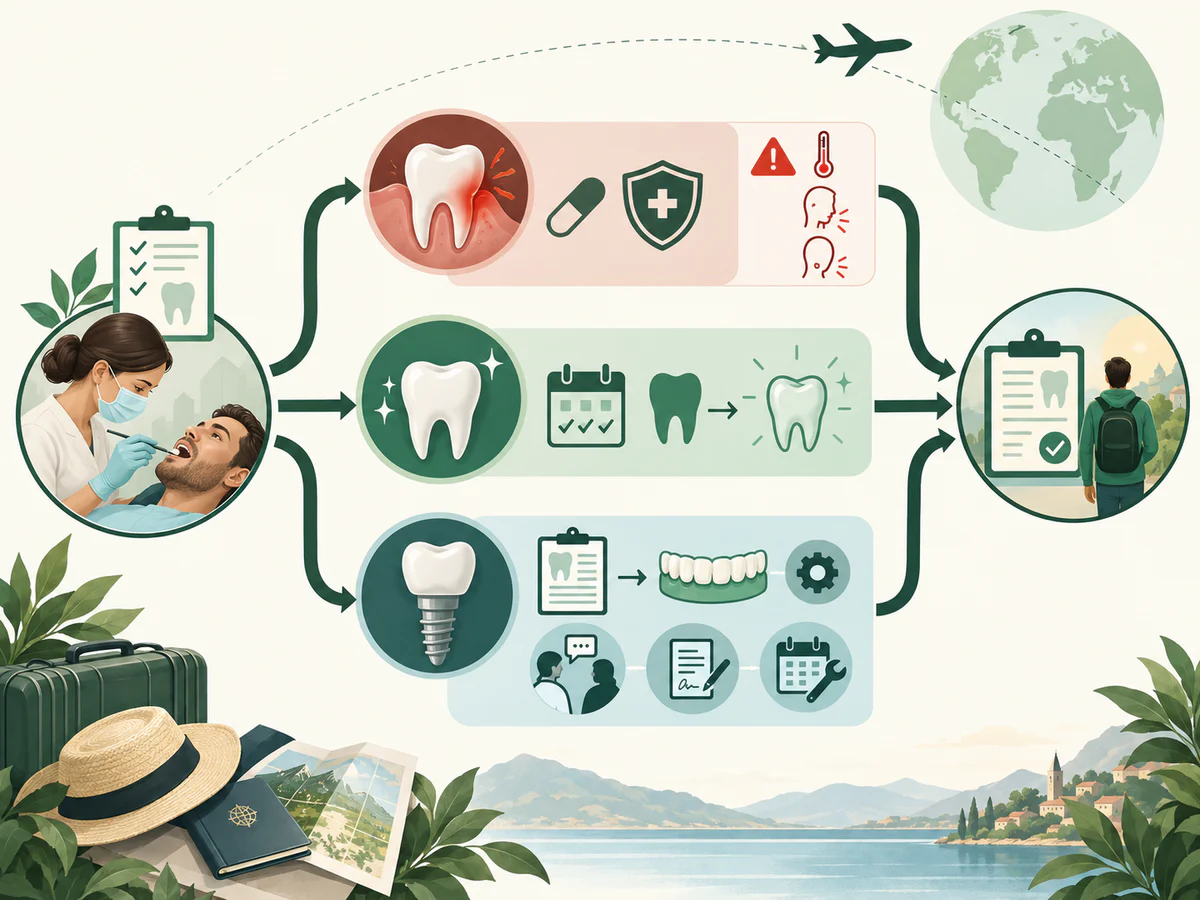
- A bridge on natural teeth requires no bone healing. Tooth preparation, impression, try-in and fitting can fit into a single stay, if it leaves time for the laboratory to make the bridge. If a supporting tooth first has to be treated or extracted, a second stay may become necessary.
- A denture is made over several appointments spaced out by the laboratory work, then needs adjustments during the weeks you are getting used to it (NHS). If teeth are extracted just before, the gum and bone change mostly during the first months: a denture fitted immediately will need to be adjusted or remade once healing is complete (Leeds Teaching Hospitals). In that case, plan for at least a second stay.
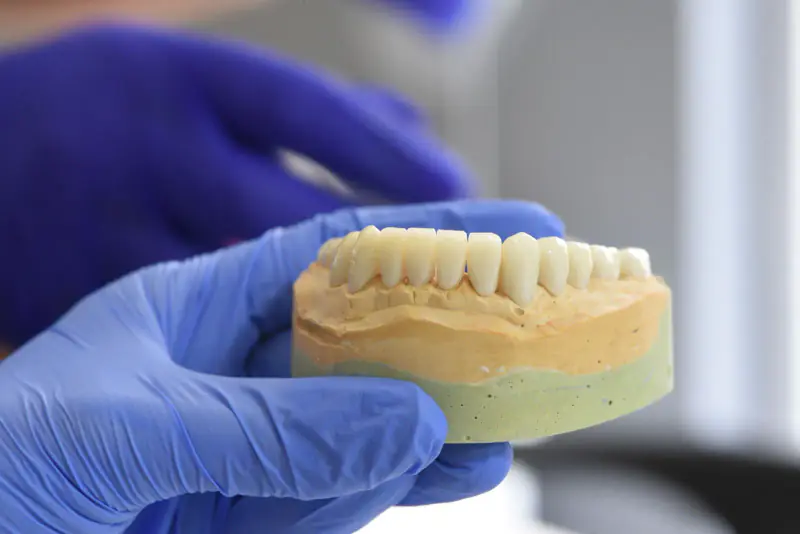
- A full arch on implants requires at least two stages: the surgery, with a temporary prosthesis in some cases, then the final prosthesis after healing, several months later. Check-ups come in between. Full-arch rehabilitation on implants describes these phases.
Questions to settle before you leave
Before beginning a course of care that will continue after your stay, ask for four points to be clarified:
- what will be done during this visit and what will wait until the next one;
- the healing times to respect between stages;
- the signs that mean you should seek care without waiting;
- the documents and information you will need for the next follow-up.
These questions do not prejudge the arrangements proposed by the practice. They help you check that realistic follow-up exists before you agree to the first stage.
After you return: the documents and the local relay needed for follow-up
An implant is followed for years, often far from the practice that placed it. A dentist who cannot identify the system used has more difficulty managing a complication or replacing a part (Mattheos and Janda, 2012). Before you leave, ask for:
- the identification of each implant: brand, model, diameter, length and lot number, as well as the references of the abutment and the prosthesis;
- a copy of the X-rays and, if one was taken, of the Cone Beam scan;
- a report of the procedures carried out, the materials used and the remaining stages;
- the follow-up instructions and the signs that should lead you to seek care.
With these documents, a dentist where you live can carry out check-ups and manage a complication between two stays. Also ask, before starting, how to reach the practice after you leave and how a complication would be coordinated between the practice and your dentist. These arrangements are clarified at the assessment.
In Morocco or elsewhere: the criteria that count everywhere
Having an implant placed in Morocco rather than in Europe is, in principle, neither more nor less serious. What counts are the same criteria, wherever you are treated:
- an in-person clinical examination and appropriate imaging before any decision;
- a written plan, with the alternatives, including no implant, and time to think it over;
- a timeline that follows healing rather than the length of your stay;
- the handover of identification documents and images;
- follow-up organised after you leave, with a possible relay where you live;
- a practitioner registered with the professional body of the country where they practise.
What the assessment should clarify
- What is happening: your situation measured in person, with imaging when indicated.
- What needs prompt attention: what should be treated during this stay and what can wait.
- The reasonable options: those compatible with the clinical situation, including options that require several stays or do not involve an implant.
- The steps: how they are spread over time and the healing periods between them.
- The plan: the information needed to order the steps and establish the cost after the evaluation.
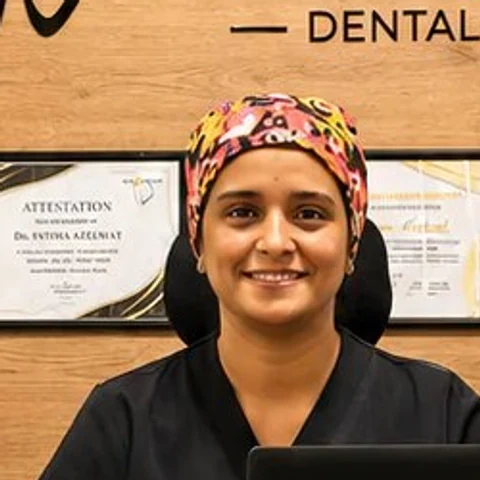
The assessment is carried out by Dr Fatima Azelmat, a dental surgeon in Kenitra. Simply state the dates when you will be in Morocco as you schedule it. No treatment is promised before the examination, and scheduling the assessment does not commit you to any treatment.
Frequently asked questions
Can implant treatment be completed during a single stay?
What can I bring to the assessment if I live abroad?
Can a plan be decided from photographs before I arrive?
What should be clarified before I leave?
Sources
Medical references consulted for this article.
Contents
Share