When you received your denture, it fitted tightly. You learned to speak with it, eat with it, and then stopped thinking about it. Year after year, it began to move. A breadcrumb slips underneath. The adhesive you apply in the morning does not last until evening. You cut food into small pieces, and meals with other people have become a source of worry.
You may tell yourself it is your fault or that the denture was poorly made. Often, the first thing to understand is simpler: what lies beneath the denture has changed.
A complete denture rests on the ridge, the area of gum-covered bone where the teeth used to be. After the teeth are lost, this ridge can gradually reduce. The denture retains the shape for which it was made. It may therefore end up resting on a support whose contours are no longer exactly the same. The way the jaws meet may also change.
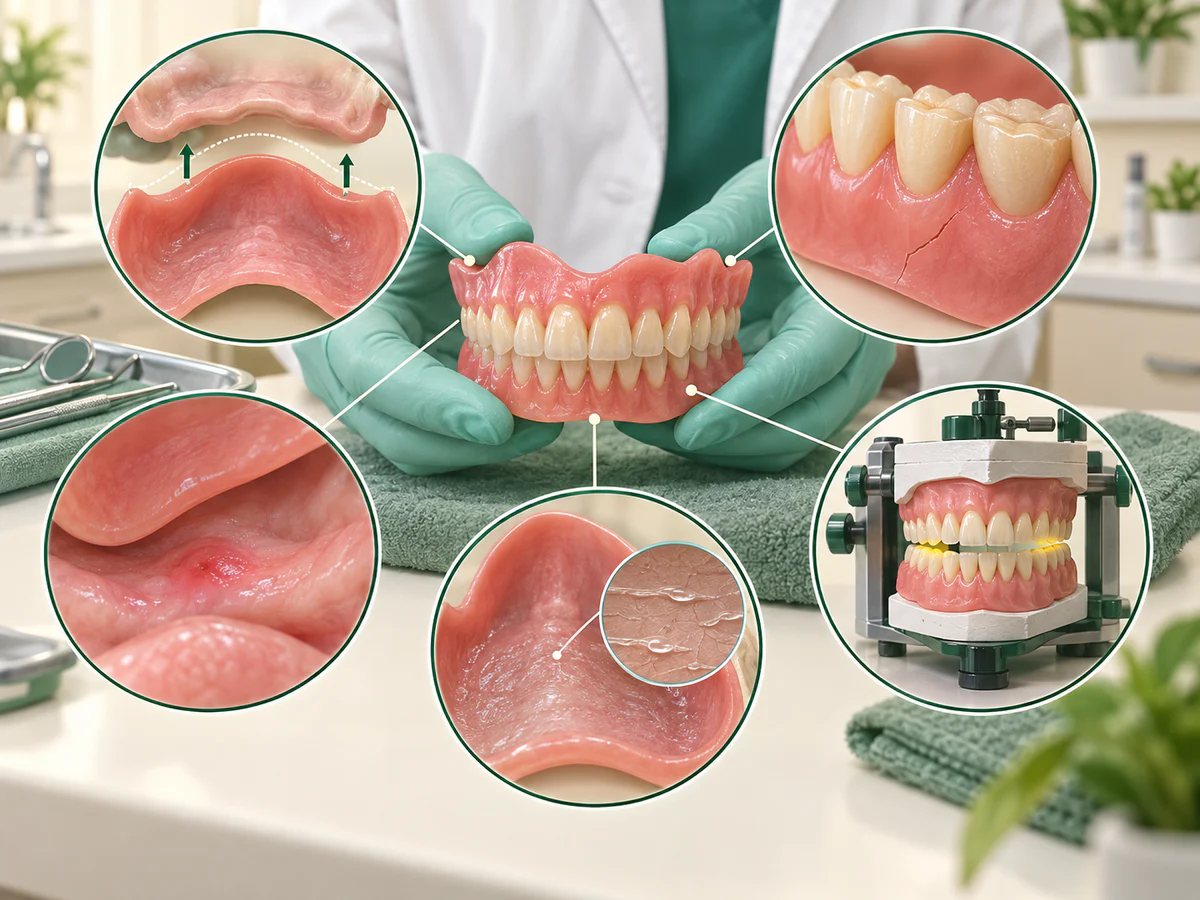
This does not explain every unstable denture. Wear, a crack, dry mouth, an irritated area of gum, or the bite may also matter. The assessment is precisely what distinguishes these causes instead of choosing a solution from the movement of the denture alone.
Saliva also plays a part in how well a complete denture stays in place. Studies on dry mouth and dentures remain few and of a low level of evidence (Turner et al., 2008), but among denture wearers the feeling of a dry mouth is associated with more difficult chewing and more sensitive gums beneath the denture (Ikebe et al., 2005). If you take medicines that dry the mouth, mention it at the assessment; simple measures are described in Dry mouth: causes and simple solutions.
Does a denture make the bone shrink?
The ridge shrinks mostly in the six months after an extraction, then more slowly throughout life (Venkatesh and Shetty, 2025). This change comes first from the absence of the teeth, not from the denture. Its pace varies from one person to another, and its causes are still only partly understood.
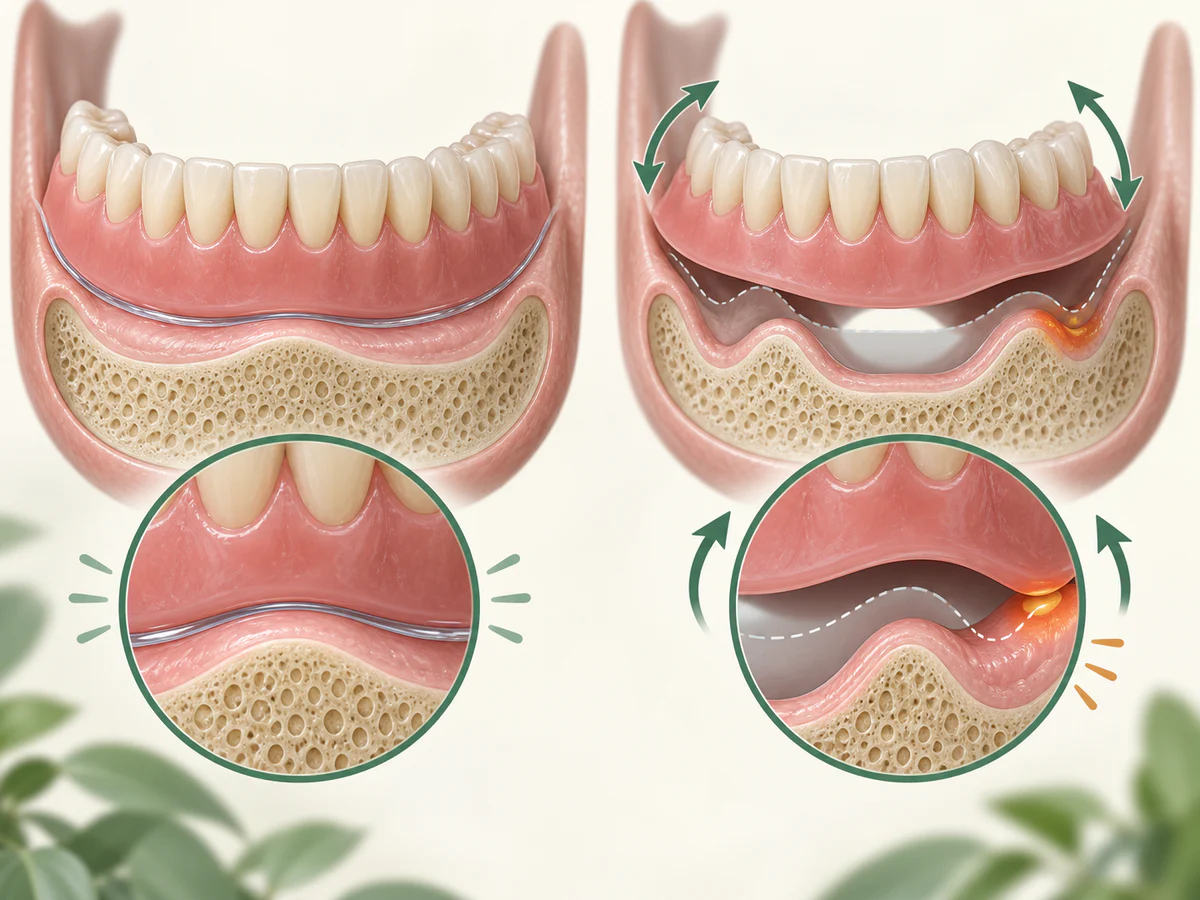
The denture plays a part in another way. When it no longer matches the shape of the ridge, it presses harder on certain areas, and excessive forces are among the factors described in ridge reduction (Klemetti, 1996). Hence the value of regular checks: the guidelines of the American College of Prosthodontists call for an annual examination of the fit, the tissues and the bone in people who wear complete dentures.
From adjustment to implant-retained solutions
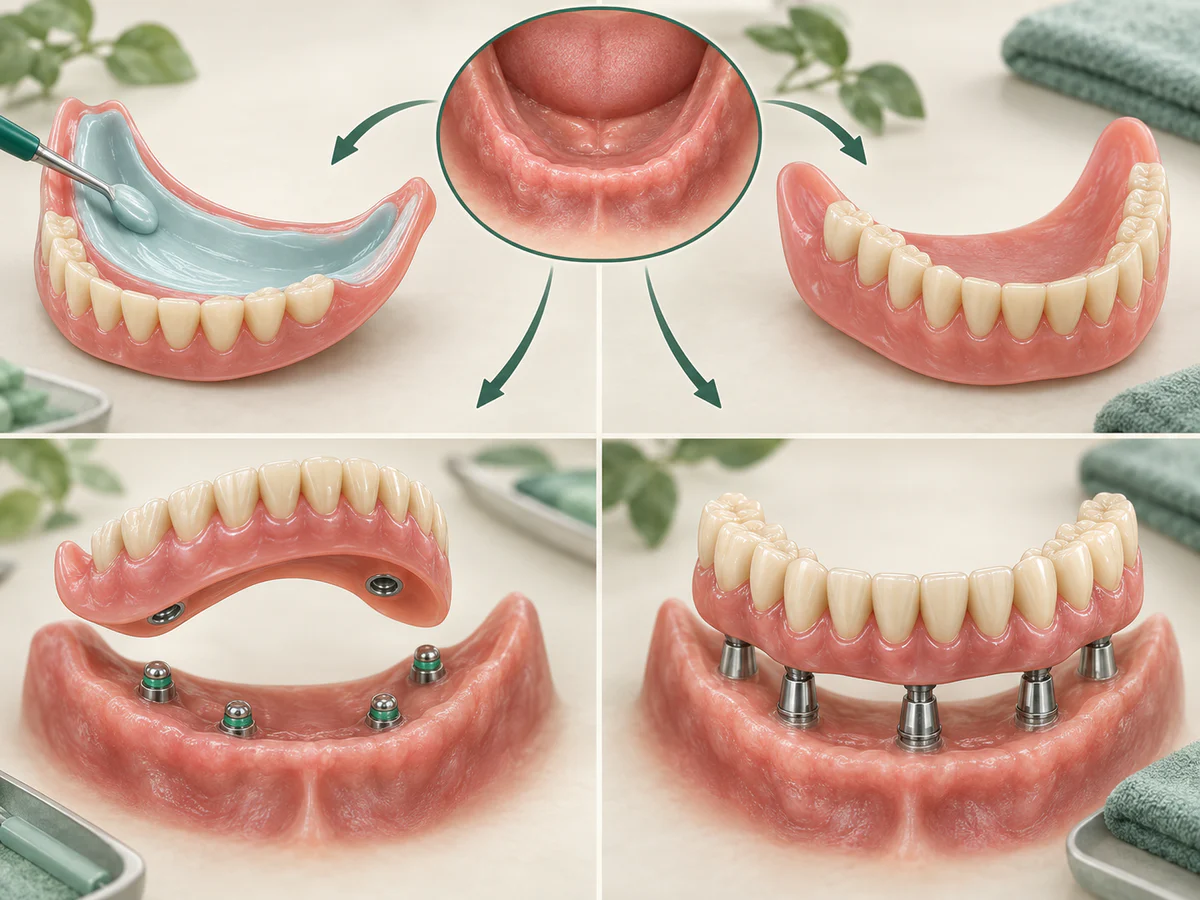
The first path may be to adapt the base of the denture to the current ridge, a process called relining. Sometimes the condition of the denture or changes in the mouth make a new denture more appropriate.
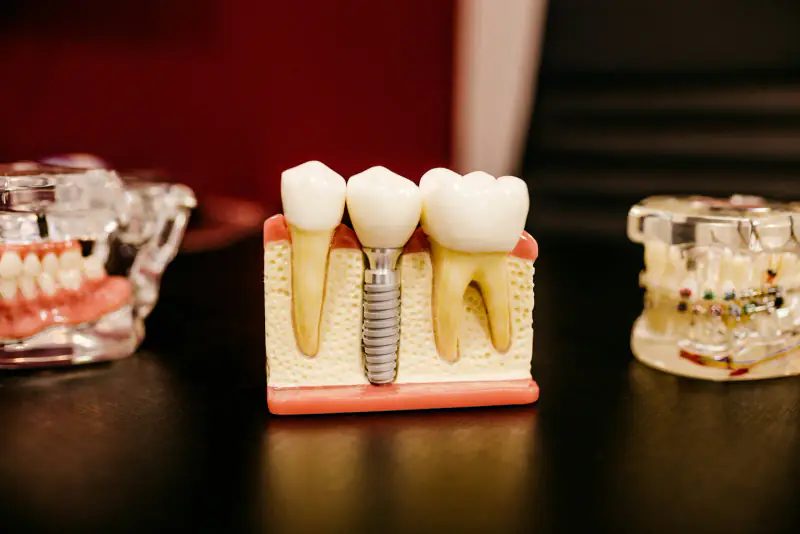
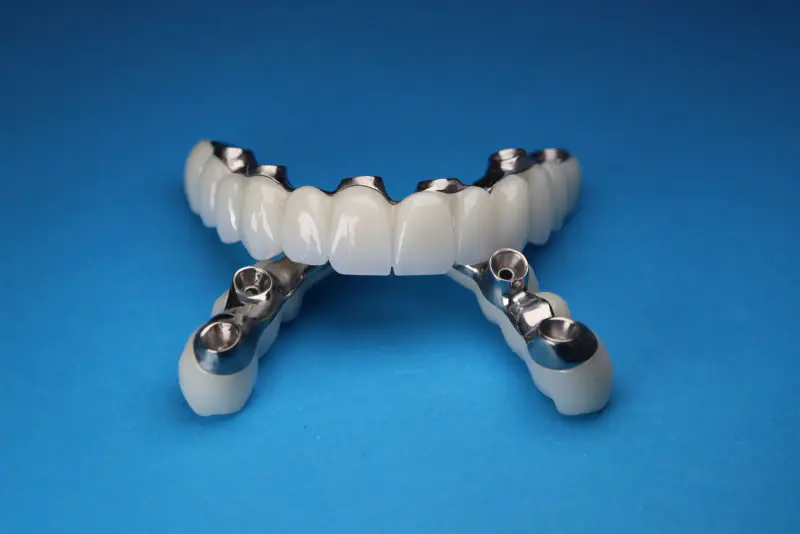
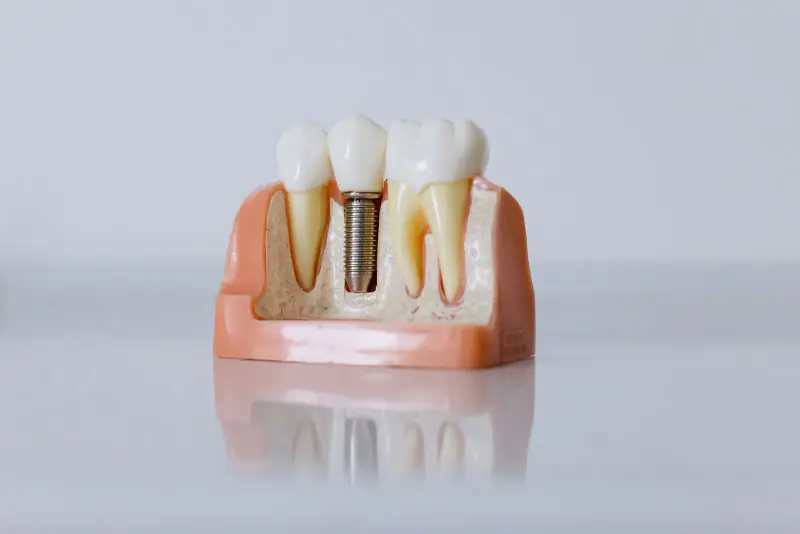
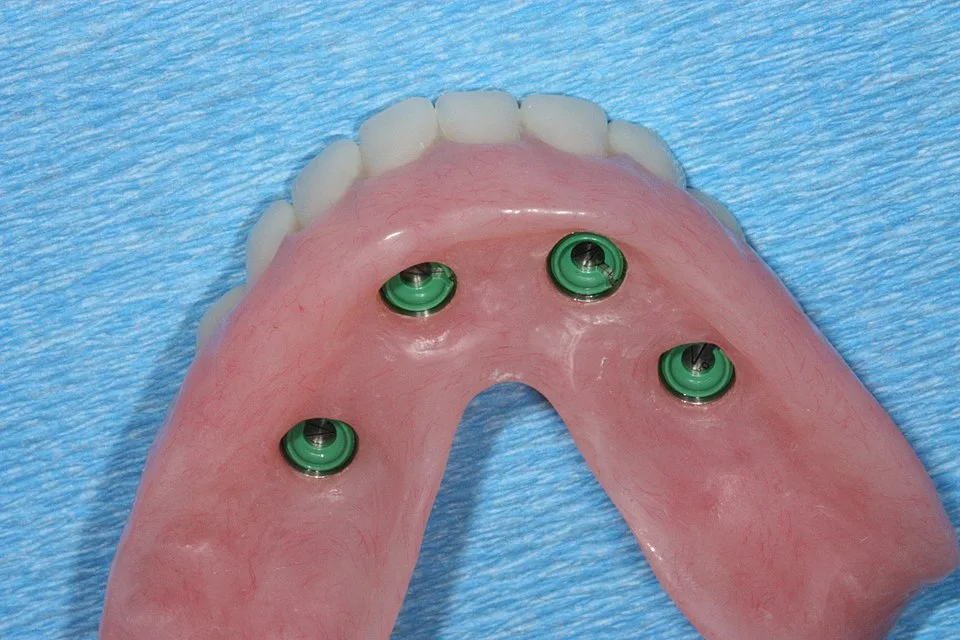
When the bone and gum allow it, a removable denture may also be retained by implants. It is still removed for cleaning, but the implants improve its retention. In some situations, a fixed solution supported by several implants may be considered. These options are neither automatic nor interchangeable; depending on the chosen plan, they may also require referral.
The differences between them begin with the bone that remains beneath the gum, in both height and thickness. The condition of the tissues, general health, healing time, possible maintenance, and cost then come into the decision. A well-fitting denture is sometimes the most reasonable answer. An implant-supported solution may be reasonable in another mouth. No one can decide before examining the ridge.
The article Implant, bridge or denture compares the main types of solution. The page about full-arch implant rehabilitation explains a more complex fixed option without presenting it as suitable for everyone.
Relining or a new denture: what sets them apart
Relining keeps your denture and remakes its inner surface, the side that touches the gum, with new resin that matches the current ridge. It suits a denture whose other features are still satisfactory: teeth not very worn, jaws that meet correctly, speech without difficulty. If these have changed too, or if the resin is cracked or badly worn, relining is no longer enough: the denture needs more extensive rework, or a new one is made. No published guideline sets how often a denture should be relined (American College of Prosthodontists): the decision is made at the examination.
What adhesive can do, and what it cannot replace
A denture adhesive used in small amounts can improve retention and limit debris under the denture, even when it fits well. It does not recreate lost support: needing more and more adhesive for the same hold is a sign that the fit has changed, and the time to have it checked. The same guidelines advise removing the adhesive completely every day, avoiding adhesives that contain zinc, and not continuing to use it for more than six months without a check of the denture and the gum.
An older denture that causes problems: what is assessed
When a denture is several years old, the examination compares it with your mouth as it is today: its fit on the ridge, the shape of the ridge itself, the way the jaws meet, the wear of the denture teeth and the condition of the gum beneath. This is what makes it possible to say whether relining is enough or whether a new denture makes more sense, and to name what has changed so as to act on the cause. The mouth has changed, the denture has not: this is no one’s fault.
What the assessment should clarify
- What is happening: the shape of the ridge, the condition of the gum, the condition of the denture, and the way you close your mouth.
- What needs prompt attention: gum that is sore, painful or irritated beneath the denture.
- The reasonable options: adapting the denture, making a new one, retaining it with implants, or another prosthetic solution, depending on the examination.
- The steps: caring for the tissues, any healing times, making the prosthesis, and follow-up checks.
- The plan: if treatment is being considered, the information needed to order the steps and establish the cost after the evaluation.
The assessment is carried out by Dr Fatima Azelmat, a dental surgeon in Kenitra. The Dental implants in Kenitra page explains that bone volume and the gum are assessed before any implant decision. The Fees page provides general guidance; the cost for your situation depends on the chosen plan. Scheduling an assessment does not commit you to any treatment.
Fixed or removable prosthesis: the four families; if the appliance is recent, Dentures: getting used to them; in every case, the assessment, before any decision.
Frequently asked questions
Why does my denture stay in place less well than before?
Does the denture always need to be remade completely?
Can implants stabilise a denture?
Can a sore gum beneath the denture wait?
Sources
Medical references consulted for this article.
Contents
Share