
Calling the practice, reaching an answering machine, calling back later, waiting on hold… Many patients know this obstacle course all too well, just to get a simple appointment. Online booking changes that dynamic: you send your request from your phone or computer, whenever suits you, and the practice calls you back to confirm the time. It is a practical convenience, not a medical revolution. It often removes the last hurdle between “I really should see someone” and a request actually sent.
This article is a practical one. It explains why an online request is useful, how it works at Dr Fatima Azelmat’s practice in Kénitra, what information to have ready so things move quickly, and, importantly, when you are better off picking up the phone. The goal is simple: to help you get the right appointment, at the right time, with as little friction as possible.
Why book online
The first benefit is round-the-clock availability. An online form never closes: you can send your request at 10 p.m., on a Sunday morning, or during a break, without waiting for the practice to open. For people who work and cannot easily phone during the day, this is often the deciding factor. A study published in the Journal of Medical Internet Research notes that working patients particularly appreciate online booking, precisely because it spares them from having to make a call from work.
The second benefit is speed. No phone queue, no repeated call-backs: you see the information you need and send your request in a few minutes. It can go out the moment it crosses your mind, without having to “find a window to call”.
The third benefit works in everyone’s favor, patients and practice alike: less time on the phone and better organization. When some requests come in writing, the phone line frees up for the calls that genuinely need it, and the information shared is clearer (a name misheard over the phone can quickly lead to an error). More generally, the literature shows that appointment reminders by text message or email reduce forgotten appointments: a landmark review published in The American Journal of Medicine concludes that reminder systems markedly reduce no-show rates for consultations.
One point deserves honesty, though: the exact effect depends on how the system is set up. A 2025 study in Frontiers in Digital Health observed, in a community practice, a much lower no-show rate for appointments booked online than for others (1.8% versus 5.9%), while in the hospital setting the result was more mixed. In other words, online booking is a good tool, not a magic formula: it makes the logistics easier; it does not replace care.
How it works at Dr Azelmat’s practice in Kénitra
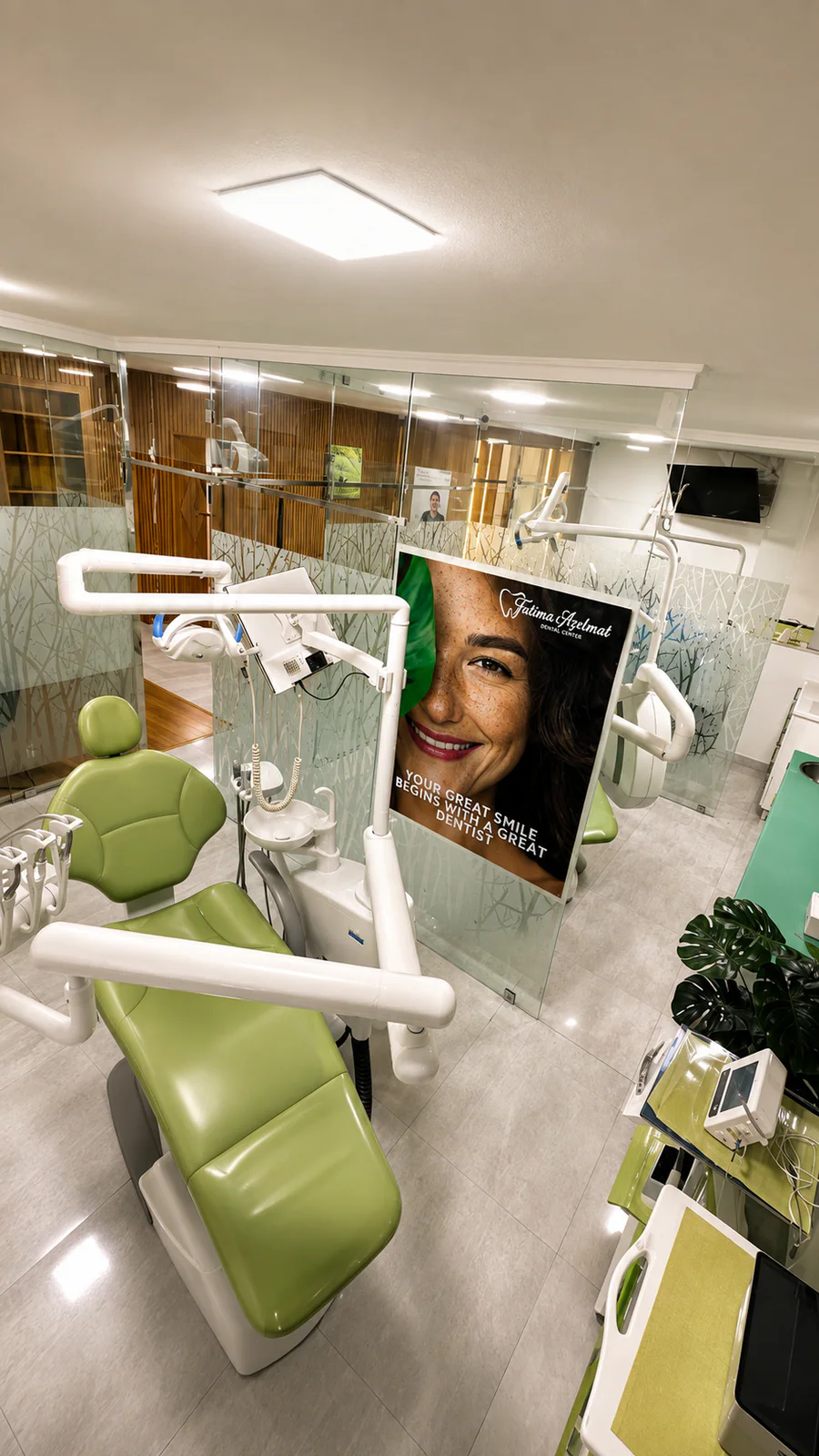
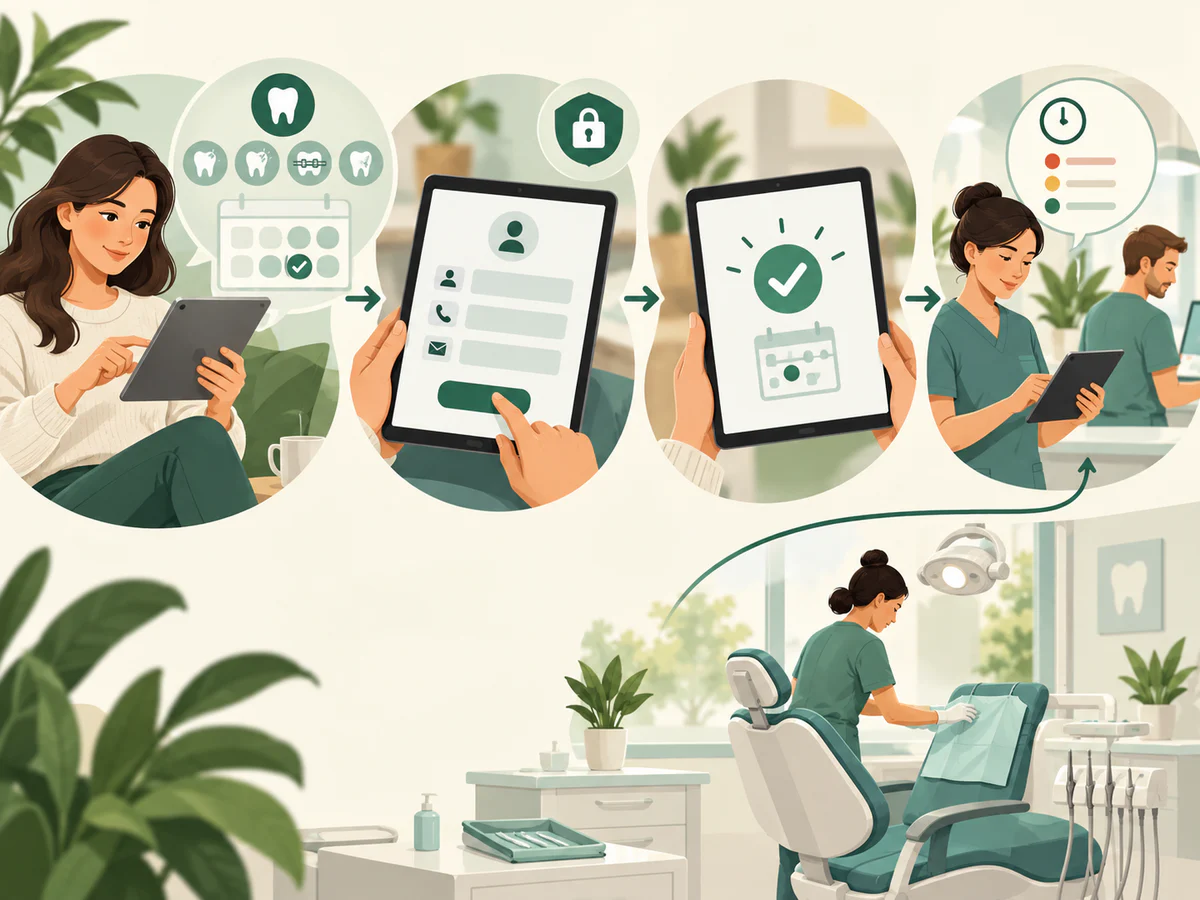
The practice offers an online appointment request. In practical terms, you fill in a short online form indicating your request (first consultation, check-up, pain, follow-up…) and your contact details. You can do this directly from the book an appointment page.
Once your request has been sent, the practice calls you back to confirm the time. This confirmation step is intentional: it lets us settle on a realistic date and time together, based on the reason for your visit and the time it requires, rather than booking “blind” a slot that would not suit that type of care. A routine check-up, a first visit, or treating a painful tooth do not call for the same amount of time.
An online request changes nothing about the consultation itself: once you are at the practice, the examination and explanations proceed as usual. It simply simplifies making contact. And it does not do away with the phone: if you would rather speak to someone, or if your situation is unusual, you can always call during opening hours.
What information to have ready
So that your request is clearly understood, it helps to gather a few things before filling in the form:

- Your exact contact details: last name, first name, and above all a phone number where you can be reached, since that is how the practice will confirm the appointment.
- The reason for the consultation, even in a single sentence: check-up, scaling, pain, broken tooth, follow-up on ongoing treatment, an opinion about an implant… The more specific, the better the slot can be matched.
- How long it has been going on, if it is a symptom: pain that started that same morning is not as urgent as long-standing discomfort.
- When you are available: giving time ranges (for example “preferably late in the day” or “on Saturdays”) speeds up settling on a date.
- For a child, their age and whether this is a first visit: helpful for preparing a good welcome. On that subject, our article on a child’s first dental visit explains how to approach this first appointment calmly.
- Any relevant medical information, where it applies (ongoing treatment, a known allergy, a particular medical history): you will be able to go into detail at the practice in any case.
There is no need, on the other hand, to write everything out in detail: the form is there to start the conversation, not to replace the consultation. In-depth medical questions will find their answers during the examination.
Emergencies: when to call rather than send an online request
An online request suits situations that can wait a little: a check-up, a scaling, an opinion, mild discomfort. It is, however, poorly suited to genuine emergencies, because it means waiting for the practice to call you back. And some situations must not wait.
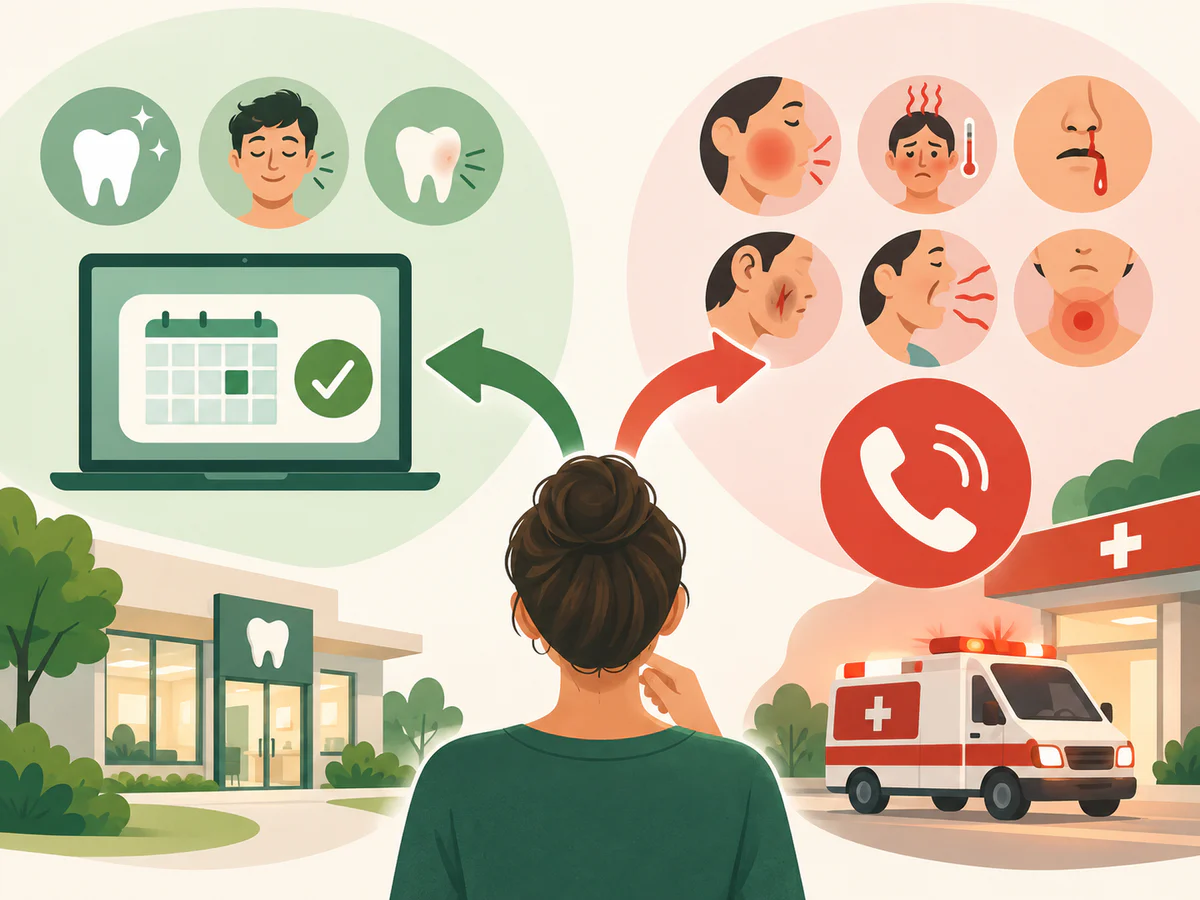
It is better to call the practice directly, or to use an emergency service, particularly in cases of:
- intense pain that does not respond to the usual painkillers;
- swelling of the face, cheek, or gum, especially if it is spreading or comes with a fever;
- bleeding that will not stop;
- trauma: a tooth broken, displaced, or knocked out after an impact (in which case how quickly it is treated is crucial).
In these situations, direct contact makes it possible to assess what is happening and point you in the right direction without losing time. Our page on dental emergencies in Kénitra sets out the signs that call for prompt care and what to do in the meantime. If you are unsure how urgent something is, the safest instinct remains to call: better to phone “for nothing” than to let a situation worsen when it is easily treated if caught early.
Conversely, for plans that call for thought and preparation, such as placing a dental implant in Kénitra, an online request for a first consultation is a good starting point: it opens the conversation with no commitment, and the treatment plan is then built together at the practice.
In summary
Requesting a dentist appointment online is above all a convenience: it lets you send a request at any hour, with no waiting on the phone. At Dr Fatima Azelmat’s practice in Kénitra, you fill in a short online form and the practice calls you back to confirm the time, based on your reason for visiting. To move quickly, have your contact details, the reason for the visit, and your availability ready. Finally, keep one simple rule of thumb in mind: for anything that can wait, send an online request; for an emergency (intense pain, swelling, bleeding, a broken tooth), call directly. Used well, an online request makes the decision to seek care simpler.
Frequently asked questions
Can I request an appointment online at Dr Azelmat's practice?
How is the appointment confirmed?
What information should I have ready for an online request?
What should I do in a dental emergency?
Is an online request as reliable as a phone call?
Sources
Medical references consulted for this article.
- 1Litchfield I, et al. Investigating Patient Use and Experience of Online Appointment Booking in Primary Care: Mixed Methods Study. Journal of Medical Internet Research, 2024;26:e51931
- 2Hassan F, et al. Efficient patient care in the digital age: impact of online appointment scheduling in a medical practice and a university hospital on the no-show rate. Frontiers in Digital Health, 2025 (taux d’absence en ligne 1,8 % vs 5,9 % en cabinet)
- 3Hasvold PE, Wootton R / synthèse American Journal of Medicine, The Effectiveness of Outpatient Appointment Reminder Systems in Reducing No-Show Rates, 2010;123(6):542–548
Contents
Share