You did the right thing: you asked for two opinions. You came home with two sheets of paper. One has a short line. The other has several lines and a very different total. You placed them side by side but could not tell whether they really describe the same care.
If a past experience ended badly, this difference weighs even more heavily. The instinct is then to look for which professional is right. Yet a price difference alone cannot answer that question. The two documents may simply describe two different plans.
What a quote may include
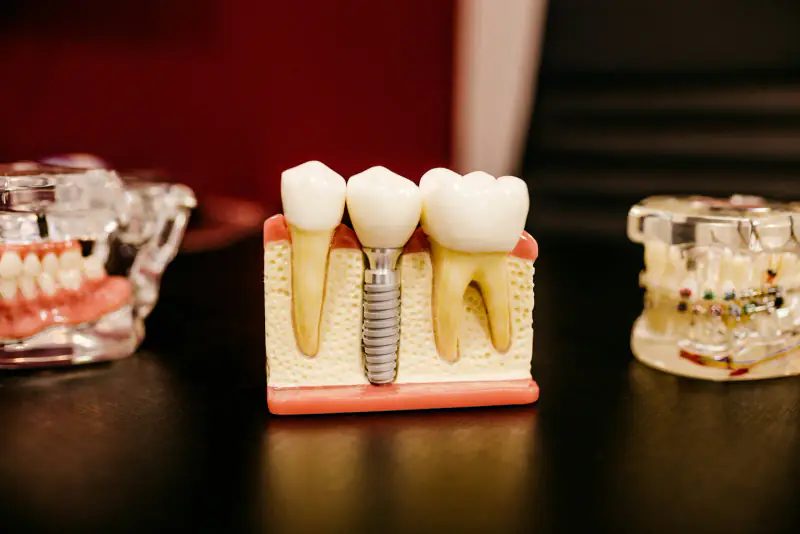
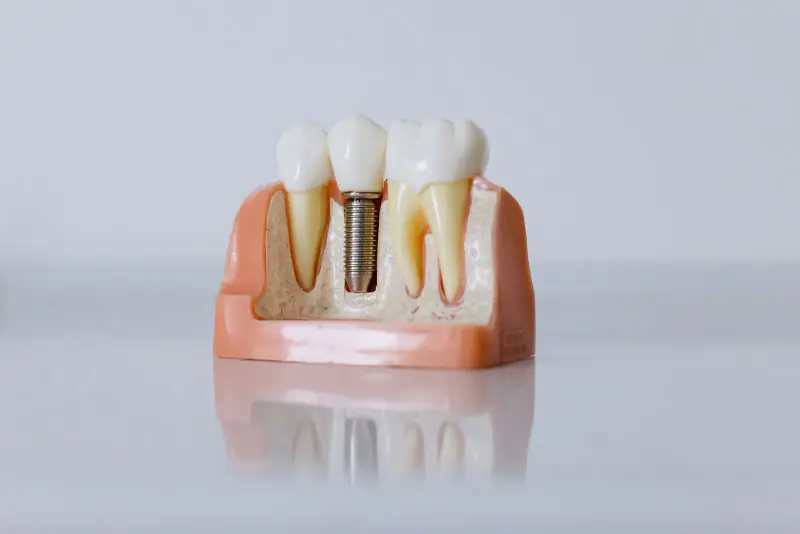
For implant treatment, several components need to be distinguished:
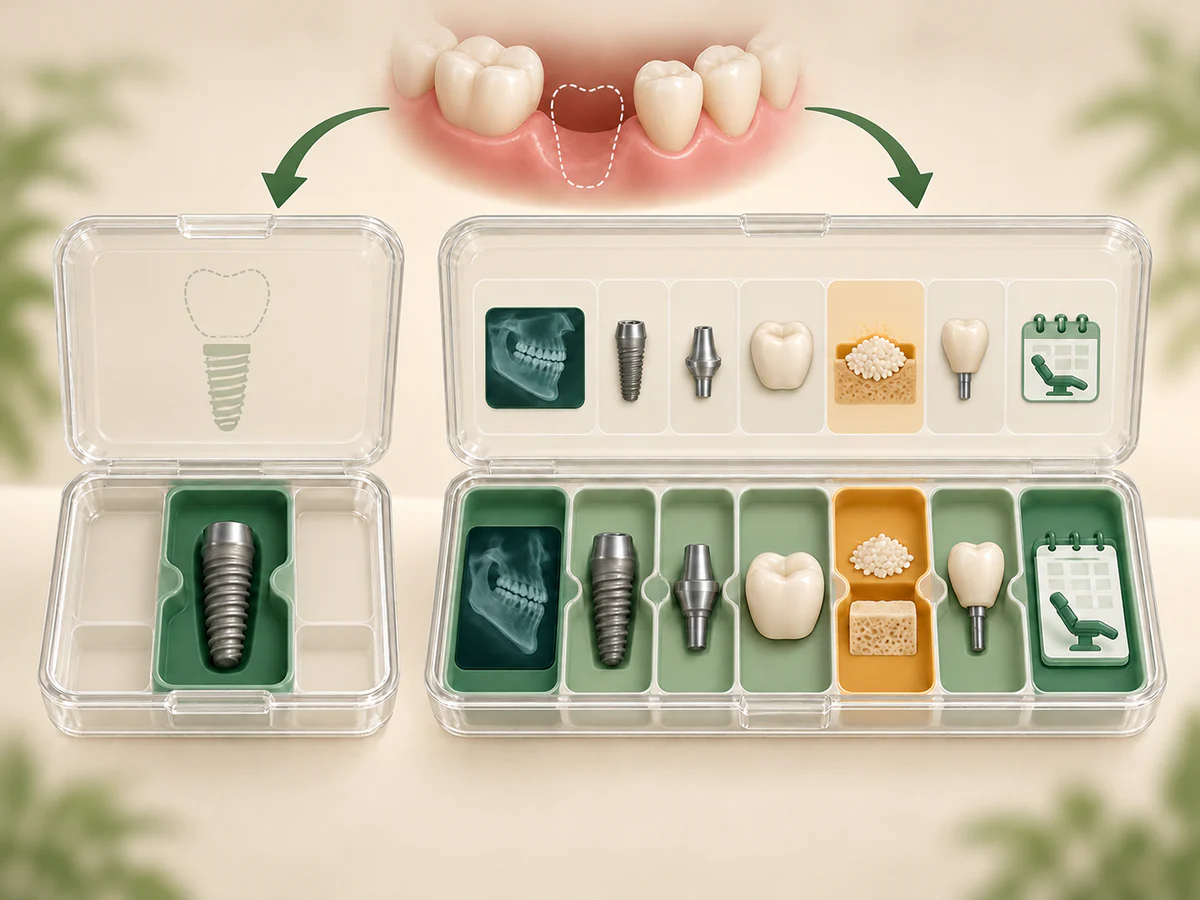
- the examination and imaging when indicated;
- the implant, which replaces the root in the bone;
- the abutment, which connects the implant to the visible tooth;
- the crown or another prosthesis;
- bone reconstruction when required;
- a temporary solution during healing;
- review visits and follow-up.
One sheet may include the crown while the other mentions only the implant. One may include a graft and the other may not. They may cover a different number of teeth or include follow-up in different ways. This proves neither the honesty nor the error of either professional. It shows why the total, in isolation, is not enough.
The article The price of a dental implant and what makes it vary explains these components. This page has a different purpose: to help you turn two figures into two understandable plans.
Questions that make the two plans comparable
Ask the same questions about each document:
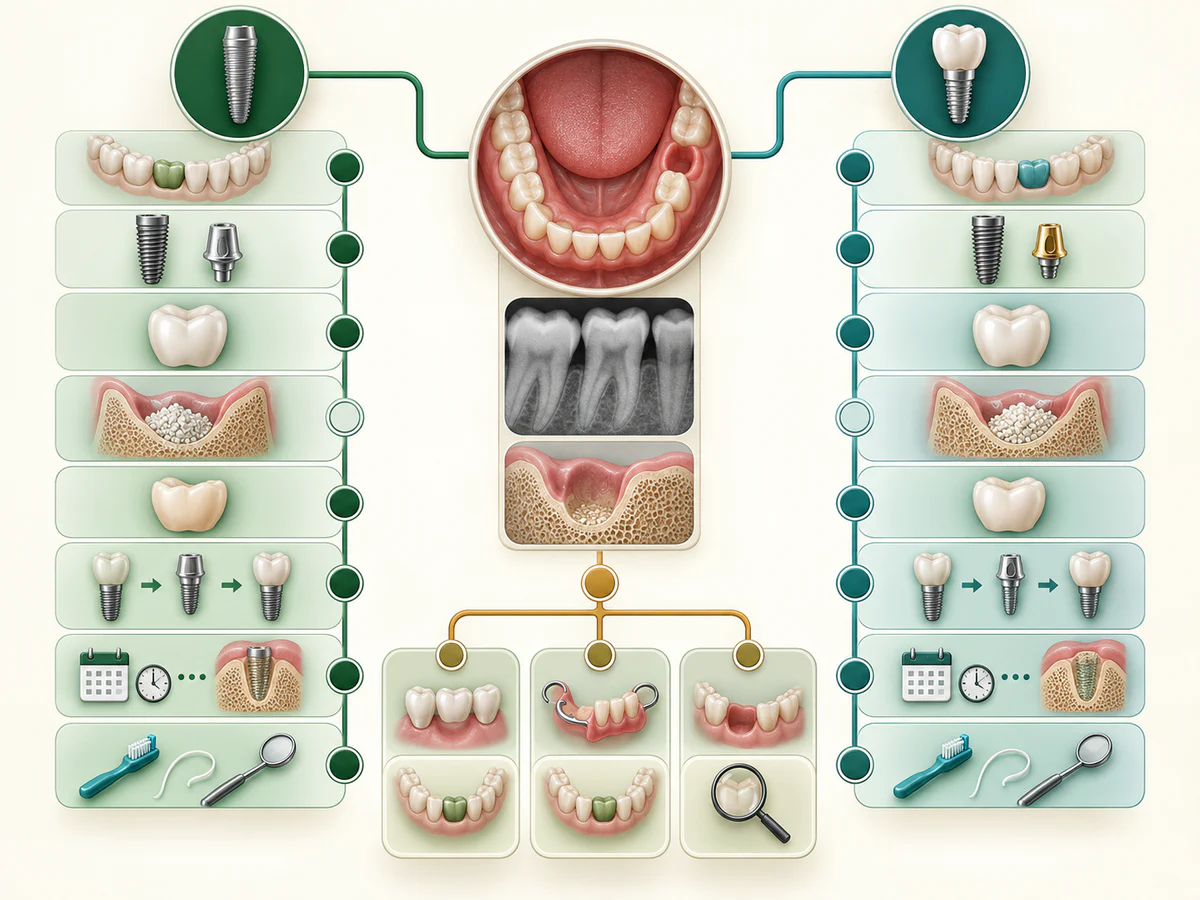
- What was examined and which images were used?
- Are the crown and abutment included?
- Is a graft or another preliminary procedure planned, and why?
- How many visits and which healing times should be expected?
- Which maintenance and follow-up are included, or still need to be organised?
- Which solutions without an implant were discussed?
- Which implant system is planned (brand and model), and on which document is it recorded?
- Who carries out each step: the examination, the implant placement, the prosthesis, the review visits?
- What is written about follow-up: which review visits are planned, and what happens if a component needs to be revisited?
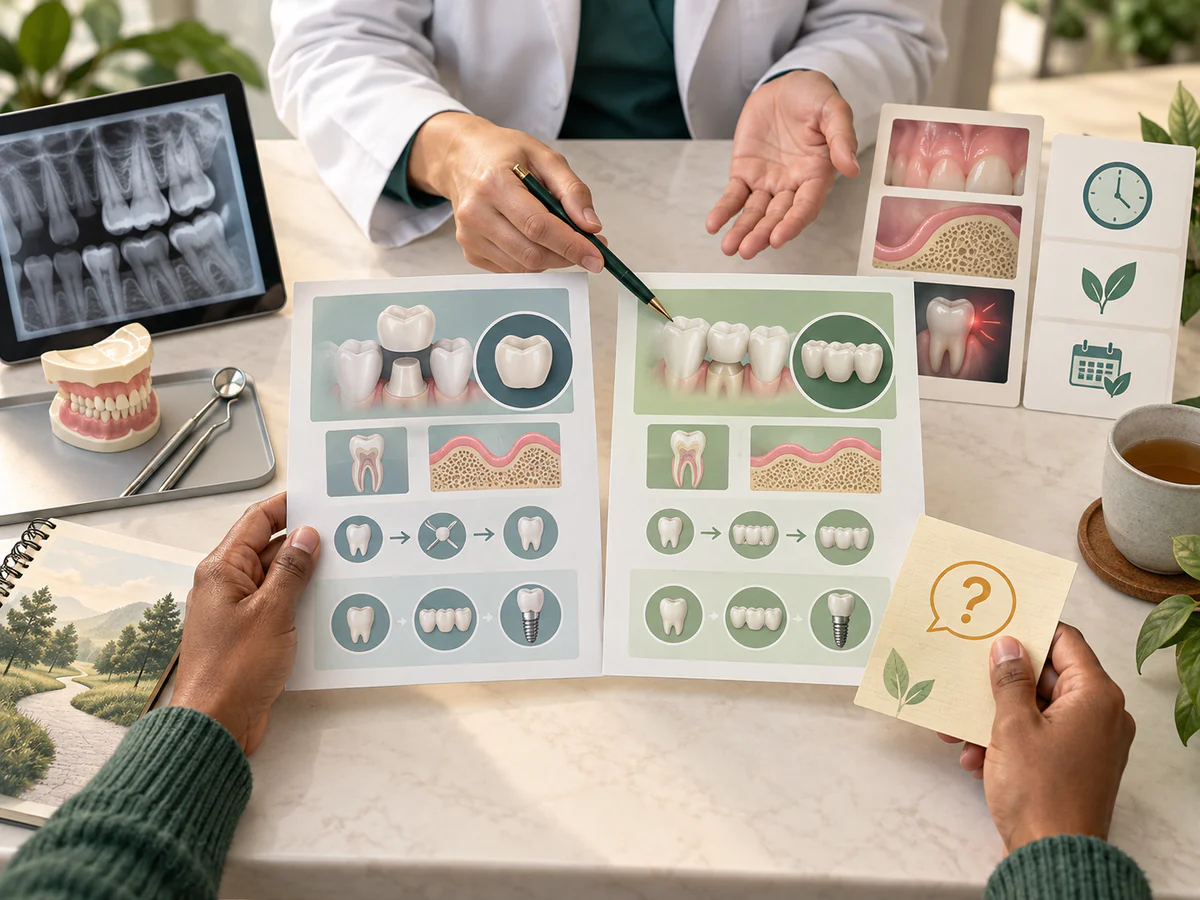
With these answers, you are no longer comparing two totals. You are comparing the stages, assumptions and practical consequences of each proposal. The comparison of implant, bridge or denture can also help you prepare questions about the alternatives.
Taking time to understand elective care is legitimate. You can take your documents away, discuss them at home, and return with questions. If a previous treatment worries you, simply describe what happened and bring the available documents; the aim is to assess your current situation, not to judge remotely what was done.
Graft or no graft: why two opinions can differ
One dentist proposes a bone graft and the other does not. That alone does not show that either of them is wrong. Several reasons can explain the difference:
- The image used. A panoramic X-ray gives a useful overview, but it does not always show the thickness of the bone. When indicated, three-dimensional imaging (Cone Beam) measures the available height and width. Two opinions based on two different images can reach two different conclusions.
- The answer chosen for the same bone. When bone height is limited, one plan may rebuild the bone and another may use a shorter implant, which can be an alternative in some situations. The options are explained in the article on implants when bone is limited.
- The final tooth planned. The implant is positioned according to the future tooth. If the two plans do not place the same tooth in the same position, they do not need bone in the same place.
A graft proposed after an extraction or an implant carried out elsewhere is not, in itself, a sign of poor work. After an extraction, bone can lose volume even when everything went well, and an infection or gum disease before the extraction can also have reduced it. The assessment describes the bone as it is today.
To understand a graft proposal, whichever practice made it, ask these questions:
- How much bone is missing, in height and width, and where?
- On which image was this measured?
- Is the bone loss stable or progressing?
- Which options without a graft were considered (a shorter implant, another position, a bridge, a prosthesis), and why were they set aside?
- Who performs the graft, who follows the healing, and how long should you expect before the implant?
A second opinion before removing one or several teeth
Asking for a second opinion before an extraction is a normal step, especially when you are advised to remove several teeth, or all your remaining teeth in order to place fixed teeth. An extraction cannot be undone: it is legitimate to understand the reason for each tooth before deciding.
So that another practitioner can review the plan, gather:
- recent images, if you have them (the assessment page explains what is useful to bring);
- the written plan, tooth by tooth;
- if the cause is gum disease that has caused bone loss around the teeth, the record of the measurements taken around each tooth, if one exists.
Then ask these questions:
- For each tooth, what is the reason for the extraction: mobility, bone loss, infection, fracture?
- Could some teeth be kept after gum treatment?
- What will replace the teeth, in what order, and with which temporary solution between the stages?
Pain, infection or swelling changes the priority: treating that problem then comes before the comparison. Otherwise, taking the time to gather two opinions is part of an informed decision. The pages on gum care and a loose tooth and bleeding gums describe what the gum examination looks at.
What the assessment should clarify
- What is happening: the current condition of the bone, gum and teeth concerned.
- What needs prompt attention: rarely the quote itself; pain, infection or swelling changes the priority.
- The reasonable options: those described in the two proposals and any that are missing, including options without an implant.
- The steps: their order, what each one includes, and what still depends on the examination.
- The plan: the information needed to put the steps and the cost of each item in writing if treatment is being considered.
The assessment is carried out by Dr Fatima Azelmat, a dental surgeon in Kenitra. The Fees page provides general guidance; it does not replace the evaluation needed for a personalised plan. Scheduling an assessment does not commit you to any treatment.
To read the lines of a quote: what a complete implant includes and what makes the price of a graft vary. An assessment makes two quotes comparable.
Frequently asked questions
Why can two quotes for an implant be very different?
Which items should I look for in an implant quote?
Can I ask for time before deciding?
Is the least expensive quote necessarily incomplete?
Sources
Medical references consulted for this article.
Contents
Share