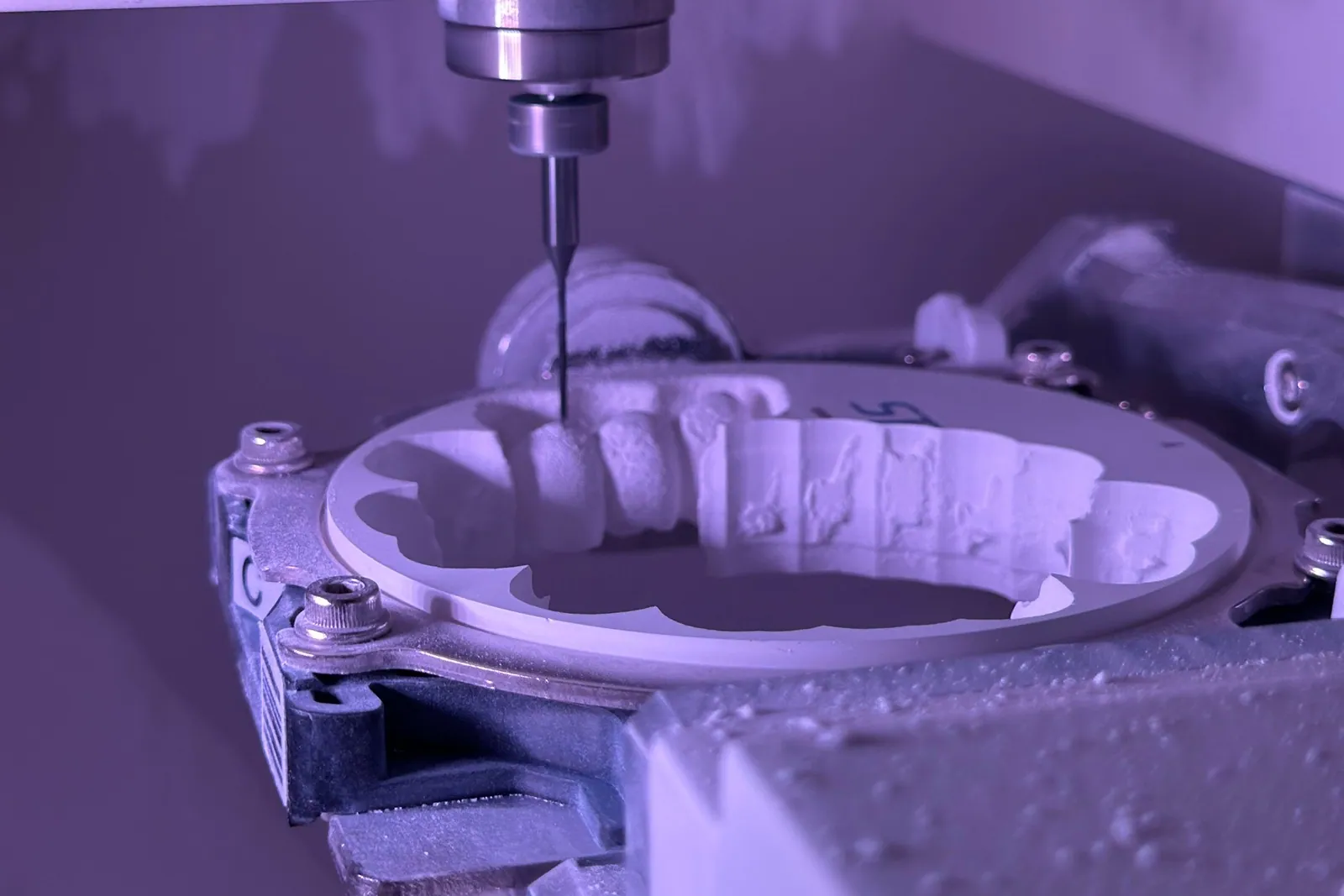
The idea of “metal-free” dentistry appeals to more and more patients: replacing the titanium of implants with a white ceramic, and making prosthetics without any alloy at all. Two avenues carry most of the expectations today: the zirconia implant (a zirconium oxide, a very hard ceramic) presented as an alternative to titanium, and the new 3D-printed resins said to be strong enough for definitive restorations. The honest answer, in one sentence: these solutions do exist, their short-term results are often encouraging, but clinical follow-up remains limited and uneven — to the point that some are not yet recommended for routine use.
As a dental surgeon in Kénitra, I offer here a measured overview, based on systematic reviews and recent clinical studies. This article is a general explanation of these technologies, not the description of any particular piece of equipment: its purpose is to help you understand what “metal-free” really means, what the evidence says, and where the areas of uncertainty lie. No figure quoted here is an individual guarantee: these are study data, to be read as probabilities.
Why want “metal-free”?
For decades, titanium has been the reference material in implantology, and for good reasons: it integrates very well with bone and benefits from considerable clinical follow-up. True titanium allergies are rare, a point covered in detail in our article on titanium implant allergy and rejection. The demand for “metal-free” therefore reflects less an absolute medical necessity than several legitimate motivations.
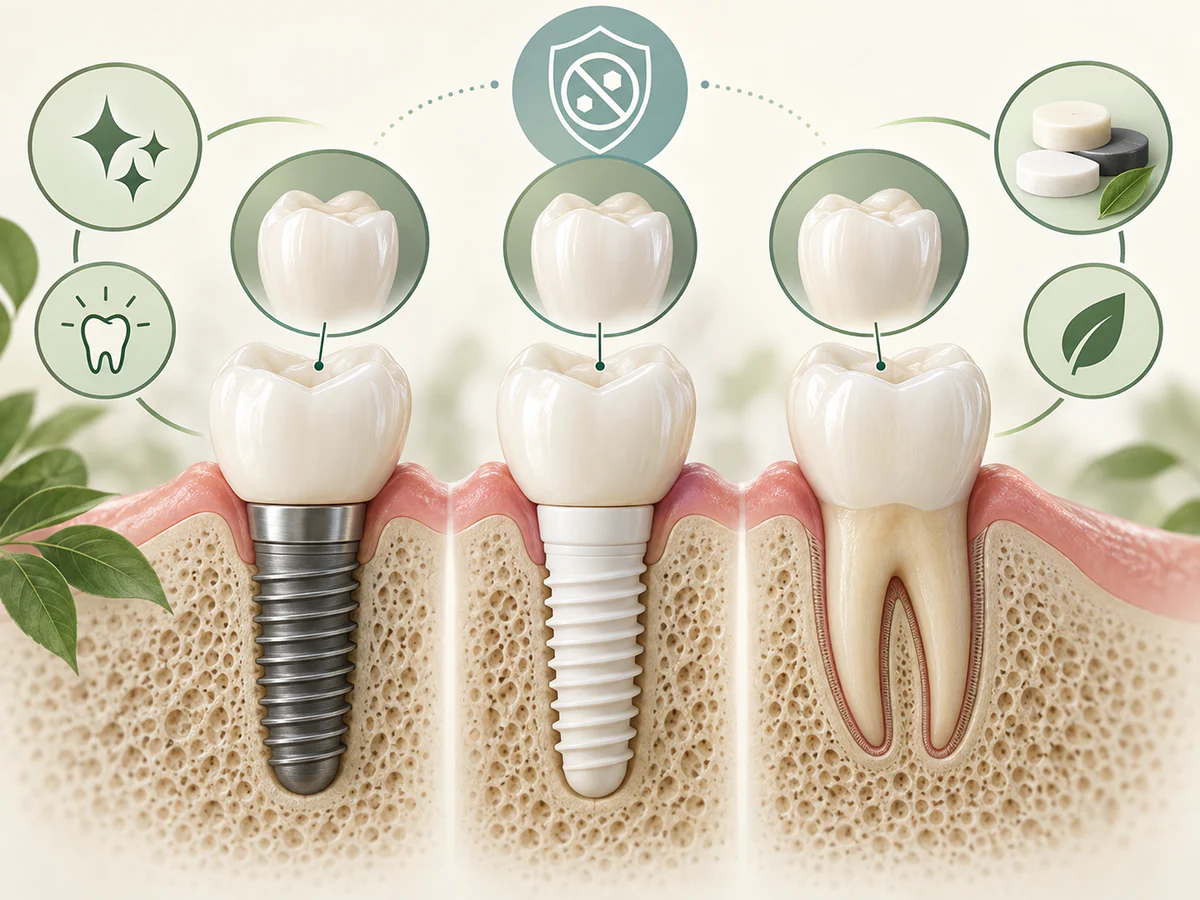
The first is aesthetic. A gray titanium root can show through a thin gum, or in cases of recession, producing a dark line; a white ceramic avoids that risk. The second is perception: some patients wish to avoid metal entirely, out of personal preference or out of concern — often without any demonstrated allergy — about a sensitivity. The third concerns the soft tissues: zirconia appears to accumulate less plaque and to be well tolerated by the gum. These motivations are legitimate, but they do not remove the need to assess each solution on its evidence.
The zirconia implant: a credible but young alternative
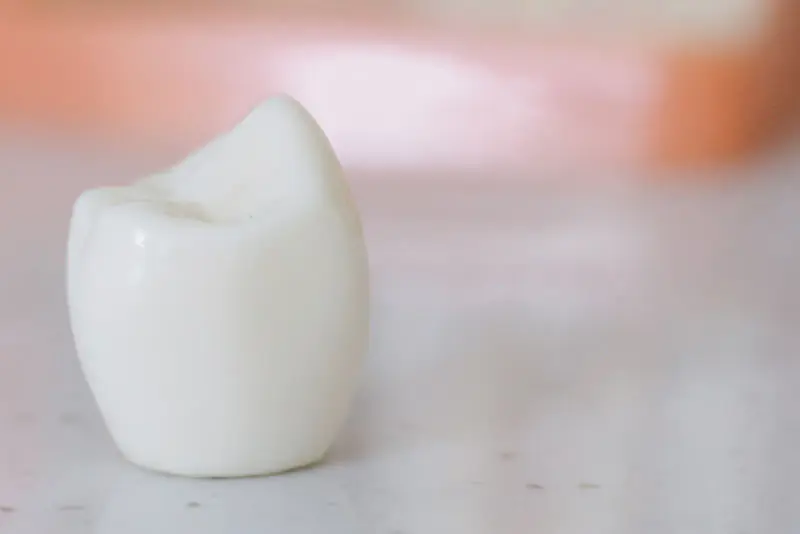
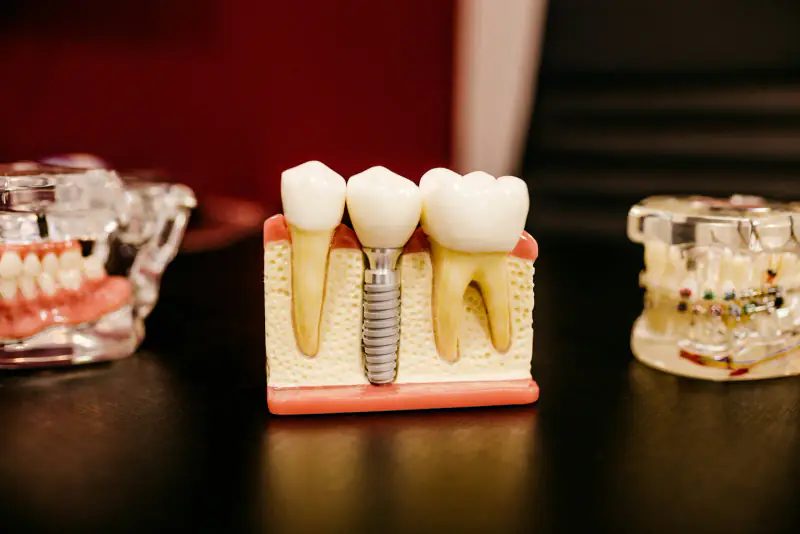
The zirconia implant is an implant screw made of zirconium oxide ceramic, white, intended to replace the artificial titanium root. On paper, the argument is appealing: no metal, a color that favors gingival aesthetics, good soft-tissue tolerance. But what matters most is the clinical data.
What short-term reviews show
In the short term, the results are rather reassuring. The systematic review by Hashim and colleagues (Clinical Oral Investigations, 2016) calculated an overall survival rate for zirconia implants of about 92% (95% confidence interval: 87–95) after one year of function. More recently, the systematic review with meta-analysis by Padhye and colleagues (Clinical Oral Investigations, 2023) directly compared zirconia and titanium and found no statistically significant difference in survival at twelve months; it even observed a gingival aesthetic score (Pink Aesthetic Score) slightly in favor of zirconia.
These data suggest that at one year, a well-placed zirconia implant may perform on a par with titanium and offer an aesthetic advantage at the gum line. That is an encouraging starting point.
The problem of long-term follow-up
The qualification, and it is decisive, is that these conclusions rest on a thin, short-term evidence base. Padhye and colleagues (2023) point this out themselves: out of more than 6,000 references screened, only 4 articles could be retained, corresponding to 2 clinical trials, with limited follow-up periods and heterogeneous designs. The authors conclude that long-term randomized trials remain necessary before any superiority can be claimed.
A recent prospective study illustrates that caution starkly. Kohal and colleagues (Clinical Oral Implants Research, 2025) followed one-piece zirconia implants for single teeth over ten years: the survival rate was only about 73%, with overall success lower still and marginal bone loss above 2 mm in a notable share of the implants. The authors did not recommend this particular model for routine use. That result, far less favorable than the one-year figures, is a reminder that a good start does not predict longevity, and that performance varies widely depending on implant design.
One-piece or two-piece?
Historically, zirconia implants were mostly one-piece (screw and abutment in a single unit), which simplifies manufacturing but requires loading the implant from the outset and makes prosthetic management more complex. The reviews note that one-piece models often show low marginal bone loss, but with a non-zero risk of spontaneous fracture (Hashim et al., 2016, reported generally low fracture rates, with one exceptionally high study). Two-piece models, more recent, come closer to the logic of titanium and show high medium-term survival in several series, sometimes at the cost of slightly more marked bone loss. The choice between these designs, like all implant planning, calls for an individual assessment.
3D-printed resins for definitive restorations
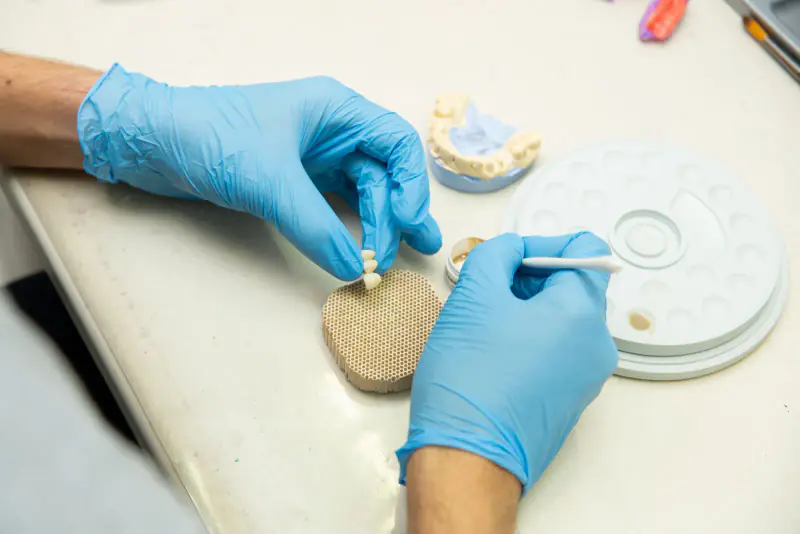
The second front of “metal-free” concerns the manufacture of prosthetics. 3D printing, already well established for models, surgical guides and temporaries, now claims to produce definitive restorations — crowns, veneers — in resin, with no metal framework. The question is no longer “can we print a tooth?” but “will this printed tooth last over time?”.
Mechanical properties still lagging behind
The comparative data invite caution. The systematic review by Abad-Coronel and colleagues (Materials, 2025) compared the flexural strength, fatigue behavior and hardness of 3D-printed resins for indirect restorations with those of milled and conventional materials: the printed resins generally showed lower flexural strength and hardness than milled blocks. The authors also noted that the type of printer and the polymerization time strongly influenced the results — in other words, the manufacturing protocol weighs heavily on final performance.
Another systematic review devoted to printed resins for definitive restorations (Journal of Prosthetic Dentistry, 2025) reaches a similar conclusion: the mechanical performance of these resins only just meets expectations for single-unit restorations and remains inferior to that of other materials. To place these materials alongside the better-documented metal-free ceramics, you can read our articles on zirconia and metal-free ceramics and on ceramic or zirconia crowns.
Color and ageing in the mouth
Beyond strength, durability over time is a concern. A clinical study by Doumit and colleagues (Journal of Dentistry, 2024) assessed the color stability of non-invasive printed restorations after 24 months in the mouth: most restorations showed perceptible to significant color changes, and the authors recommended limiting this type of restoration to a service life of around six months. That result, obtained on materials of a given generation, illustrates that “printable” does not yet mean “as durable as a ceramic”.
The review literature converges: there is a lack of randomized clinical trials evaluating printed definitive restorations, and several of the few available studies looked at materials that have since been withdrawn from the market. This is a very fast-moving technology, one whose clinical evidence struggles to keep pace with new products.
Comparison: where does the evidence stand?
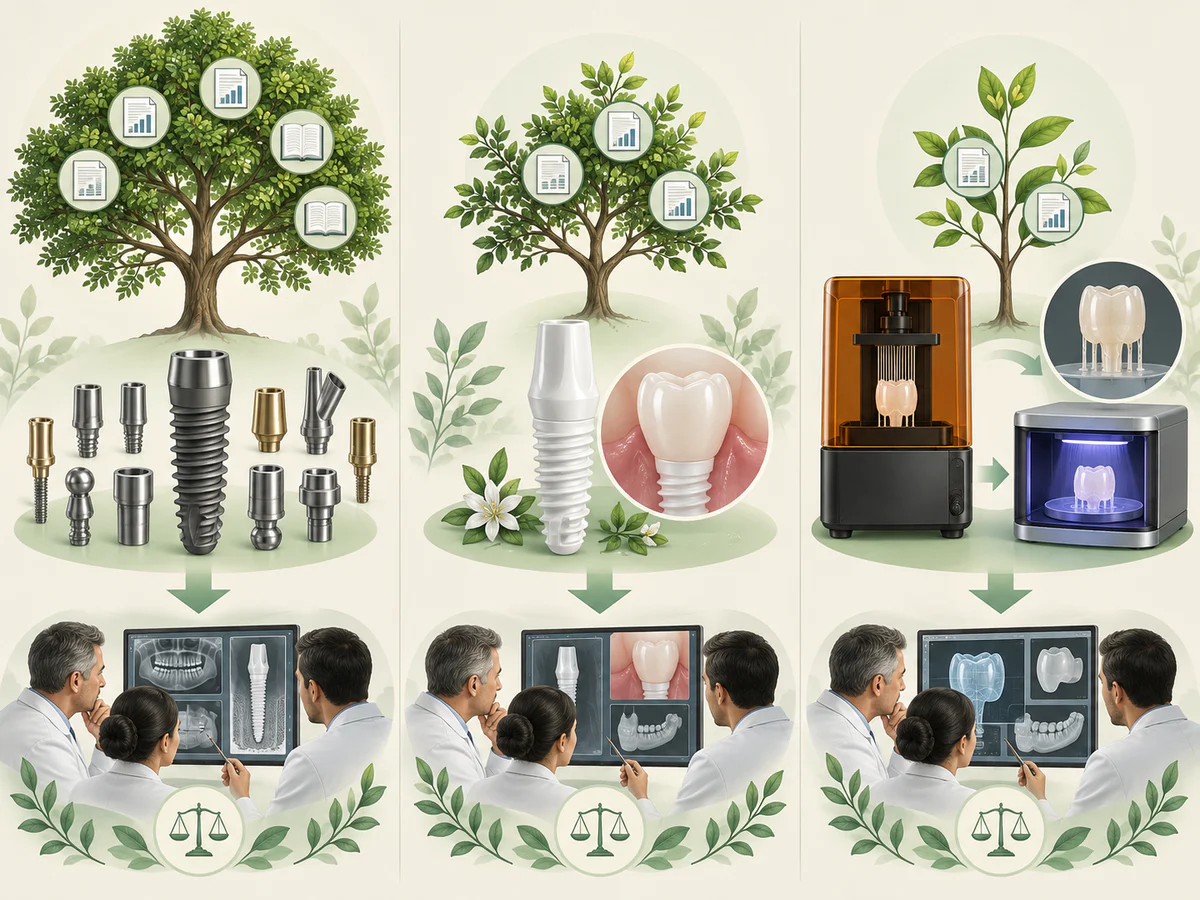
The table below summarizes the state of the evidence for each “metal-free” solution, relative to the well-documented references.
| Solution | Maturity of the evidence | What the studies show | Main limitation |
|---|---|---|---|
| Titanium implant (reference) | High, several decades of follow-up | High, extensively documented long-term survival | Possible gray line on a thin gum |
| Zirconia implant | Moderate in the short term, low in the long term | Survival ≈ 92% at 1 year; comparable to titanium at 12 months (Padhye, 2023); but ≈ 73% at 10 years for a one-piece model (Kohal, 2025) | Few long randomized trials; results vary widely depending on design |
| Metal-free ceramic prosthesis (milled zirconia, disilicate) | High | Favorable survival at 5–10 years (milled ceramics) | Still subject to fracture and ageing |
| 3D-printed definitive restoration | Low (emerging) | Mechanically behind milled blocks (Abad-Coronel, 2025); unstable color at 24 months (Doumit, 2024) | Lack of long clinical trials; rapidly changing materials |
This table is not a ranking from “good” to “bad”: it is a map of the level of evidence. A recent solution is not a bad one; it is simply less documented, which calls for more caution and closer follow-up.
What “metal-free” does not provide
It is important to name what these technologies do not guarantee, so as to avoid any over-promise.
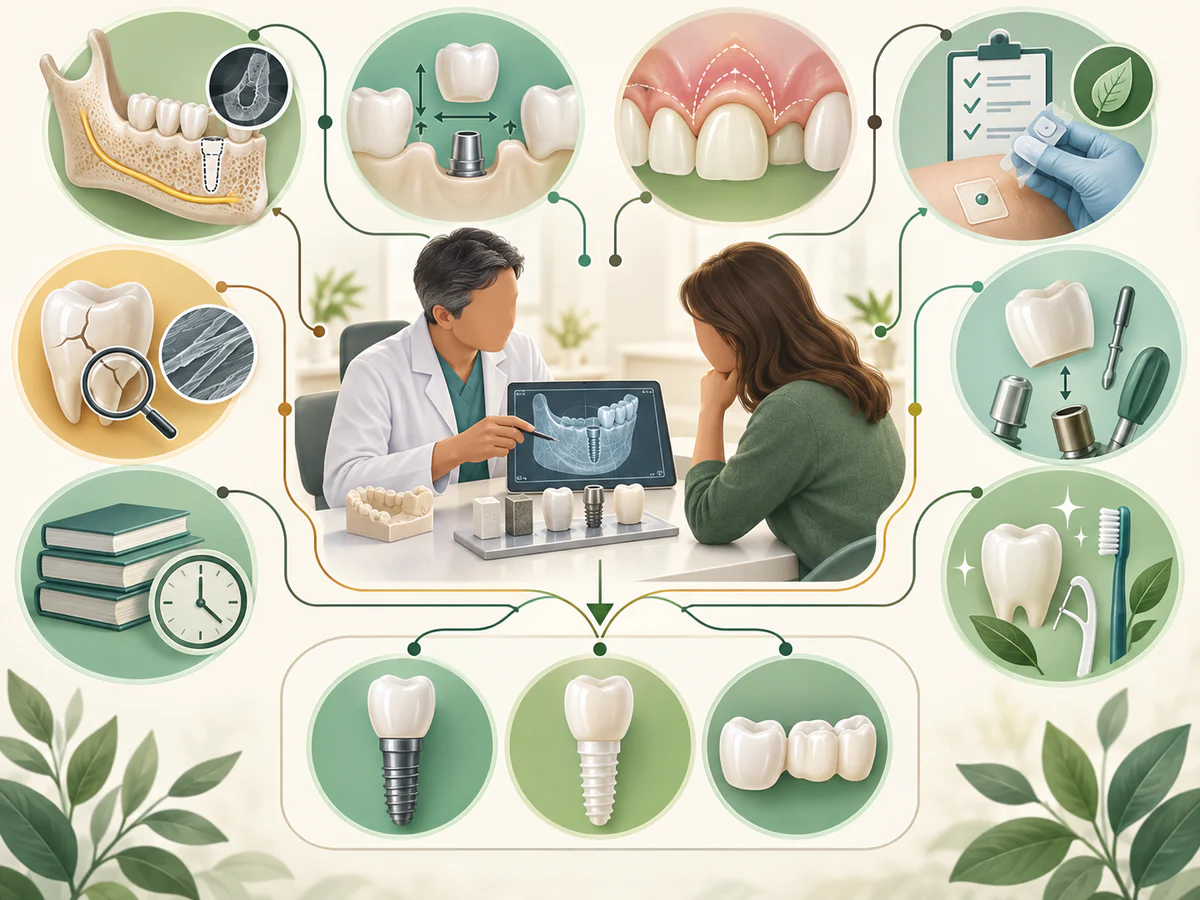
“Metal-free” is not, in itself, a guarantee of better health. Titanium remains a safe and proven material, and true allergies are rare; choosing ceramic is most often a matter of aesthetic or personal preference, not a demonstrated medical necessity. Promising a health benefit simply from having avoided metal would be misleading.
“Metal-free” does not remove the risk of failure. A zirconia implant can, like a titanium implant, lose its osseointegration, develop peri-implantitis or fracture; the symptoms to watch for are the same and are described in our article on the signs of implant failure. Likewise, a printed crown can wear, stain or break.
Finally, these technologies replace neither the clinical indication, nor oral hygiene, nor follow-up. Bone quality, plaque control, occlusion and maintenance determine the outcome at least as much as the material chosen. No ceramic, however modern, removes the need for rigorous care and regular check-ups.
Ceramic or zirconia crowns at the practice; Dental implant: indications and limitations.
In summary
“Metal-free” dental solutions are genuinely progressing, but at very different stages of maturity. The zirconia implant is a credible alternative to titanium, with comparable one-year results and a gingival aesthetic advantage (Padhye et al., 2023), but its long-term follow-up remains limited and uneven — to the point that a ten-year study reports markedly lower survival for one given one-piece model (Kohal et al., 2025). The 3D-printed resins for definitive restorations are more emerging still: their mechanical properties remain behind those of milled materials (Abad-Coronel et al., 2025) and their color stability at two years is disappointing (Doumit et al., 2024). As the evidence stands, these technologies deserve interest but call for caution: the choice of a material, metal-free or not, should rest on an individual assessment, honest information about the level of available follow-up, and regular monitoring — never on a promise.
Frequently asked questions
Is a zirconia implant as reliable as a titanium implant?
Why choose a metal-free implant if there is no titanium allergy?
Can a definitive 3D-printed crown be made today?
Does a zirconia implant prevent peri-implantitis and failure?
What is the difference between a one-piece and a two-piece zirconia implant?
Does the practice place metal-free implants?
Sources
Medical references consulted for this article.
- 1Hashim D, Cionca N, Courvoisier DS, Mombelli A, A systematic review of the clinical survival of zirconia implants, Clinical Oral Investigations, 2016
- 2Padhye NM, Calciolari E, Zuercher AN, Tagliaferri S, Donos N, Survival and success of zirconia compared with titanium implants: a systematic review and meta-analysis, Clinical Oral Investigations, 2023
- 3Kohal RJ et al., Ten-Year Results of a Prospective Study on One-Piece Zirconia Oral Implants for Single-Tooth Reconstruction, Clinical Oral Implants Research, 2025
- 4Abad-Coronel C et al., Flexural Strength, Fatigue Behavior, and Microhardness of 3D-Printed Resin Material for Indirect Restorations: A Systematic Review, Materials (Basel), 2025
- 5Doumit M, Beuer F, Böse MWH, Nicic R, Hey J, Prause E, The colour stability of 3D-printed, non-invasive restorations after 24 months in vivo, Journal of Dentistry, 2024
- 6Properties of 3D printed resins for definitive dental restorations: A systematic review, Journal of Prosthetic Dentistry, 2025
- 7Duarte S et al., Advances in Dental Restorations: A Comprehensive Review of Machinable and 3D-Printed Ceramic-Reinforced Composites, Journal of Esthetic and Restorative Dentistry, 2025
Contents
Share