Orthodontics corrects the position of the teeth and the way the two jaws fit together. Long associated with adolescence, it also concerns adults, for functional as much as aesthetic reasons. In Kénitra, a frequent request comes from adults whose teeth have shifted over time, sometimes after the loss of a tooth, or who are preparing a prosthetic or implant project. This article describes the indications, the choice between aligners and braces, and the conditions for a stable result, drawing on identified sources and without promising a set duration or a guaranteed outcome.
Like any treatment, orthodontics has indications, limits and after-effects. Aligning teeth takes time, a healthy periodontium, and retention to hold the result. Presenting alignment as permanent and free of constraints would be inaccurate.
Adult orthodontics: for what reasons?
In adults, orthodontics addresses several situations:
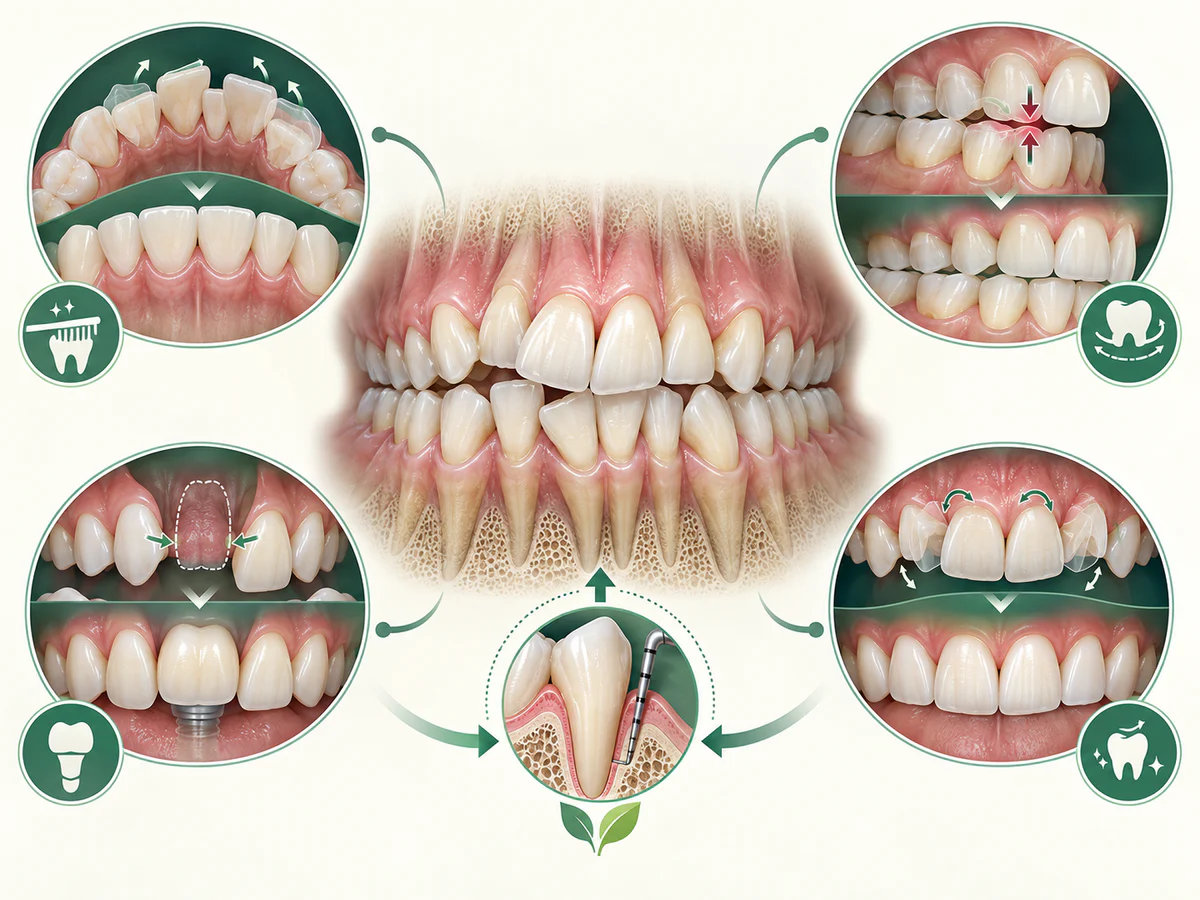
- crowding that gets in the way of brushing and encourages plaque;
- teeth that have drifted or tipped, often after the loss of a neighboring tooth;
- a bite that distributes chewing forces poorly;
- a wish to align the smile for aesthetic reasons.
The decision does not rest on the aesthetic request alone. It follows a clinical examination, an analysis of the bite and, if necessary, imaging. The goal and the limits are set out before starting.
Aligning before an implant or a prosthesis
When a tooth has been missing for a long time, the neighboring teeth have sometimes tipped into the space and the opposing tooth may have over-erupted. Before placing an implant or a prosthesis, repositioning these teeth makes it possible to reopen the space, straighten an axis and improve the final bite. This pre-prosthetic orthodontics is coordinated with the implant plan, whose stages are described in our guide to dental implant placement. If different replacement options are still being considered, see implant, bridge or denture: how to choose.
Clear aligners or braces: what does the literature say?
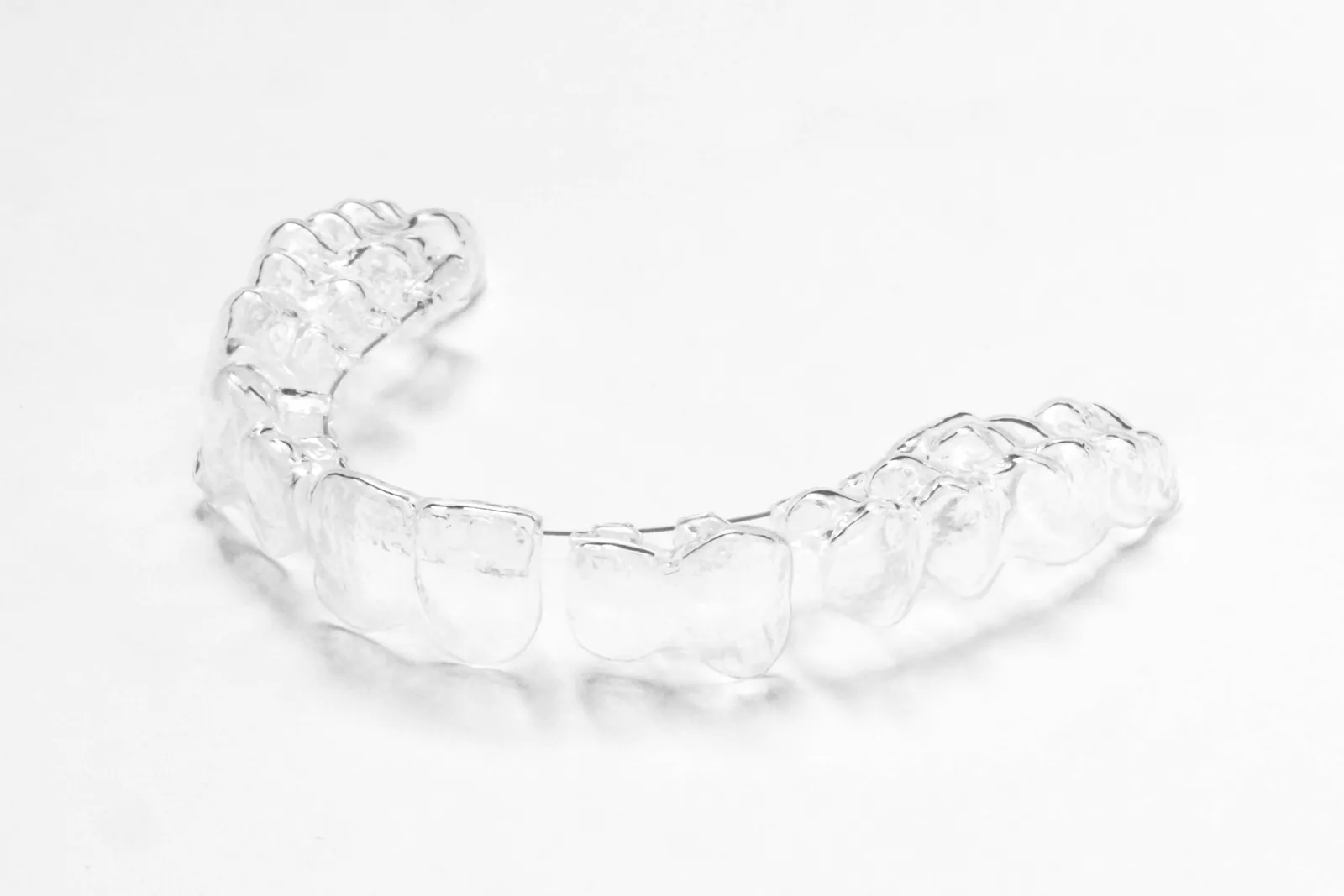
There are two broad families of appliances: clear aligners, removable trays changed in stages, and fixed multibracket appliances, or braces.
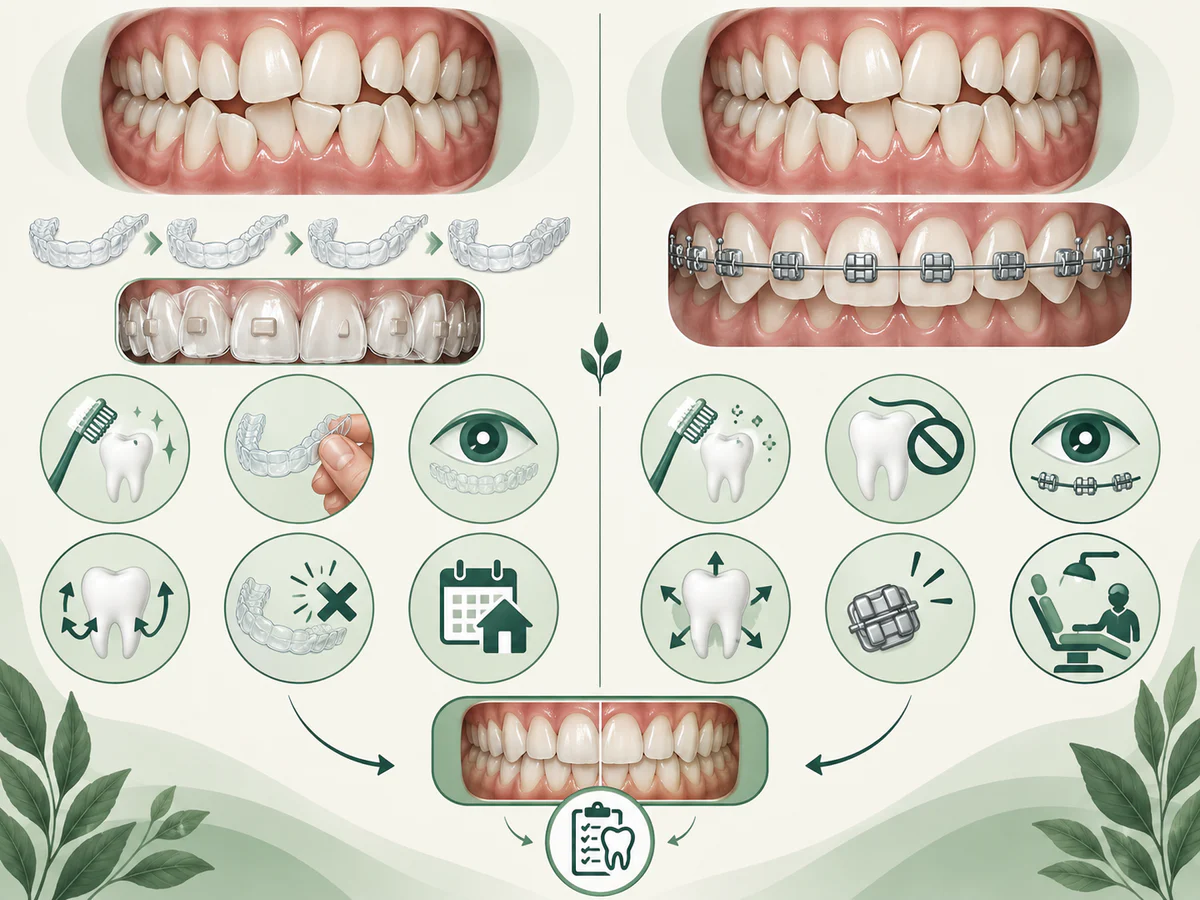
The systematic review with meta-analyses by Papageorgiou et al. (2020, European Journal of Orthodontics) compared the results of comprehensive treatments carried out in adults. It concluded that aligners were associated with poorer occlusal outcomes than fixed appliances for this type of treatment. This does not disqualify aligners: they often respond well to simpler corrections and offer a discretion that patients appreciate. But certain movements remain less predictable with them, and complex cases often point toward braces.
The choice is therefore made after the examination, the analysis of the bite and the definition of the objectives. It depends on the type of movement to be achieved, on the condition of the teeth and gums, and on the expected compliance, since aligners only work if they are worn for the prescribed amount of time each day.
One prerequisite: healthy gums
Orthodontics moves the teeth through the bone that supports them. This movement is safe only if the periodontium, that is, the gum and the supporting bone, is healthy or stabilized. Moving teeth on a background of active periodontitis can accelerate bone loss.
That is why a periodontal assessment precedes the orthodontic plan. Inflammation or periodontitis is dealt with first, as explained in periodontitis or gingivitis: understanding the difference and bleeding gums: causes and what to do. Hygiene is also decisive throughout the treatment, particularly with braces, around which plaque builds up more easily.
After treatment: retention
Achieving alignment is only one stage. Once the teeth are in place, they have a natural tendency to drift back toward their original position: this is relapse.
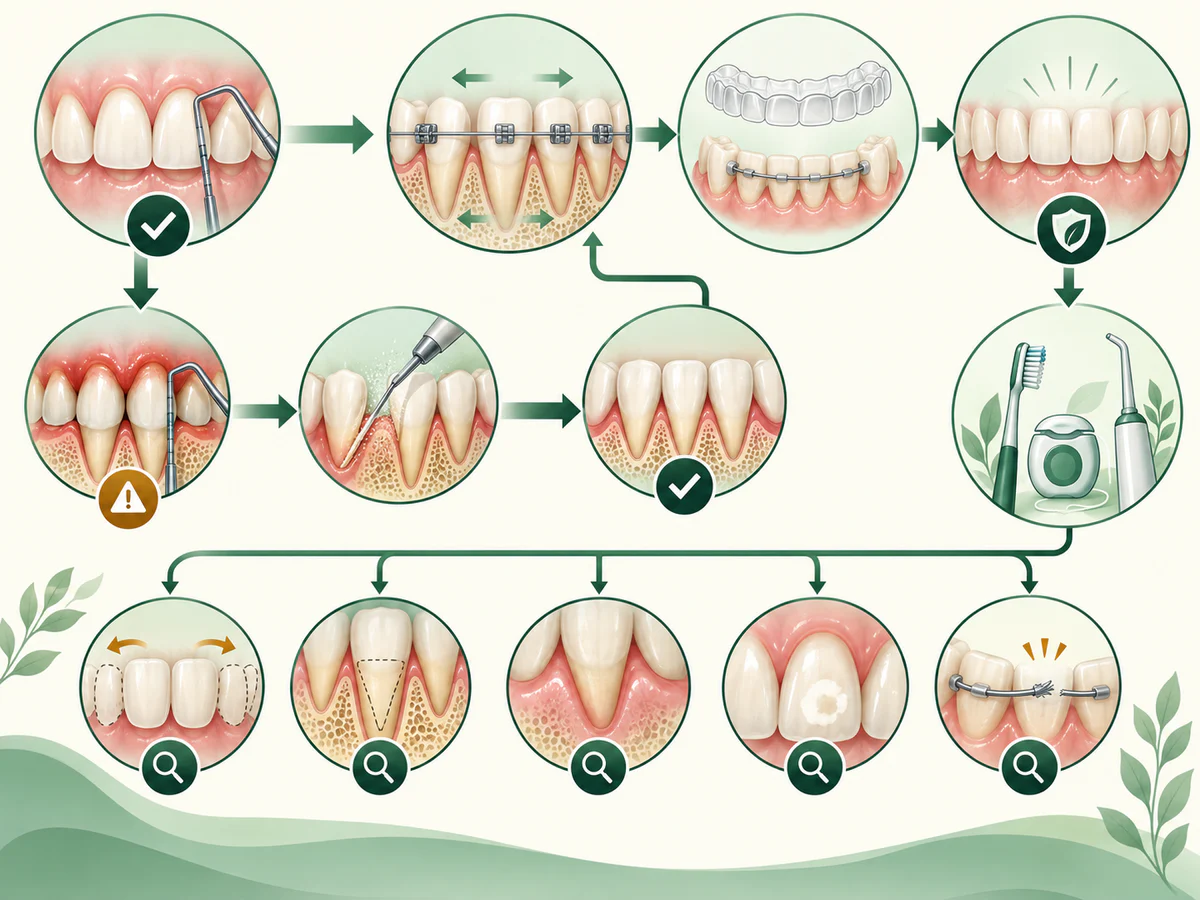
The Cochrane review by Littlewood et al. (2016) points to this risk and concludes that there is, to date, no evidence of sufficient quality to state that one retention method is superior to another. In practice, a retainer, either a wire bonded behind the teeth or a night-time tray, is put in place and often kept for a prolonged period to stabilize the result. Presenting alignment as settled and permanent without retention would be an overpromise.
Limits and risks
Honest information also means mentioning the limits:
- the length of treatment varies with the complexity of the case and cannot be guaranteed in advance;
- insufficient hygiene around braces can lead to white demineralization spots on the enamel;
- root resorption can occur, most often moderate, and is monitored;
- certain situations involving a significant discrepancy between the jaws call for combined orthodontic and surgical management, which is beyond the scope of this article.
In summary
Adult orthodontics is a credible option for aligning the teeth, improving function and preparing a prosthetic or implant project. It assumes healthy gums, an appliance chosen to suit the case rather than the fashion, and retention to make the result last. The type of treatment, aligners or braces, is decided after an assessment, never in advance, and no duration and no result can be guaranteed as a matter of principle. It is this cautious framework that makes it possible to decide with full knowledge of the facts.
Frequently asked questions
Is orthodontics only for teenagers?
Are clear aligners as good as braces?
Do you have to wear a retainer after treatment?
Can the teeth be aligned before an implant?
Sources
Medical references consulted for this article.
- 1Papageorgiou et coll. 2020, aligneurs vs appareils fixes, European Journal of Orthodontics
- 2Littlewood et coll. 2016, contention après traitement orthodontique, Cochrane Database of Systematic Reviews
- 3OMS, Global Oral Health Status Report 2022 (communiqué)
- 4UFSBD, fiches patients (Union Française pour la Santé Bucco-Dentaire)
Contents
Share