Every time you come to the practice, important information is created: an X-ray, a photo of your teeth, notes on the treatment performed, a prescription, the date of your next check-up. For a long time, all of this lived on paper and in X-ray binders. Today, this data is most often brought together in a “digital patient record.”
This article is deliberately educational. It explains what this record is, what it contains, what it changes in practical terms for your follow-up — and, most importantly, how your health data is protected in Morocco and what rights you have over it. The goal is not to sell a technology, but to help you understand a tool that touches on very personal information: your health.
What is a digital patient record?
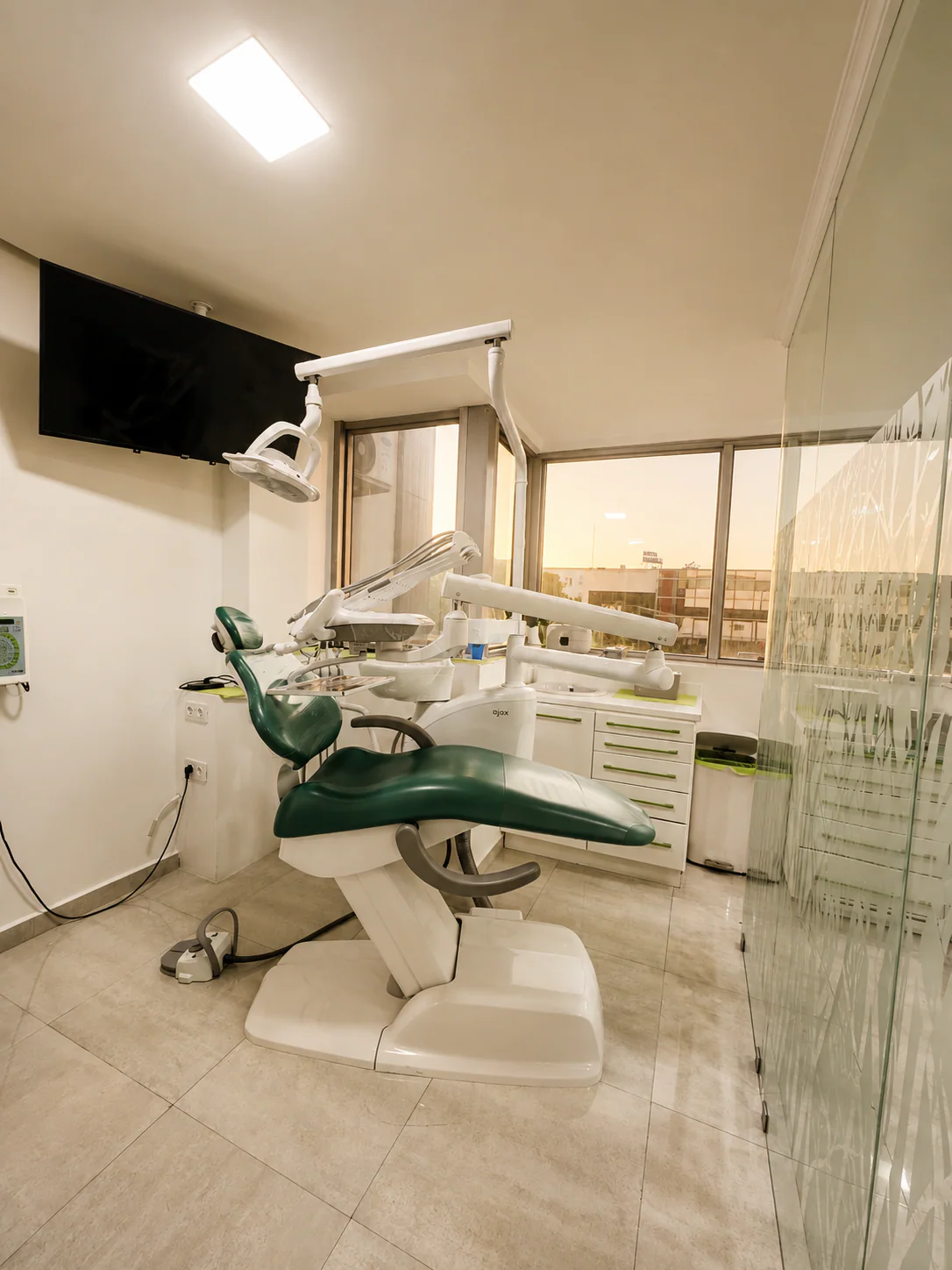
The digital patient record is simply the electronic version of your medical record at the practice. Instead of a cardboard folder and film X-rays stored in a drawer, your information is recorded in the practice’s management software, on a secure, backed-up computer.
This is not some “gimmicky novelty.” Keeping a complete, up-to-date record is an ethical obligation for every dental surgeon, whether the medium is paper or digital. Going digital does not change that obligation: it mainly changes how information is filed, retrieved, and protected. A well-kept record is, in fact, the foundation of good follow-up, from the first visit onward and throughout your care journey.
What it contains
A digital patient record gathers, filed by date, the documents needed for your care. It most often includes:
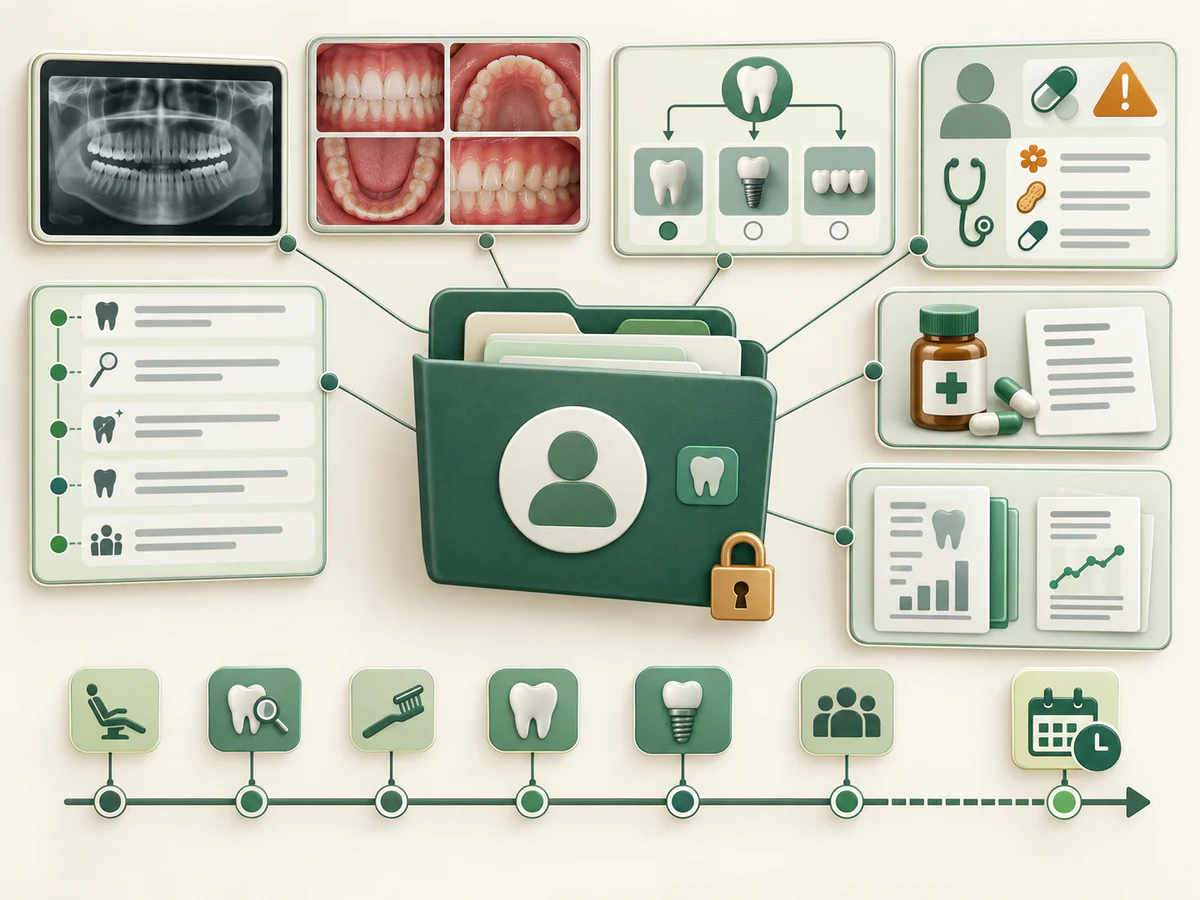
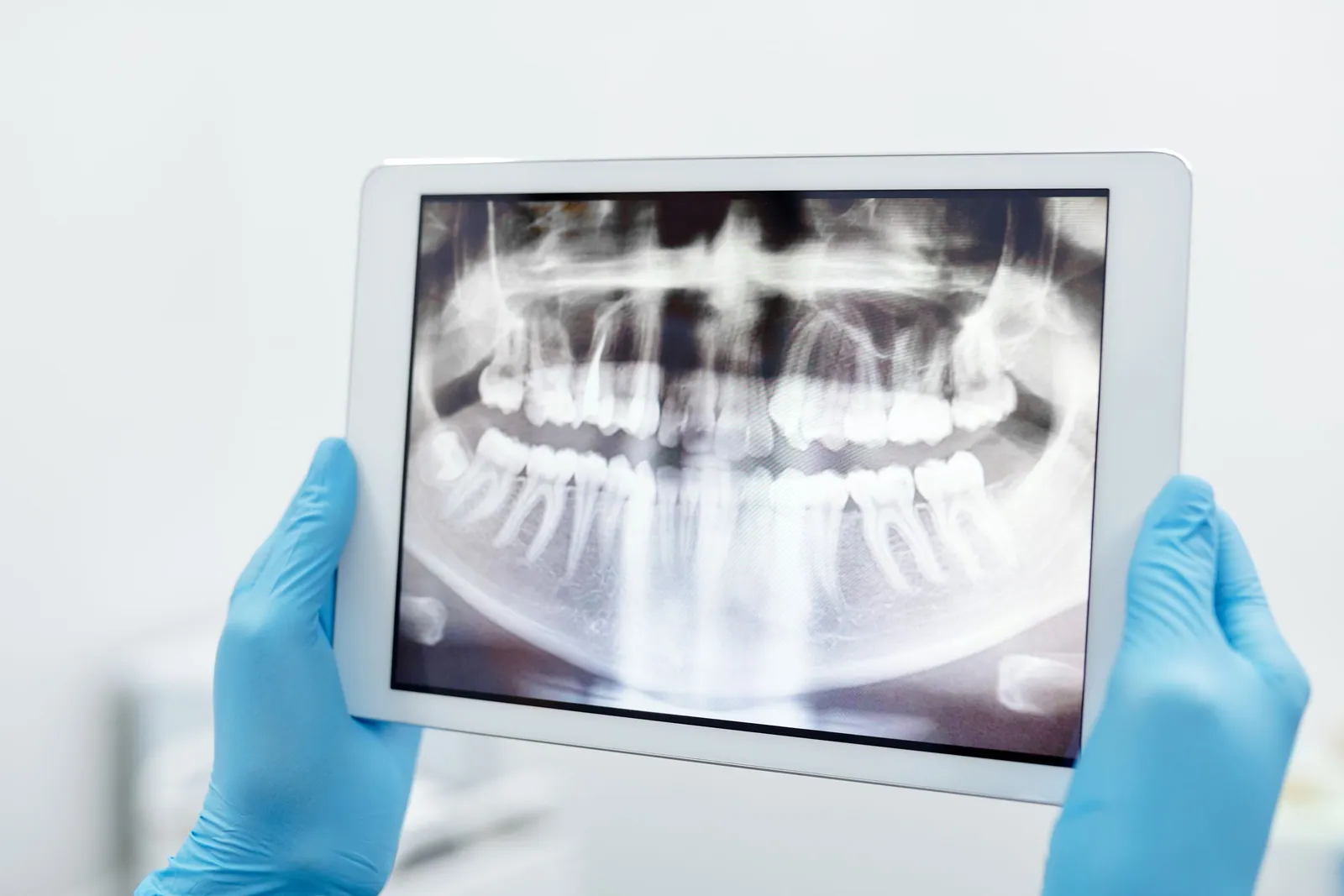
- Your X-rays. Periapical images, panoramic X-rays, or 3D imaging when it is justified. To understand these exams, see our articles on digital radiography and the cone beam (3D imaging).
- Clinical photos of your teeth and gums, useful for tracking changes over time or explaining a situation.
- The treatment plan: what is being proposed, in what order, along with the options and cost estimates.
- Your treatment history: what was done at each appointment, the anesthetics given, the materials used.
- General medical information: medical history, allergies, current medications — all of which affect the safety of certain treatments.
- Prescriptions and reports, as well as past and upcoming appointments.
The vast majority of this information qualifies as “health data.” This is a particularly sensitive category that enjoys stronger protection under the law — we come back to this below.
The benefits for your follow-up
The first benefit is continuity of care. At a new consultation, the practitioner opens your record and immediately sees your history. They can compare today’s X-ray with one taken two years ago, spot a change, and make an informed decision. Nothing gets lost at the bottom of a filing cabinet.
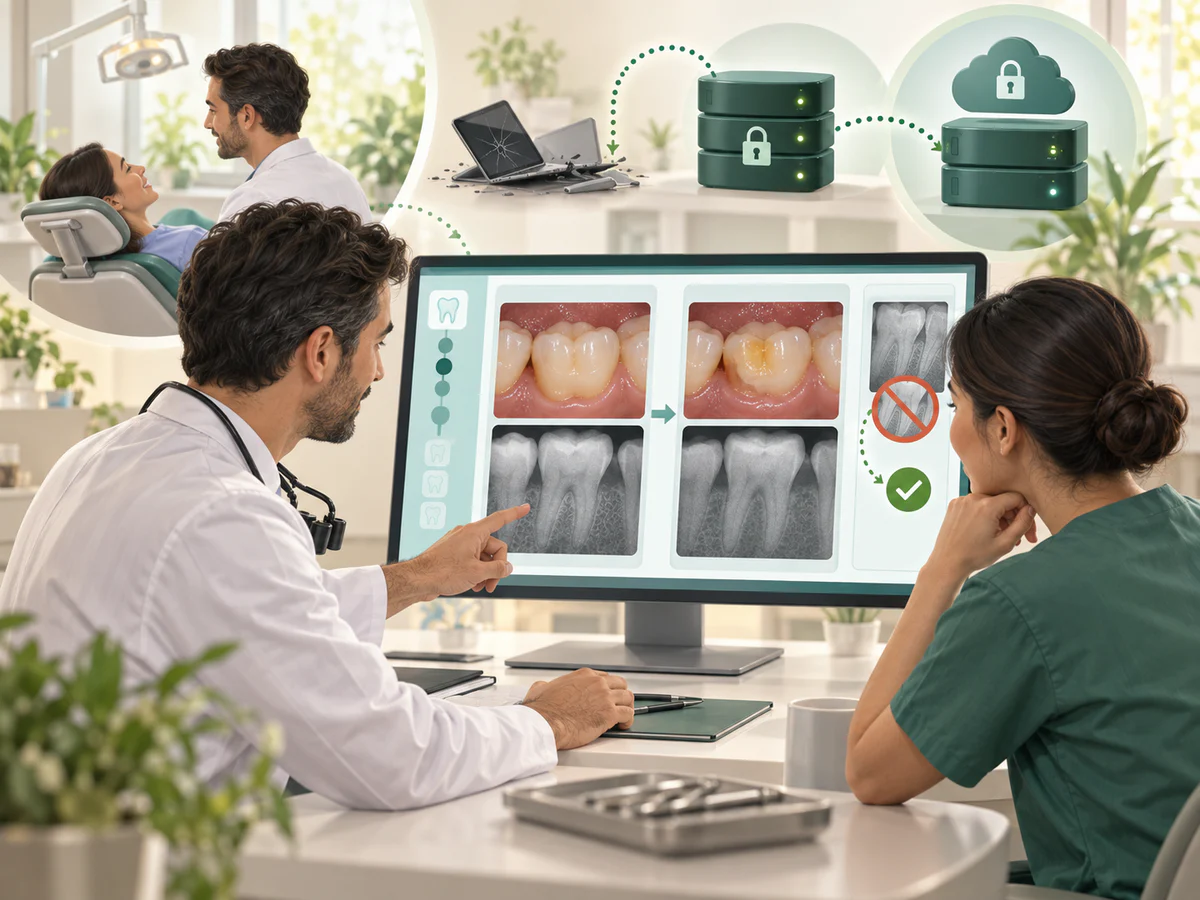
The second is coordination. If another practitioner at the practice sees you, or if a colleague needs to step in (for example, to plan a dental implant in Kenitra), they have the same level of information. The record serves as a shared, reliable memory.
The third is less repetition. Having your history and exams at hand avoids asking the same questions over and over and, sometimes, redoing an exam that is already available. Appointments run more smoothly and waste less time — leaving more room for listening and for care.
Finally, digital records make backups easier. A paper file can burn, get soaked, or go missing. A properly managed digital record is duplicated and can be restored after an incident, protecting the memory of your care over the long term.
Confidentiality and data protection
A digital record does not mean your information circulates freely. In Morocco, the processing of personal data is governed by Law 09-08 (enacted in 2009), under the oversight of the CNDP, the National Commission for the Control of Personal Data Protection.
Two principles are essential to know. First, health data is considered sensitive data: processing it is prohibited in principle, except in cases provided for by law — notably when it is necessary for the practice of medicine and carried out by a professional bound by medical confidentiality. Second, this type of processing is subject to specific formalities with the CNDP, which involve describing the purposes, the security measures, and the people authorized to access the data.
In practice, this translates into a few common-sense rules every practice must apply: access limited to the care team who looks after you, confidentiality (passwords, individual sessions), data stored securely with backups, and time-limited retention, consistent with professional obligations. By way of comparison, the European regulation (GDPR) rests on very similar principles — purpose limitation, data minimization, security, justified retention periods — which explains why the logic is the same from one country to another.
Your rights over your record
Your data concerns you: you have rights over it. Law 09-08 notably recognizes a right of access (to obtain confirmation that data about you is being processed and to access it in an understandable form), a right of rectification (to have inaccurate information corrected or completed), and a right to object on legitimate grounds.
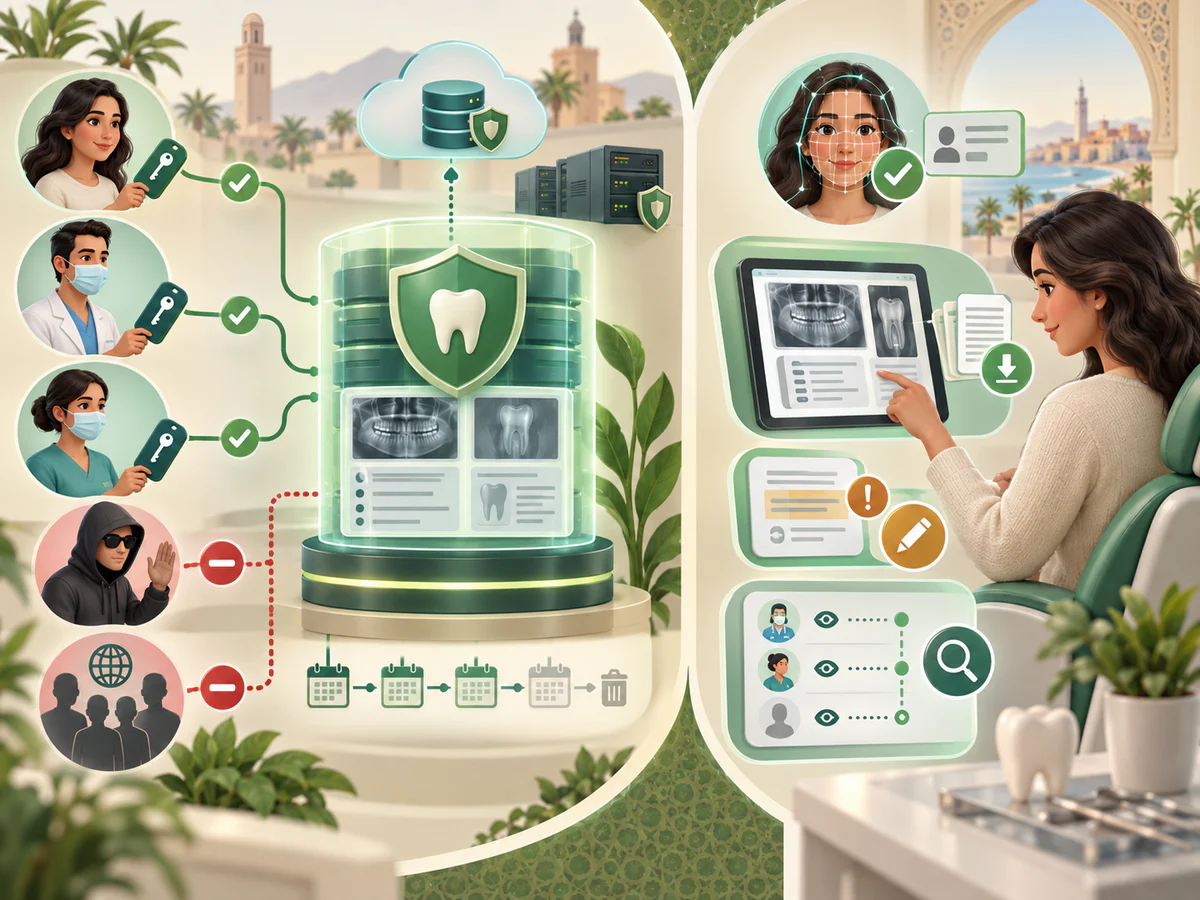
In concrete terms, as with any medical record, you can ask to see the information that concerns you and obtain a copy. In general, all you need to do is prove your identity; you do not have to justify your request. This is a widely shared principle: in France, for example, patients’ direct access to their medical records has been recognized since the law of March 4, 2002, and the French National Authority for Health (HAS) has made it a core requirement of patient care.
So don’t hesitate to ask your practice: where is my data stored, who has access to it, how can I get a copy of my X-rays? A serious practice will answer clearly.
Limitations / what it does not change
Let’s be honest: digital tools bring order and security, but they do not do everything.
It does not replace the care relationship. A record, however complete, does not treat anyone. It is no substitute for the clinical examination, for listening, or for explaining your options. It is a support tool, not a decision.
It is not a magic vault. Security depends on real-world practices: updates, passwords, backups, controlled access. No system is 100% invulnerable. Protection comes as much from human rigor as from the tool itself.
It does not make your data “public” or “shared everywhere.” Contrary to a common misconception, your practice record is not automatically connected to some large national network or viewable by just anyone. Access remains, as a matter of principle, restricted to your care team.
It does not remove your rights or the practitioner’s obligations. Medical confidentiality, the duty to keep an up-to-date record, and your right of access apply exactly as they do with paper.
In summary
The digital patient record brings together, in one secure place, the information needed for your care: X-rays, photos, treatment plan, history, and medical background. It improves follow-up, makes coordination between practitioners easier, and cuts down on repetition, while safeguarding the memory of your care through backups. In Morocco, this health data enjoys stronger protection under Law 09-08 and the oversight of the CNDP, following a logic close to the European GDPR: limited access, confidentiality, security, and justified retention. You retain clear rights over your record, starting with the right to access it and to request corrections. What matters most remains this: a record is a tool in service of the care relationship — never a substitute for your practitioner’s judgment and attentiveness.
Frequently asked questions
What exactly is a digital patient record?
Is my health data well protected in Morocco?
Can I request a copy of my record and my X-rays?
Who can view my dental record?
What happens to my data if the computer breaks down?
Sources
Medical references consulted for this article.
- 1CNDP (Commission Nationale de Contrôle de la Protection des Données à Caractère Personnel) — Loi 09-08 relative à la protection des personnes physiques à l’égard du traitement des données à caractère personnel.
- 2Loi n° 09-08, texte intégral (Bulletin Officiel n° 5714) — version PDF publiée par la CNDP.
- 3CNDP — Dépliant d’information sur la loi 09-08 et les droits des personnes (accès, rectification, opposition).
- 4Haute Autorité de Santé (HAS) — Accès aux informations concernant la santé d’une personne : recommandations pour la pratique clinique (2005).
- 5Conseil National de l’Ordre des Médecins (France) — Le dossier du patient : règles de tenue et droit d’accès.
- 6American Dental Association (ADA) — Record Retention : recommandations de tenue et de conservation des dossiers dentaires.
Contents
Share