Effective daily dental hygiene rests on three simple, regular habits: brushing at least twice a day for two minutes with a fluoride toothpaste, cleaning between the teeth every day with floss or an interdental brush, and professional follow-up at a frequency suited to your situation. This foundation, recommended by the World Health Organization (WHO), the American Dental Association (ADA) and the FDI World Dental Federation, is enough to prevent the great majority of cavities and gum disease. The rest of this article looks in detail at the method, brushing technique, choosing your tools, the role of fluoride and where scaling fits in.
As an oral surgeon practicing in Kénitra, I see every day how much a well-managed hygiene routine changes the outlook for treatment, particularly in oral surgery and implantology. A healthy oral environment determines how tissues heal and how long restorations last. Prevention is not a side issue: it is the foundation for everything else.
How many times a day should you brush your teeth?
The recommendation is clear and consistent: at least twice a day, for two minutes. WHO, the ADA, the FDI and ameli all agree on this point. The ADA notes that brushing for two minutes reduces plaque more than brushing for only one minute.
The evening brushing, right before bed, deserves particular attention. During the night, saliva production drops, which reduces its natural protective effect against acids. This is therefore the time when plaque acts for longest without anything to counter it.
There is no need to brush more often than this baseline. Brushing three times a day or more brings no demonstrated benefit and, with too heavy a technique, can wear down the enamel and irritate the gums. The quality of the movement matters more than the quantity.
When should you brush after an acidic meal?
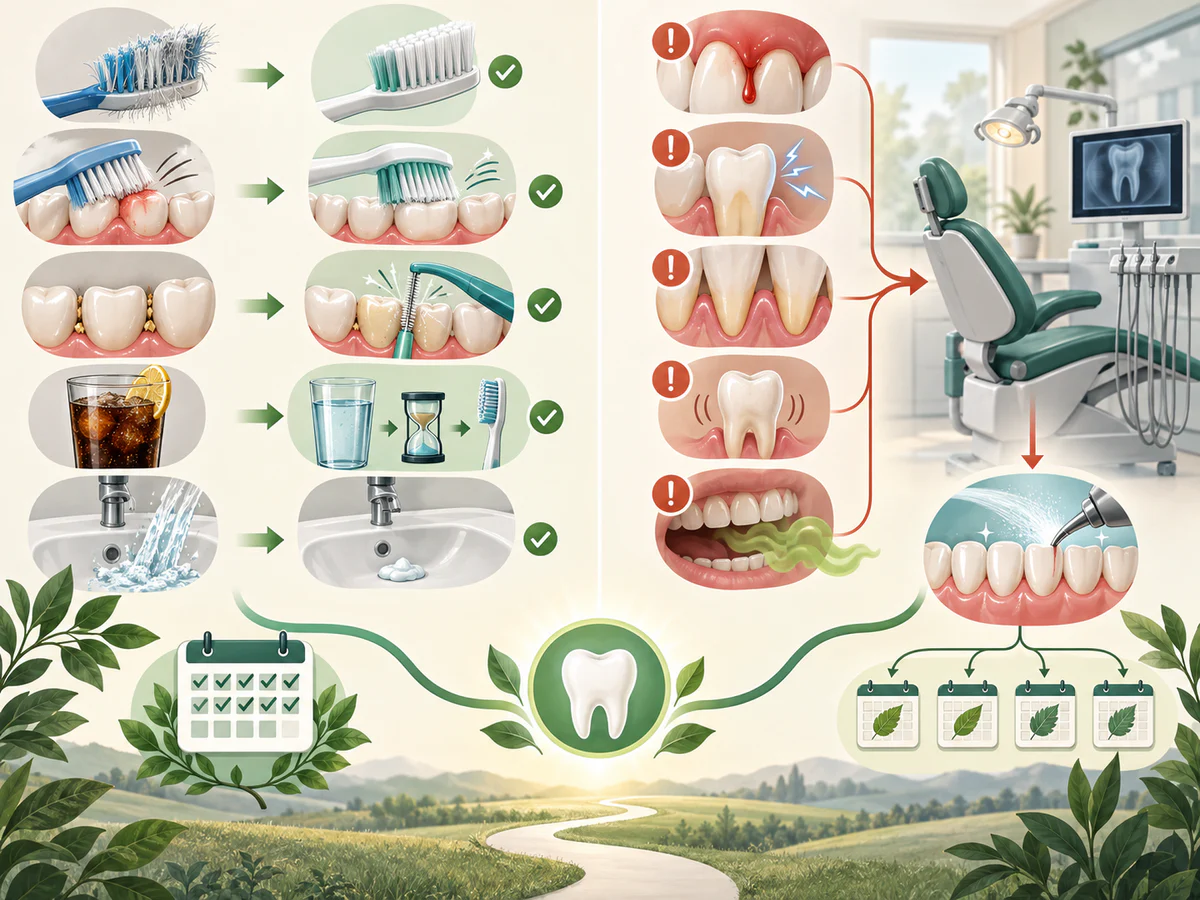
After an acidic food or drink (citrus fruit, sodas, wine), the enamel is temporarily softened. Brushing straight away can then increase wear. It is better to wait around thirty minutes, or to rinse your mouth with water in the meantime. This simple detail avoids unnecessary abrasion.
What is the right brushing technique?
No organization endorses a single technique as universally superior. The ADA in fact takes a pragmatic position: the best method is the one the patient actually applies, and applies regularly. That said, a structured approach helps make sure nothing is missed.
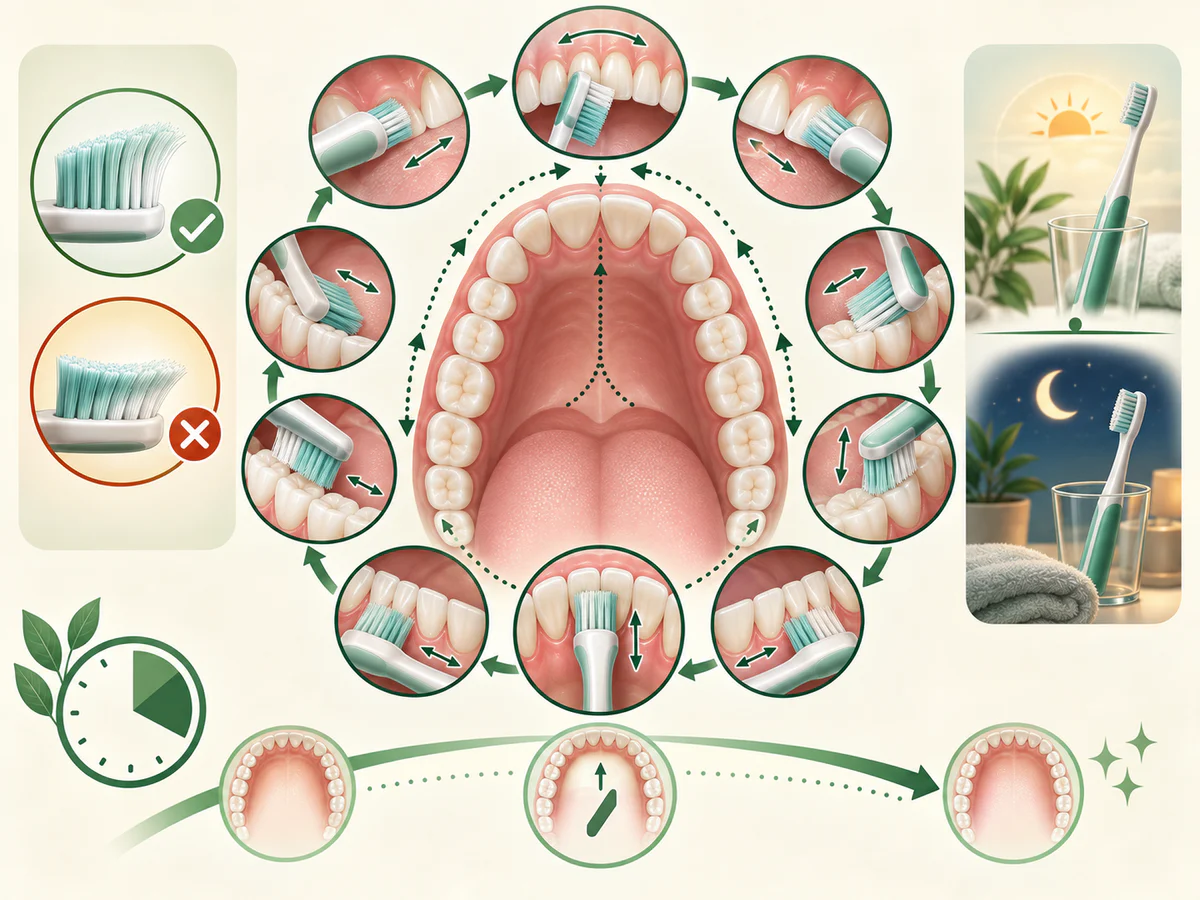
The Union française pour la santé bucco-dentaire (UFSBD) offers an easy-to-remember guide, sometimes called the BROS method, close in principle to the modified Bass technique: angle the brush at about 45 degrees toward the groove between tooth and gum, and brush from pink to white — that is, from the gum toward the tooth.
The practical points to remember:
- Brush the upper and lower arches separately, in small sections, without rushing.
- Angle the bristles toward the gumline, where plaque builds up the most.
- Use small, gentle movements, without scrubbing hard from side to side.
- Systematically cover all three surfaces of every tooth: outer, inner and chewing surface.
- Do not forget the tongue, which harbors bacteria involved in bad breath.
This description reflects expert consensus rather than high-level clinical evidence: studies comparing the various techniques against one another remain inconclusive. What matters is regularity and gentleness, more than a perfect movement.
Manual or electric toothbrush?
Both allow effective brushing. An electric toothbrush can make the movement easier for people with reduced dexterity or a tendency to press too hard, thanks to the pressure sensor found on some models. But a manual brush, used properly, remains perfectly suitable. The choice comes down to comfort and habit.
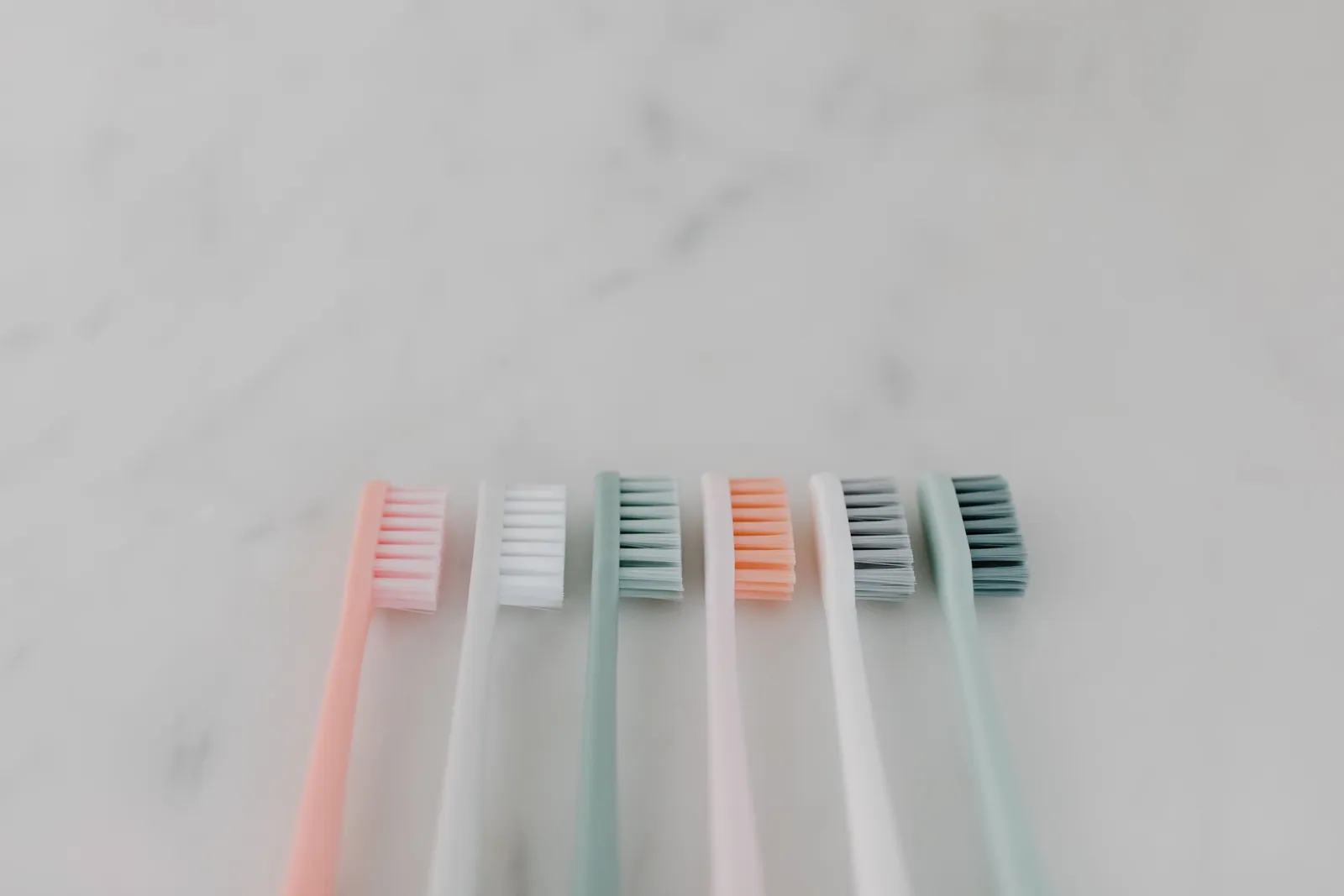
In every case, choose a soft-bristled brush with a small head, as ameli recommends. Soft bristles clean without damaging the enamel or the gums, and a small head reaches the back teeth more easily. Replace the brush as soon as the bristles start to splay, generally about every three months.
Floss or interdental brush: which should you choose?
Brushing does not clean the spaces between the teeth, where decay and gingivitis often begin. Daily interdental cleaning is therefore essential, in addition to brushing and not as a replacement for it. The ADA recommends cleaning between the teeth every day; ameli mentions dental floss and correctly sized interdental brushes.
The choice between floss and an interdental brush depends above all on the space available:
| Tool | Best suited to | Notes |
|---|---|---|
| Interdental brush | Open, accessible spaces | Several diameters; choose the size that fits without forcing |
| Dental floss | Tight contacts, teeth very close together | Takes a little technique; useful where an interdental brush will not fit |
| Water flosser (oral irrigator) | Supplementary use, prosthesis, orthodontic appliance | A useful complement; does not replace mechanical cleaning |
We should be honest about the level of evidence. According to the Cochrane review (Worthington et al., 2019), adding floss or interdental brushes to toothbrushing may reduce gingivitis and plaque more than brushing alone, and interdental brushes might be more effective than floss; but the certainty of these findings is low. This does not call the recommendation into question: professional bodies maintain it, because the practice is safe, inexpensive and consistent with the biology of plaque. We simply should not claim that it prevents periodontitis on its own.
If your gums bleed during the first few days of use, this is often the sign of inflammation that was already present, and it generally settles with regular cleaning. Bleeding that persists is a signal not to dismiss, as we will see below and as detailed in our article on bleeding gums: causes and what to do.
Fluoride toothpaste: why, and at what strength?
Fluoride is the central active ingredient in the prevention of cavities. WHO points out that adequate exposure to fluoride is an essential factor in preventing decay, and the FDI stresses that the regular use of a fluoride toothpaste is scientifically recognized as a major way of reducing the frequency and severity of cavities. The ADA places the preventive effect of an over-the-counter fluoride toothpaste in a range from 16% per tooth to 31% per surface compared with no fluoride at all.
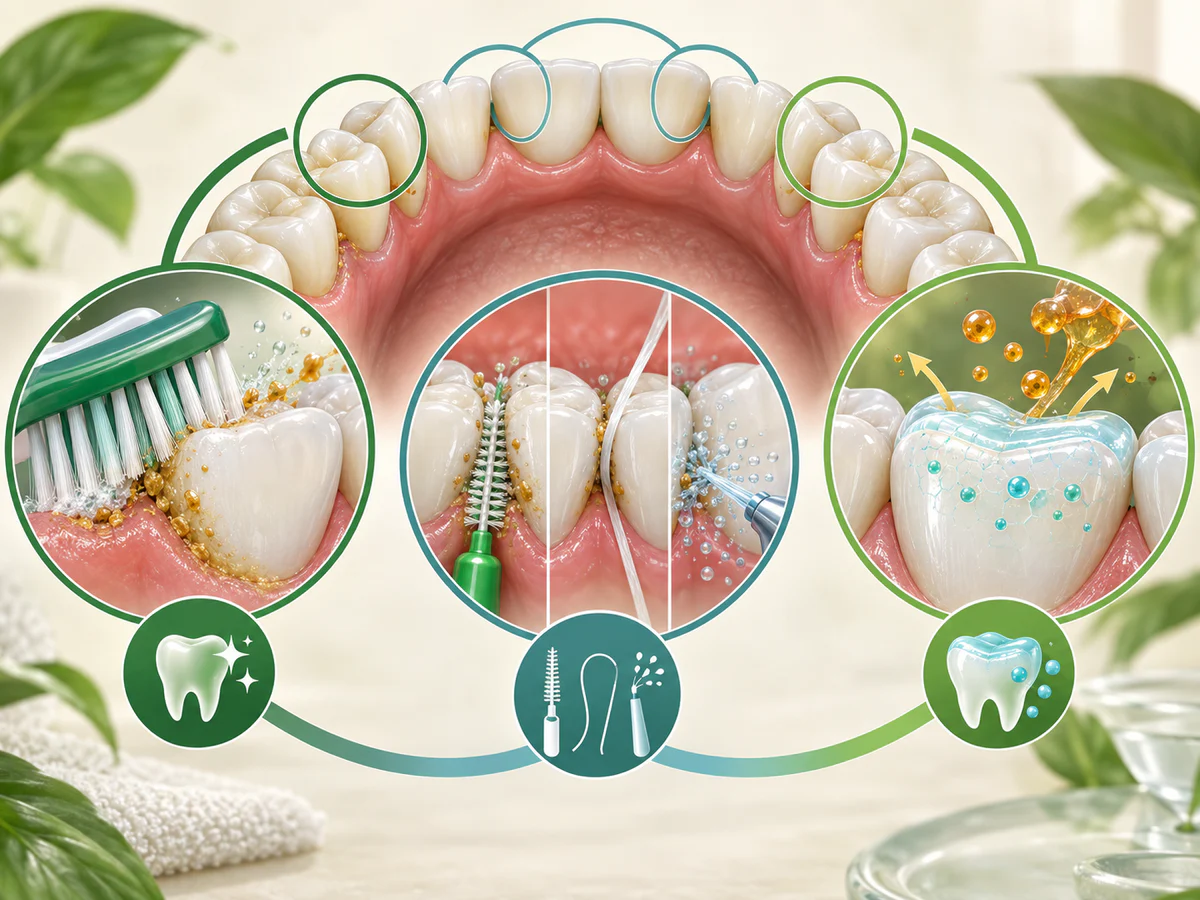
For an adult with no particular caries risk, WHO and the FDI settle on a concentration of 1000 to 1500 ppm of fluoride (the FDI referring to a minimum on the order of 1000 to 1100 ppm). This is the strength of ordinary adult toothpastes.
A few practical pointers:
- Check the fluoride content on the tube; it is given in ppm or as a percentage.
- After brushing, spit out but do not rinse thoroughly with water: this lets the fluoride work for longer.
- Very high-strength toothpastes (2800 or 5000 ppm, for example) are not an everyday over-the-counter product: they are reserved for high-risk situations, on clinical indication and by prescription.
The dose for children differs with age and must be adapted accordingly. This point is covered in our article on cavities in children: prevention, baby teeth and treatment.
Receding gums: adapting your brush, interdental brushes and toothpaste
When the gum has pulled back, after a recession or after treatment for periodontitis, the mouth changes: roots become exposed and the spaces between the teeth widen. Everyday tools adapt accordingly.
- The toothbrush. Keep a soft-bristled brush and a gentle motion, without scrubbing sideways. According to the American Dental Association (ADA), roots are covered with cementum, a tissue softer than enamel.
- Interdental brushes. Wider spaces often call for larger interdental brushes, and sometimes several sizes in the same mouth: for each space, the right size is the one that fits without forcing. The EFP guideline for the treatment of periodontitis (Sanz et al., 2020) favors interdental brushes for cleaning between the teeth, where the space allows.
- The single-tuft brush. This small brush with a single tuft of bristles helps clean areas a standard brush reaches poorly: an isolated tooth, an irregular gum margin, the back surface of the last teeth, overlapping teeth. It adds to brushing without replacing it (Hasegawa et al., 2016).
- Toothpaste. Keep a fluoride toothpaste: an exposed root is more prone to decay, the ADA points out. If the roots are sensitive to cold, a toothpaste for sensitive teeth used twice a day can reduce the pain; our advice on tooth sensitivity to cold and heat covers these options in detail.
At a check-up, the practitioner can help you choose interdental brush sizes suited to your spaces. The causes of a receding gum are explained in our article on gum recession, and cleaning the roots beneath the gum in the one on scaling and root planing.
Scaling: how often, and is it painful?
Brushing and interdental cleaning, even when well carried out, do not remove tartar, the mineralized plaque that clings firmly to the teeth, including below the gumline. Only a dentist can remove it, as ameli points out. Professional scaling is therefore a complement to home care, not a substitute for it.
On frequency, one widespread idea needs correcting: there is no six-month scaling rule that holds true for everyone. No organization sets such a single interval. The frequency is individualized according to risk:
- For a low-risk adult, a check-up and a scaling about once a year is a common baseline.
- For a patient with periodontal disease or who forms tartar quickly, closer follow-up is warranted, sometimes every three to four months during the maintenance phase.
It is therefore a clinical decision, made together with your dentist, and not an automatic routine.
As for the question of pain, let us stay measured. Scaling of the visible surfaces is generally well tolerated. It can nonetheless cause temporary sensitivity and slight bleeding, especially if the gums are already inflamed or if the procedure involves areas below the gumline. Comfort varies from one person to another, and a local anesthetic can be offered if necessary. Carried out correctly, a scaling does not damage the enamel.
What common mistakes should you avoid?
Several frequent habits reduce the effectiveness of your hygiene routine or damage the tissues:
- Brushing too hard or with hard bristles, which wears down the enamel and causes gum recession. This mechanism is one of the causes of tooth sensitivity to cold and heat.
- Neglecting the evening brushing, the most important one of the day.
- Skipping interdental cleaning, on the assumption that brushing is enough.
- Rinsing the mouth immediately and thoroughly after brushing, which washes the fluoride away before it can act.
- Keeping a worn-out brush, whose splayed bristles no longer clean properly.
- Treating bleeding gums as normal and ignoring it over the long term.
Hygiene, gums and general health: why it matters
A rigorous daily routine is aimed first at preventing two problems: tooth decay and gum disease. Gingivitis, the initial and reversible form, often shows up as bleeding. Without treatment, it can progress to periodontitis, which affects the tissues supporting the tooth. The difference between these two stages is set out in detail in our article on periodontitis or gingivitis: understanding the difference.
To describe periodontitis, the profession has relied since the EFP’s 2017 World Workshop on a classification by stages I to IV and grades A to C, which replaced the former distinction between chronic and aggressive forms. That same classification defined peri-implant diseases for the first time, an important point in implantology.
Smoking is a major periodontal risk factor: according to ameli, it greatly increases the risk of developing or worsening gum disease, while sometimes masking the bleeding, which delays diagnosis.
Finally, the value of periodontal health extends beyond the mouth. The 2024 EFP / WONCA Europe consensus states that periodontitis is associated with cardiovascular disease and with diabetes, with a two-way relationship in the case of the latter. This is an association, and not a demonstrated causal link: evidence of cause and effect has yet to be established. This nuance is important, because it separates what science has shown from what it still only supposes.
When should you see a dentist?
A well-run daily routine does not remove the need for a professional opinion when certain signs appear. According to ameli, gum bleeding that persists beyond two weeks despite proper hygiene warrants a consultation. The same is true for new sensitivity, receding gums, a loose tooth or persistent bad breath.
In a surgical context, good control of hygiene is a prerequisite. Before an implant is placed, before a bone graft or a sinus lift, a healthy mouth reduces the risk of complications and supports healing. Our facilities in Kénitra, which include a Cone Beam for three-dimensional imaging, a dedicated surgical suite, piezosurgery and the use of Choukroun PRF, are part of this same logic of carefully managed care, but nothing replaces the daily upkeep you provide yourself. To understand the full implant journey, you can read our article on how a dental implant is placed, step by step.
In summary
Daily dental hygiene comes down to a few consistent habits: brushing at least twice a day for two minutes with a fluoride toothpaste at 1000 to 1500 ppm, cleaning between the teeth every day with floss or an interdental brush, keeping an eye on your gums, and leaving scaling to a professional at a frequency suited to your own risk. These principles, based on the recommendations of WHO, the ADA, the FDI and ameli, are within everyone’s reach and are the best prevention there is against decay and gum disease. Consistency, more than perfection, is what makes the difference over the long term.
Frequently asked questions
How many times a day should you brush your teeth?
Should you use dental floss or interdental brushes?
What fluoride level should you choose in a toothpaste?
How often should you have a scaling?
My gums bleed when I brush: is that serious?
Sources
Medical references consulted for this article.
- 1OMS : Santé bucco-dentaire, fiche d'information, 2025
- 2ADA : Home Oral Care, Oral Health Topics
- 3FDI World Dental Federation : Topical Fluoride for Caries Prevention, 2025
- 4ameli.fr : Prévenir la maladie des gencives
- 5Cochrane : Home use of devices for cleaning between the teeth, Worthington 2019
- 6EFP : Proceedings of the 2017 World Workshop, classification 2018
- 7EFP / WONCA Europe : Maladies parodontales et maladies systémiques, consensus 2024
- 8EFP : Treatment of stage I-III periodontitis, recommandation S3 (Sanz et coll., J Clin Periodontol 2020)
- 9ADA MouthHealthy : Tooth Decay (racines découvertes par la récession, cément plus tendre que l'émail)
- 10ADA : Toothpastes, Oral Health Topics (dentifrices désensibilisants)
- 11Hasegawa I et coll. : Effectiveness of a single-tuft toothbrush for control of newly formed dental biofilm, Braz J Oral Sci 2016
Contents
Share